
Third-party risk management: how to build it into your supplier contracts

Rezvan Golestaneh
Published · 12 min read
Third-party risk management connects what you know about a supplier to the terms, evidence, and reviews that keep the relationship accountable.
- Tier suppliers by data access and business dependence.
- Turn assessment findings into contract clauses.
- Keep due diligence evidence beside the agreement.
- Re-check suppliers before renewal.
- Finish exit with data return and access removal.
Third-party risk management means identifying, assessing, and controlling the risks that come from suppliers, service providers, and other outside companies you rely on.
A new SaaS tool gets customer data. Its security questionnaire sits in someone’s inbox. The contract was signed on the vendor’s paper before anyone compared the answers with the terms. If you own suppliers at a company of 50 to 500 people, whether in procurement, ops, legal, IT, or compliance, this guide gives you a practical checkpoint: the contract every supplier passes through anyway.
What is third-party risk management?
Third-party risk management (TPRM) is the ongoing work of understanding your exposure to outside companies and putting controls around those relationships.
A third-party risk assessment asks what could go wrong with a particular supplier, how much it would matter, and what evidence supports your decision. Examples of third-party risk include:
- Security and data: A support provider’s account exposes customer records.
- Operational and continuity: Your dispatch service goes offline and orders stop moving.
- Compliance and legal: A processor uses personal data outside your documented instructions.
- Financial: A supplier becomes unable to deliver work you’ve already paid for.
- Reputational: A contractor’s conduct while representing your company damages customer trust.
These categories overlap. A service outage can interrupt work and upset customers at the same time. Assess the relationship as you actually use it, including the information shared and the work that depends on it.
Why the contract is your strongest control
The contract turns assessment findings into obligations you can hold the supplier to after signing.
In ENISA’s NIS Investments 2025 survey of organizations in critical sectors, 63% require suppliers to comply with security standards and keep certifications, 54% run supplier risk assessments or audits, and only 48% include cybersecurity requirements in supplier contracts.
That gap matters when the answer changes. A questionnaire tells you what is true today; the contract decides what you can demand tomorrow. Does the vendor have to notify you of a breach? Can you request an audit, object to subprocessor changes, or get your data back?
A completed questionnaire doesn’t settle those questions. Read its answers beside the draft and turn the important ones into written commitments. The contract can’t prevent every supplier failure, but it can define the information, cooperation, and exit rights you’ll need.
The third-party risk management lifecycle, mapped to the contract
A practical third-party risk management lifecycle follows five contract moments: before signing, at signing, during the contract, at renewal, and at exit.
| Moment | What you check | What the contract needs |
|---|---|---|
| Before signing | Data access, business dependence, security evidence, and ability to deliver | Proposed terms that address the gaps found in due diligence |
| At signing | Whether the final wording matches the assessment and accepted exceptions | Agreed security, audit, service, notification, and exit duties |
| During the contract | Performance, incidents, current evidence, and notified changes | Reporting duties, review rights, and deadlines for notices |
| At renewal | Changes to your use, the supplier, its evidence, and the terms | Updated protections and workable notice and renewal terms |
| At exit | Data, access, outstanding work, and the replacement’s readiness | Return or deletion duties, transition support, and surviving obligations |
Fit these checks into your supplier contract process. Assessment results should reach the person negotiating the agreement before the signature request does.
Tier your suppliers before you assess them
Tier suppliers by their access to information and the effect of failure, then match the paperwork and review effort to that exposure.
Use this three-tier model as a starting point for a lean team:
| Tier | Typical suppliers | Paper you need | Review rhythm |
|---|---|---|---|
| Tier 1: high dependence or data exposure | Payroll provider, cloud host, payment processor, anything with customer or employee data, or anything that stops the business if it fails | Signed agreement, applicable DPA and SLA, security evidence, questionnaire, subprocessor list, and documented review decision | Yearly and on every renewal |
| Tier 2: important but replaceable | Marketing agency with limited data access | Agreement, relevant confidentiality and data terms, and a short assessment of access and dependence | At renewal |
| Tier 3: low risk | Office supplies without system or personal data access | Standard purchase terms | None beyond standard terms |
Give every supplier one named owner. That person gathers input from specialists when needed and makes sure the review gets finished.
Spend doesn’t decide the tier on its own. An inexpensive tool with employee records belongs in the data review. An agency that gains access to your full customer database needs reassessment even if its fee stays the same.
Write the tiers, required evidence, review rhythm, and exception approver into a short policy. That’s a workable third-party risk management framework someone else can follow when you’re unavailable.
Turn every finding into a clause
Every material due diligence finding should lead to a proposed contract term or a recorded decision about the risk you’re accepting.
| If due diligence finds… | Put this in the contract |
|---|---|
| The vendor uses subcontractors that touch your data | Subprocessor rules with advance notice of changes and an opportunity to object |
| You can’t inspect the vendor’s security yourself | A right to audit or regular reports and certificates, with a way to follow up on gaps |
| Personal data is processed on your behalf | A DPA addressing Article 28 GDPR, where applicable |
| An outage would stop your work | Measurable service levels, reporting, and service credits |
| The vendor may be acquired | Change-of-control terms defining notice and any agreed exit right |
| A breach would hurt you | A breach notification duty stating timing, contact, and required information |
| You may need to leave quickly | Termination for convenience plus return or deletion of data, with agreed timing and costs |
- Subprocessing The subprocessing clause in a contract outlines the conditions under which a primary contractor may engage third parties to handle or process certain aspects of the contracted work. It typically includes obligations for obtaining consent from the primary client, ensuring subcontractor compliance with original contract terms, and maintaining data protection standards.
- Right to audit The "Right to Audit" clause grants a party the ability to review and examine the financial records, systems, and practices of another party to ensure compliance with contractual terms and accuracy of financial reporting. This clause is often included to provide transparency and accountability, and to safeguard against fraud or mismanagement.
- Personal data breach A personal data breach clause sets out what happens when personal data is lost, stolen or exposed: how fast the party that discovers the breach reports it, what information it provides, and how it helps contain the breach and notify authorities and the people affected.
- Service levels and KPIs A service levels clause turns good service into numbers: what the provider measures, the target, how it is measured and what a miss costs. Service levels are binding and usually backed by service credits, while KPIs are tracked to manage the relationship without a financial consequence.
- Change of control A "change of control" clause in a contract is designed to protect parties by outlining specific terms and conditions that come into effect when there is a significant shift in ownership or control of one party involved in the agreement, such as through a merger, acquisition, or sale. This clause often permits the other party to terminate the contract, renegotiate terms, or take other defined actions if such a change occurs, ensuring transparency and continuity amid organizational transitions.
- Return or destruction of confidential information The Return or Destruction of Confidential Information clause specifies the obligations of parties to either return or destroy all confidential information upon the termination or completion of the contractual relationship. This ensures that sensitive data is not retained unnecessarily, thereby protecting proprietary information and maintaining confidentiality.
Check the wording as part of contract risk management. A clause title alone doesn’t tell you whether the right is usable.
For example, an audit right that excludes the systems handling your data may not answer the finding. If the supplier refuses a needed term, record who accepts that gap, why, and what practical control will cover it. Don’t let an unanswered negotiation comment become silent approval.
Keep an evidence file next to every contract
Keep the documents supporting your supplier decision beside the agreement so the next reviewer can check what you relied on.
For each tier 1 supplier, keep:
- The signed contract and its DPA.
- A current certificate, such as ISO 27001, or the vendor’s audit report.
- The completed security questionnaire.
- The subprocessor list as of signing.
- An insurance certificate, if required.
- The owner’s review notes, including accepted gaps and follow-up.
Check that evidence covers the service you’re buying. A certificate for a different part of the vendor’s business doesn’t answer your question.
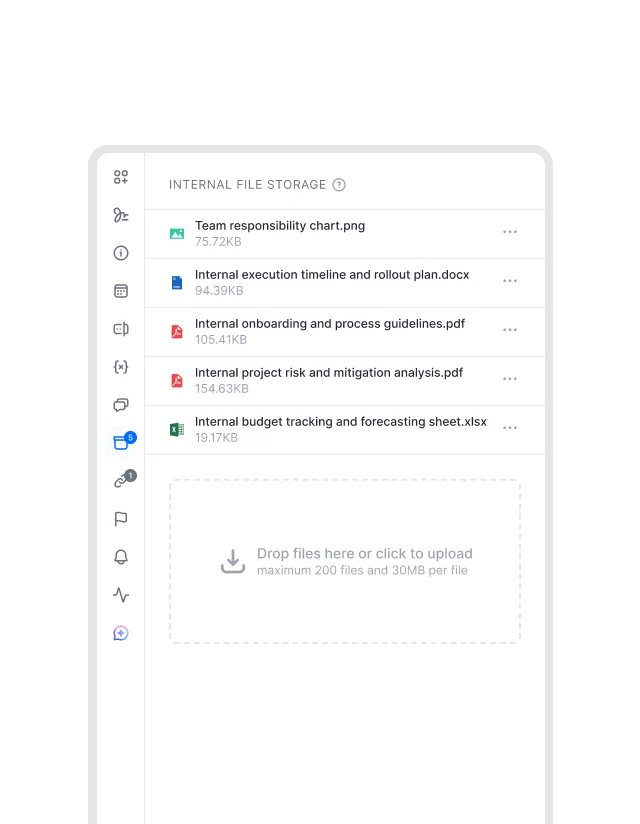
In fynk, you can store questionnaires, reports, and review notes as internal files on the contract. They don’t appear as attachments, so internal assessment material stays separate from the agreement and its annexes.
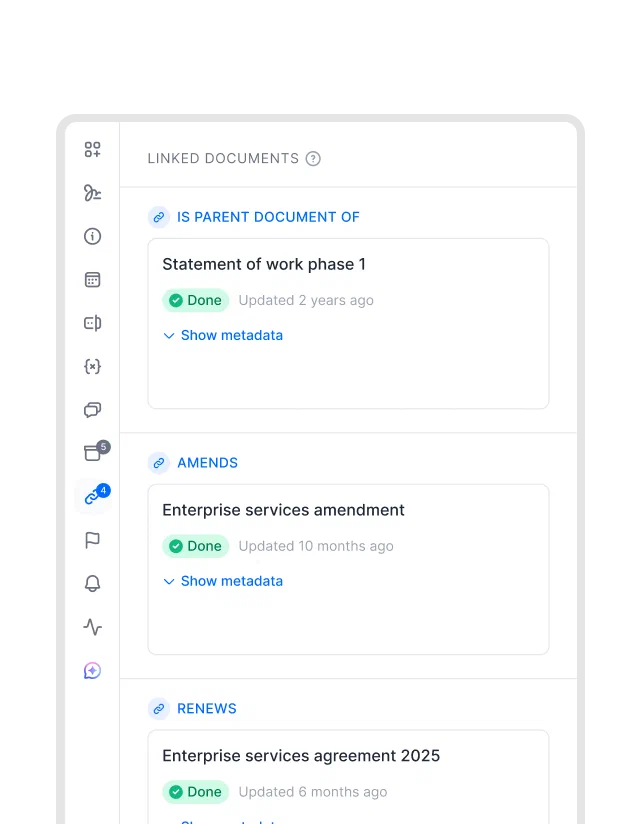
You can also link related agreements, such as the DPA, SLA, and amendments, to the main agreement. They’re one click apart when you need to check how the documents fit together.
We primarily use fynk for contract management and e-signatures. It enables centralized and compliant data storage as well as reliable access and permission management.
Watch your suppliers without a TPRM tool
You can keep supplier reviews manageable without dedicated TPRM software by connecting ownership, review dates, and clause checks to the contracts you already manage.
Step 1: Make the next review someone’s job
Ask the named supplier owner to record a review date on the contract and define what they’ll check. For a payroll provider, that could mean requesting current security evidence and confirming the subprocessor list.
fynk’s tasks and reminders link assigned work to contract dates, stages or fields. Set the review early enough to resolve questions before the renewal decision.
Step 2: Find missing protections across contracts
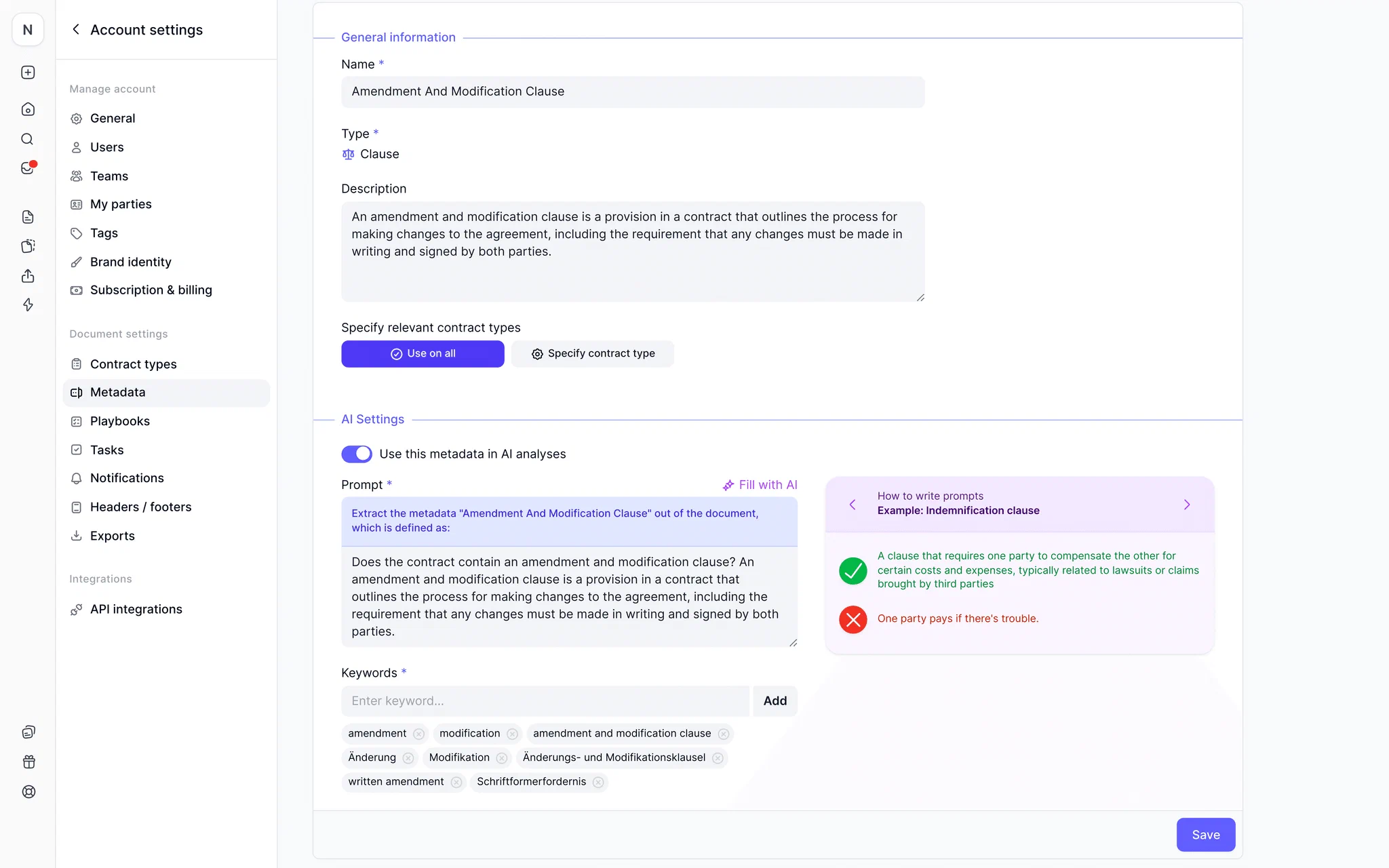
Create your own metadata fields in fynk, for example “Right to audit” or “Subprocessor notice,” with a prompt so fynk’s AI fills them from every contract. Then filter supplier contracts that lack the clause.
A prompt might ask whether the agreement requires notice before adding a subprocessor. Check the resulting shortlist against the wording before deciding what to renegotiate.
Step 3: Make every renewal a re-check
Compare the current evidence with your use of the service. Has the vendor gained more data access? Are unresolved service problems still open? Record whether to continue, request changes, or leave.
Before signing a supplier’s own paper, fynk’s AI review checks it against your supplier playbook. Write rules as sentences, such as “The supplier must notify us of a personal data breach.” It flags missing requirements and explains the reason, giving the reviewer specific issues to resolve.
Conrad Electronic’s procurement team uses playbooks and templates built with legal to flag critical clauses across contracts.
Exit: the step most programs skip
Supplier exit is complete when the work has moved, access is removed, and the agreed data obligations are fulfilled.
Assign these actions before the service ends:
- Give notice on time. Check the notice dates, required delivery method, and recipient.
- Get data back or deleted. Follow the agreed process and ask for written confirmation.
- Remove access. Close the vendor’s accounts and revoke access to your systems.
- Collect or cancel credentials and devices. Recover equipment and cancel credentials issued for the work.
- Check surviving terms. Confirm what continues, including confidentiality, audit, and liability.
- Move the work. Confirm the replacement can take over before switching off the old service.
- Archive the evidence. Keep the contract with notices, review records, and proof of completed exit actions.
An offboarded supplier with live access is still a third party.
Which rules may require this?
GDPR, NIS2, and DORA can require supplier contract terms or supply chain security measures, depending on which rules apply to your company.
GDPR: If GDPR applies and a supplier handles personal data on your behalf, Article 28 requires a contract covering, among other things, processing on your instructions, confidentiality, security, subprocessors, assistance, deletion or return at the end, and information for audits. The DPA template maps these requirements to its terms.
NIS2: Entities in scope must take supply chain security measures, “including security-related aspects concerning the relationships between each entity and its direct suppliers or service providers” (Article 21(2)(d)).
DORA: Financial entities face specific contract requirements for their ICT third-party providers. In BaFin’s analysis of DORA incident reports for 2025, one incident at a third party led to ICT incidents at 39 financial firms on average.
Free supplier templates with risk terms built in
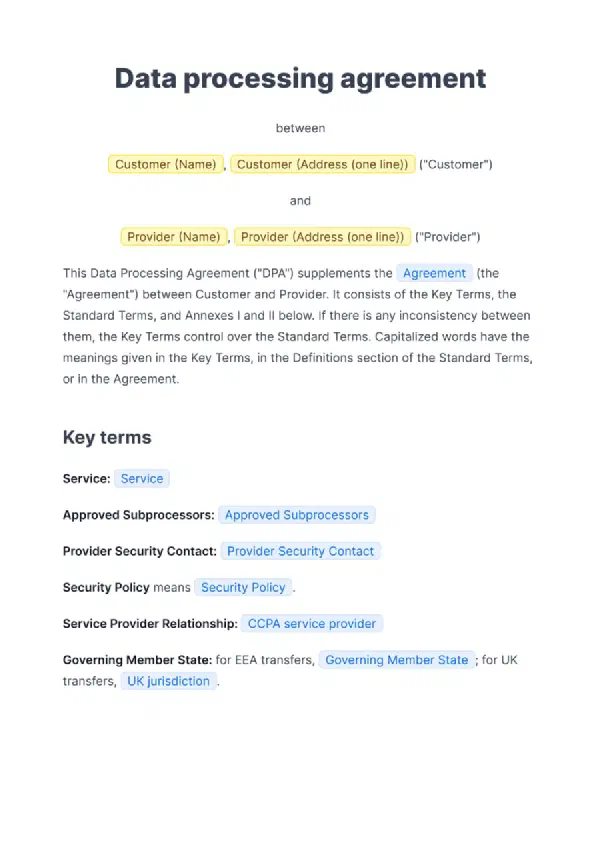 Data processing agreement template (DPA)
For any supplier that processes personal data for you.
Use template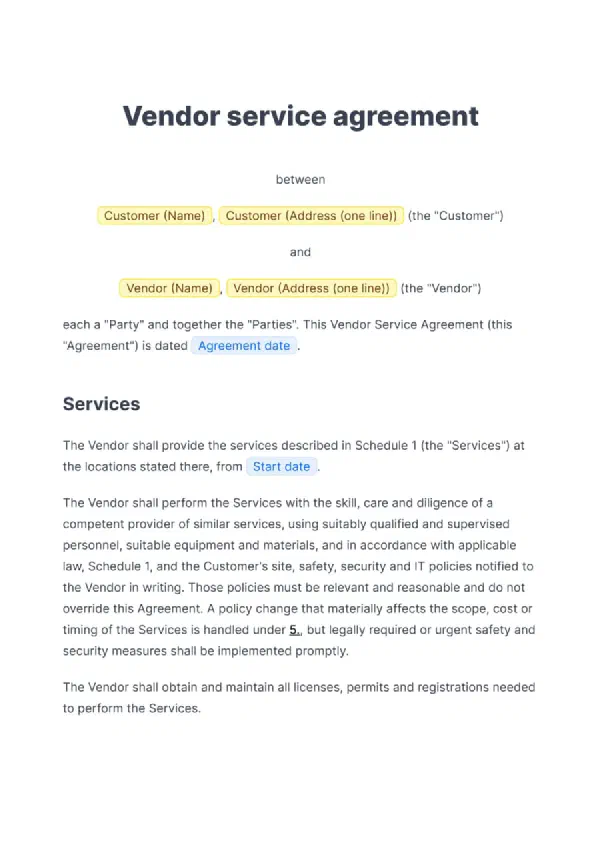
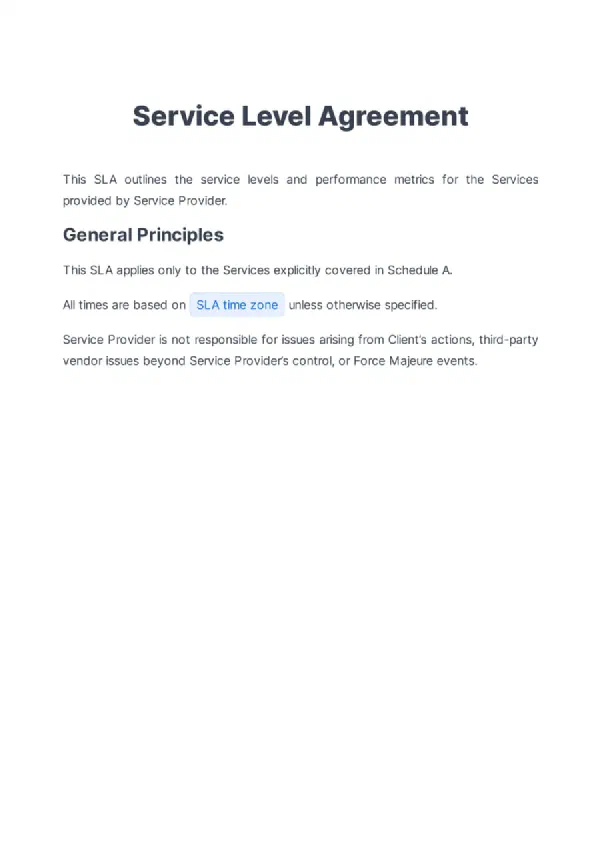
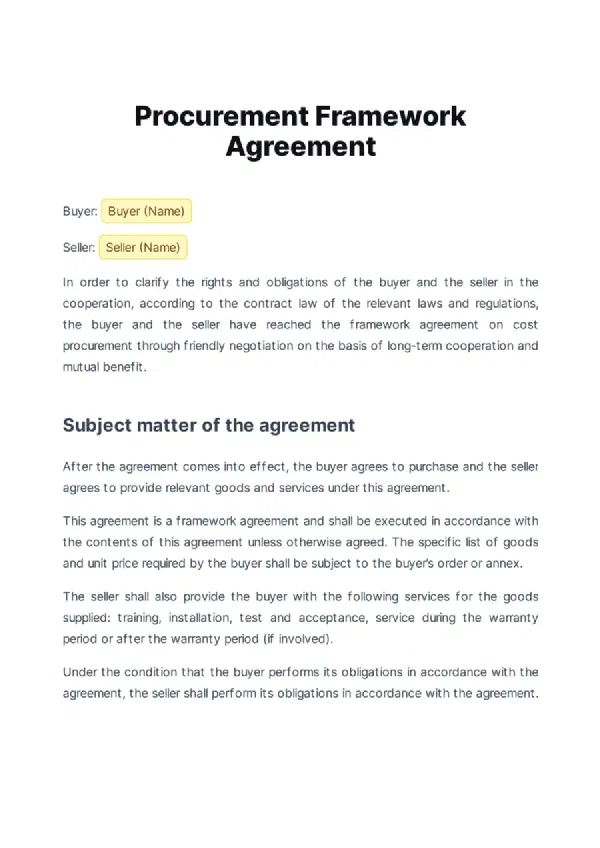
See which supplier contracts miss a key clause.
Third-party risk management FAQ
Start with the supplier’s access and your dependence on its service, then choose the checks that answer those risks.
A practical five-phase model is due diligence before signing, contracting, ongoing monitoring, renewal review, and exit. At each phase, connect what you learn to the agreement, supporting evidence, and an assigned action. Use the phases as repeatable checkpoints rather than treating the initial assessment as the finished job.
Vendor risk management focuses on suppliers you buy goods or services from. Third-party risk management can also cover other outside relationships, such as business partners. For a small company's supplier program, the practical work overlaps: assess exposure, agree protections, and keep reviewing the relationship.
As a starting policy, assess tier 1 suppliers yearly and at every renewal, and tier 2 suppliers at renewal. Tier 3 suppliers need no scheduled review beyond standard terms under this model. Reassess sooner if data access, business dependence, or the supplier's circumstances change.
Small companies need a proportionate way to manage the outside companies they depend on. Start with supplier tiers, one owner per supplier, contract requirements, an evidence file, and review dates. Whether a formal program is legally required depends on the rules that apply to the business.
It is the process plus the place where it runs: a supplier list with tiers, an owner per supplier, the assessments, the contract terms, the evidence and the review dates. Large companies buy a dedicated TPRM platform. A small team can run it on its contract management software, with tasks, reminders and fields on each supplier contract.
Give your next supplier assessment a place in the contract, evidence beside it, and a review date someone owns.
Searching for a contract management solution?
Find out how fynk can help you close deals faster and simplify your eSigning process – request a demo to see it in action.
Please keep in mind that none of the content on our blog should be considered legal advice. We understand the complexities and nuances of legal matters, and as much as we strive to ensure our information is accurate and useful, it cannot replace the personalized advice of a qualified legal professional.




Get a regular dose of insightful contract management content

Take control of your agreements. Move your business forward.
Run agreements the way they should run: fast, clear, and on your terms.
No setup headaches
Go live in days, not quarters
No lock-in
Full export anytime
No hidden fees
Signatures included, no envelope fee