
Contract risk management: spot, rank and reduce risk

Rezvan Golestaneh
Published · 10 min read
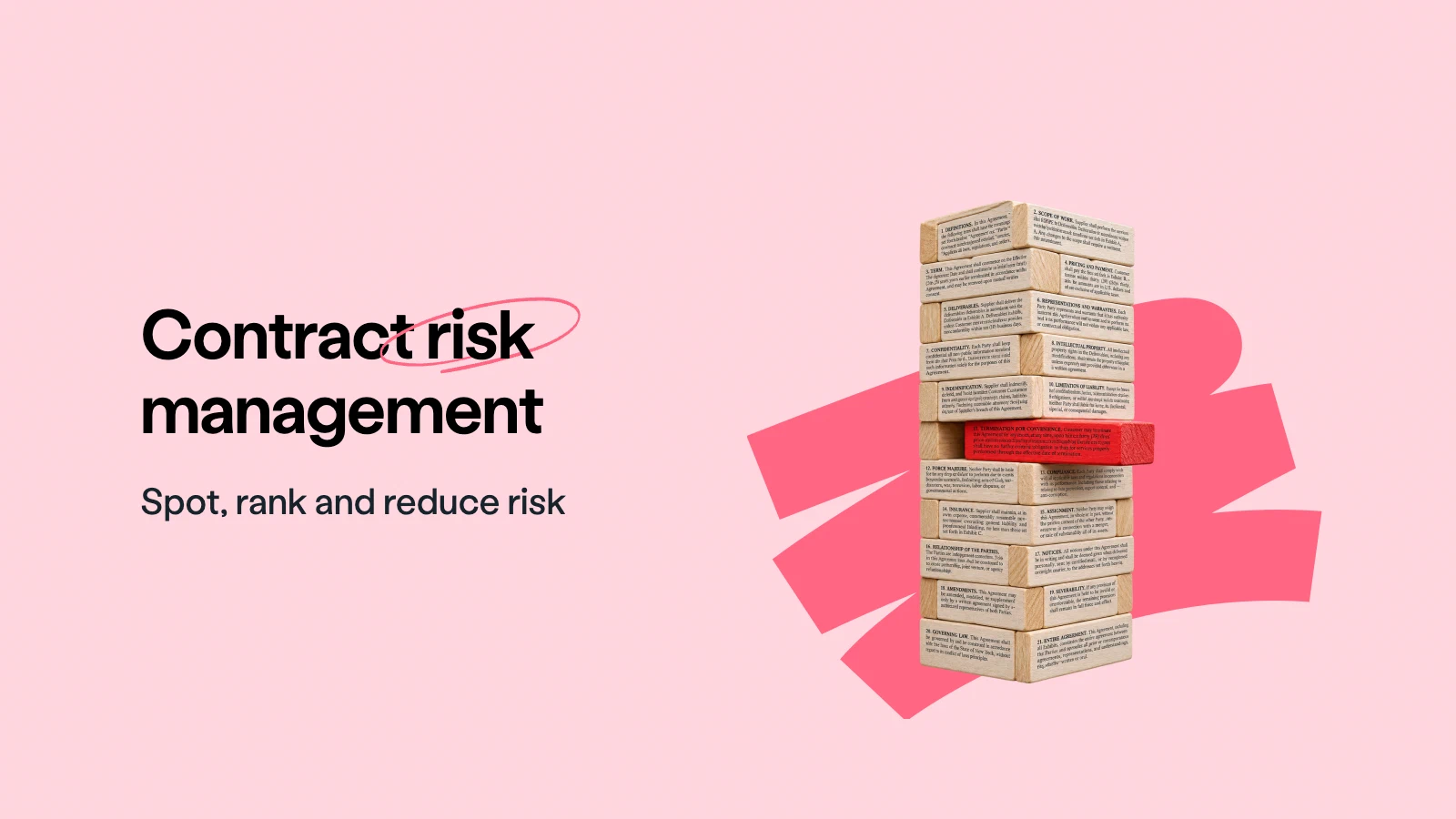
Contract risk management helps teams identify risky terms, prioritize exposure and track obligations before and after signing.
- Identify risky terms and rank their impact.
- Record decisions, exceptions and responsible owners.
- Track deadlines and obligations after signing.
An unwanted renewal invoice lands in your inbox. The cancellation deadline passed, and nobody owned it. Contract risk management helps prevent surprises like this by identifying risky terms, ranking their impact and assigning action before and after signing. From uncapped liability to missed notice periods, the work starts with knowing what could go wrong.
What is contract risk management?
Contract risk management is the ongoing process of spotting what could go wrong in a contract, deciding how serious it is and taking action to limit the damage.
You’ll also hear it called contractual risk management. The work falls into two connected parts:
- Before signing: check what you’re agreeing to. Could prices rise without warning? Can your team meet the promised service level? Can you leave if the supplier repeatedly fails?
- After signing: track what needs to happen. Send notices, check performance, meet obligations and act when something changes.
Contract risk analysis identifies specific exposures in the wording and the deal. A contract risk assessment ranks those exposures so the team knows what to accept, negotiate or escalate. Management carries those decisions through to completion.
The goal isn’t a contract with no risk. It’s a contract whose risks your business understands and can handle.
What are the main types of contract risk?
The main types of contract risk are financial, legal and compliance, operational, deadline, counterparty, and relationship or reputational risk.
These categories help you check an agreement from different angles. A single clause can create more than one risk.
- 💸 Financial: terms expose you to unexpected costs or losses. An uncapped liability clause leaves potential exposure open, while unrestricted price increases make next year’s budget a guess.
- ⚖️ Legal and compliance: wording doesn’t match the deal’s legal or data-handling needs. A supplier will process customer data, but the contract leaves permitted uses and handling responsibilities unclear.
- ⚙️ Operational: promises don’t match how the work gets done. You commit to round-the-clock support with a team that works business hours.
- ⏰ Deadline: a missed date costs money or removes an option. An agreement renews automatically because nobody sends notice before the contractual cutoff.
- 🤝 Counterparty: the other party can’t deliver what it promised. Your only supplier lacks the capacity to meet the launch schedule.
- 📣 Relationship and reputational: agreed behavior damages trust. A publicity clause lets a supplier announce your partnership before your team is ready.
Contract wording can address some of these risks. Others need action outside the document, such as checking supplier capacity or arranging backup support.
How do you assess contract risk?
Assess contract risk by describing what could go wrong, scoring its likelihood and impact, and assigning a response.
Start with the event, rather than a vague label. “Bad renewal clause” gives a reviewer little to work with. “We could pay for an unwanted renewal because no one owns the notice deadline” identifies both the exposure and a possible fix.
For a simple internal scoring method, give each factor a value:
- Likelihood: low (1) means unlikely under current conditions; medium (2) means plausible; high (3) means likely or already recurring.
- Impact: low (1) means a manageable cost or inconvenience; medium (2) means a material budget hit or disruption; high (3) means a loss, outage or commitment the business would struggle to absorb.
Risk score = likelihood × impact. Agree what “material” means for your own budget and operations before using the scores.
The following examples illustrate how a small team might compare clauses. The scores depend on the deal and the controls already in place.
| Clause and potential problem | Likelihood | Impact | Score | Response |
|---|---|---|---|---|
| Payment clause carries a small late fee; payment is already scheduled | Low (1) | Low (1) | 1: low | Accept and keep the payment task |
| Automatic renewal has no assigned notice owner | Medium (2) | Medium (2) | 4: medium | Assign an owner and reminders; negotiate more workable notice terms if needed |
| Supplier can increase fees at any time, making costs unpredictable | High (3) | Medium (2) | 6: high | Negotiate price limits and notice; escalate any remaining exception |
| Critical supplier agreement has no exit right for repeated service failures | Medium (2) | High (3) | 6: high | Escalate and negotiate an exit route |
| Customer contract leaves your liability uncapped; a major claim seems unlikely | Low (1) | High (3) | 3: medium, with escalation override | Escalate despite the total; negotiate a defined cap and review exceptions |
Use the totals to prioritize work:
- Low, 1–2: accept within your agreed rules and record any routine action.
- Medium, 3–4: negotiate the term or add a practical control, then reassess.
- High, 6–9: escalate before signing. Change the terms, obtain an authorized exception or decline the deal.
Always escalate high-impact risks, even when likelihood is low. The same applies to anything your playbook marks as unacceptable. A multiplication score shouldn’t wave through a loss your business couldn’t survive.
Record the clause, your reasoning, the action, the owner and the risk remaining afterward. Keep individual risks visible. An average contract score can hide a serious problem among harmless clauses.
How do you manage contract risk step by step?
A practical contract risk management process sets review rules, resolves exceptions before signing and turns accepted terms into assigned work afterward.
You can start with a shared document and a tracker. As agreements accumulate, keep the review decisions connected to the contract so each handoff preserves the context.
Step 1: Write down your risk rules
Create a contract playbook that states acceptable terms, fallback positions and issues requiring approval.
Start with the clauses your team repeatedly debates: liability, payment, price changes, data handling, service levels, renewal and termination. For each, explain the business concern and who can approve an exception.
For example, your rule might require review whenever a supplier can raise prices during a fixed term. Your preferred position could be fixed pricing, with a fallback of agreed limits and advance notice.
Keep the rules specific enough that another person can apply them. “Avoid unfavorable terms” isn’t much help when a salesperson needs an answer this afternoon.
Step 2: Review every new contract before signing
Compare the full agreement against your rules, including schedules, referenced terms and amendments that affect the deal.
Check whether the wording matches the price, scope and promises the team discussed. A contract management checklist makes risk checks repeatable when different people handle different agreements.
For a clause such as “Supplier may adjust fees at any time,” identify the problem and the requested change. Ask for predictable pricing, an agreed adjustment mechanism and enough notice to make a decision.
fynk’s AI review checks contracts against your own playbooks and rules. It flags risks and shows what to fix before legal review, giving reviewers specific issues to address.
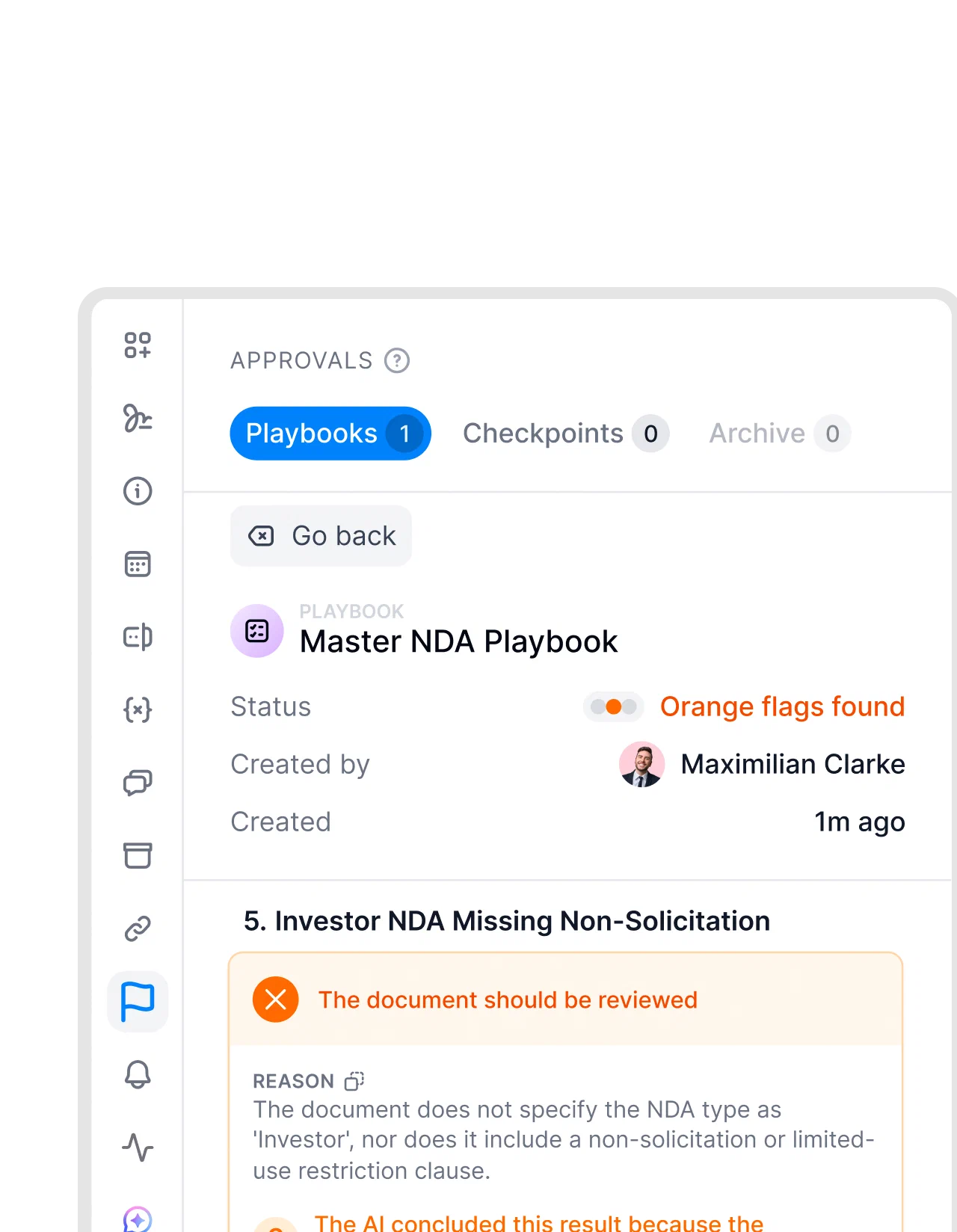
Recheck the final version after negotiation. A risk resolved in an earlier draft still needs to be resolved in the agreement you sign.
Step 3: Route high-risk terms to the right approver
Send exceptions to the person who can assess the exposure and authorize the decision.
Legal reviews wording and legal exposure. Finance considers payment, pricing and financial commitments. Operations checks whether delivery promises are realistic. A business leader may need to accept the remaining commercial risk.
Give the reviewer the clause, its score, the proposed change and the reason for any exception. “Please approve” attached to a long document leaves the reviewer doing the assessment again.
fynk’s approval workflows route documents to the right reviewers before signing, for example by contract value. That helps the review reach the people responsible for the commitment.
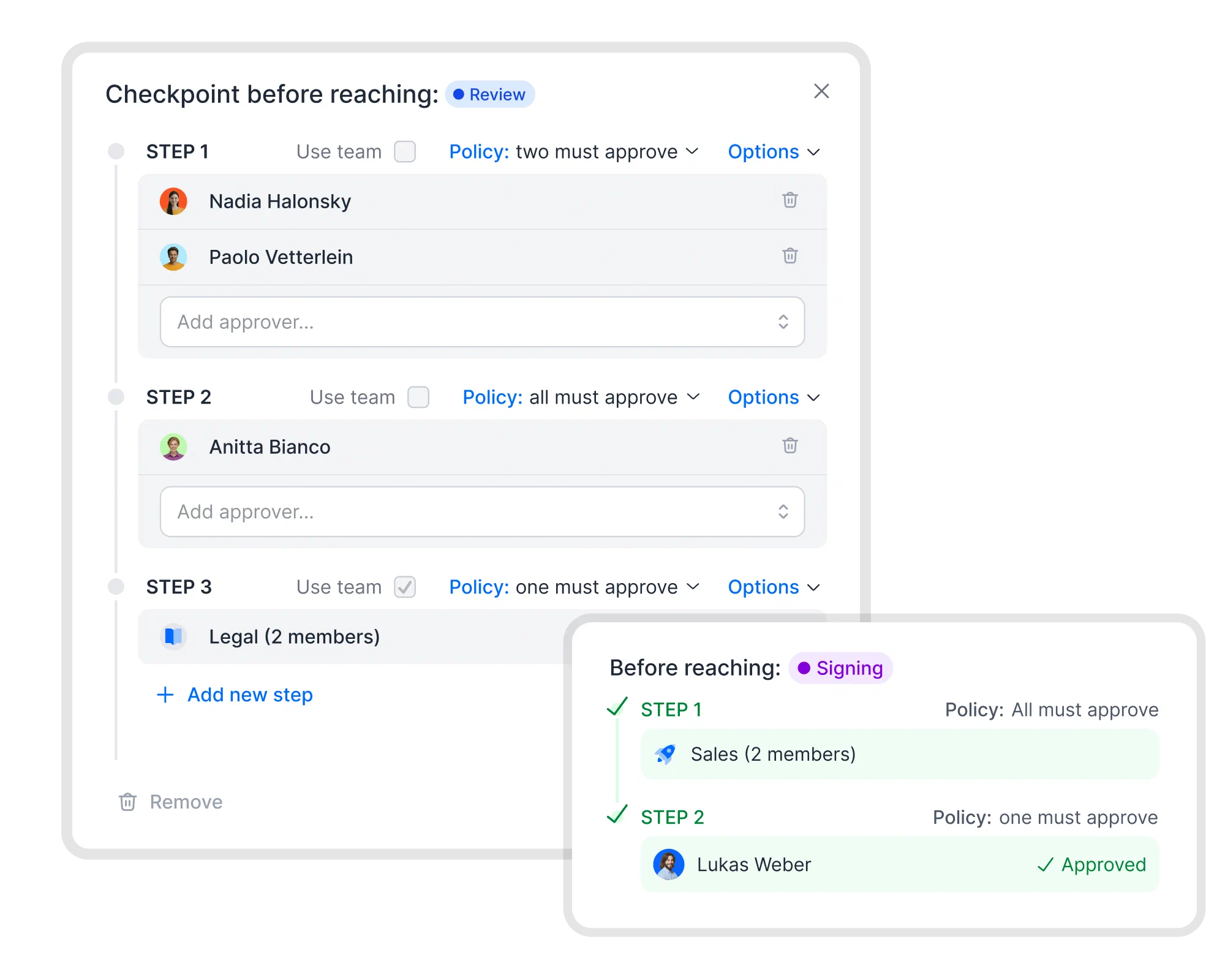
Record who accepted an exception and why. That context matters when someone later asks how the company ended up with the term.
Step 4: Store signed contracts with searchable key terms
Keep the signed agreement and amendments together in a contract repository, then record the terms people need to find and compare.
Capture the contract owner, value, renewal date, notice deadline, pricing conditions and accepted exceptions. Link each risk record to the relevant clause so someone can check the original wording.
Wolters Kluwer found that 33% of in-house legal teams still manage contracts on shared drives. Every extra tracker creates another place to maintain the same deadline.
fynk’s metadata saves key dates, values and owners as structured fields for filters, reports and reminders. Those terms become usable data for the team.
Step 5: Put owners and reminders on deadline risks
Assign a named person to every renewal decision, notice deadline and time-sensitive obligation.
Record the action deadline separately from the renewal date. Then work backward far enough to assess alternatives, obtain approval and send notice in the agreed way.
For an illustrative contract requiring notice 60 days before renewal, you might begin the internal review 90 days before renewal. The reminder starts the work; someone still needs to complete it.
fynk’s tasks and reminders link tasks to contracts with an owner and due date. Reminders before renewals, notice periods and key dates give that owner time to act.
I run the playbooks on the contract and immediately see how many red flags come up. That's great for Legal too, because they only need to review those specific sections.

Apply the same approach to delivery and reporting promises. Contract obligation management turns accepted commitments into work someone can deliver or verify.
Step 6: Review the portfolio and update your rules
Review upcoming deadlines, open exceptions and changes that could make an agreement riskier.
Begin with critical suppliers, significant customer commitments and contracts approaching a decision date. Check again when a supplier’s performance drops, your use of a service changes or an amendment adds new responsibilities.
In a fynk dashboard, the contract criticality widget shows how many contracts are rated low, medium, high or critical, so the review can start with the riskiest ones.
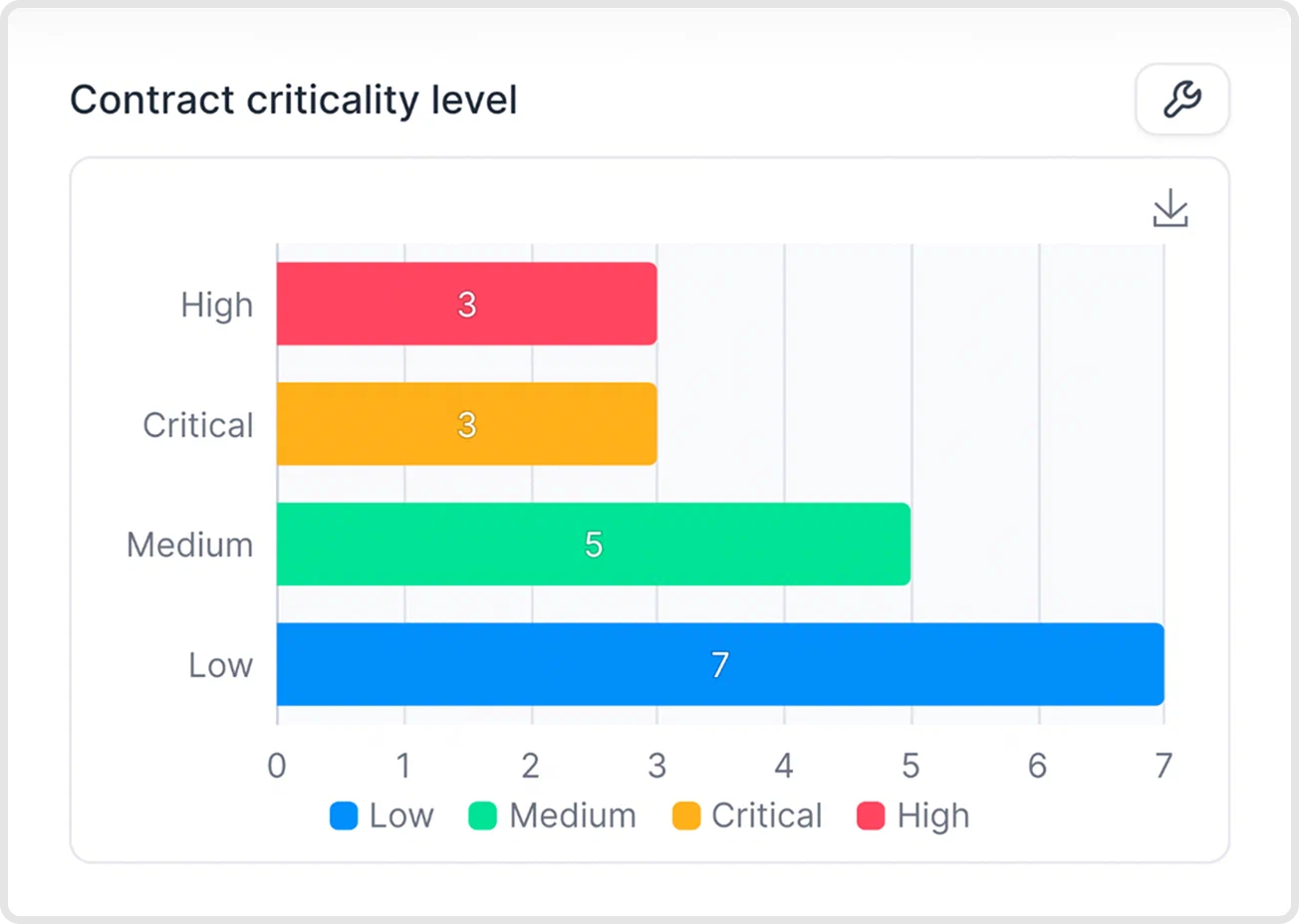
Contract monitoring after signing keeps those changes visible while there’s still time to respond.
When something goes wrong, trace the gap. Was the clause missed, the exception poorly understood or the task left unassigned? Update the playbook or handoff accordingly.
If the same renewal surprise keeps happening, another reminder email probably isn’t the whole fix.
Ask your contract anything.
What are common contract risk management mistakes?
Common contract risk management mistakes include using vague review rules, judging risk by contract value alone and leaving accepted risks without follow-up.
- Treating every flag as equally urgent. A typo and uncapped exposure need different responses. Prioritize consequences and assign the right reviewer.
- Assuming a small contract means small risk. An inexpensive service can still be critical to delivery or handle sensitive information.
- Stopping at signature. Accepted risks still need controls. Assign the renewal decision, performance check or reporting task before the contract disappears into storage.
- Recording “approved” without the reason. Save the exception, decision-maker and conditions. Otherwise, the next reviewer inherits a decision they can’t explain.
How can a small team start managing contract risk?
A small team can start managing contract risk with a shared checklist, a named contract owner and clear rules for when to involve a specialist.
Examples include uncapped liability, unexpected price increases, unclear data-handling terms, unrealistic service commitments and missed cancellation deadlines. A supplier's inability to deliver is also a contract risk, even when the agreement's wording looks acceptable.
Assign a contract owner to coordinate the process. Legal reviews legal exposure, finance reviews financial terms, and operations or procurement checks delivery and supplier risks. Sales confirms customer promises. In a small team, one person may cover several roles, but each action still needs a named owner.
Yes. AI can provide a first pass against your playbooks and rules, identifying terms that need attention. A person should check the output against the contract and the deal's context. Humans decide which changes to request and whether the remaining risk is acceptable.
Yes. A practical checklist covers liability, pricing, payment, data handling, service levels, renewal, termination and counterparty capacity. For each issue, record the clause, likelihood, impact, proposed action, owner and approval needed. Reassess the risk after changes are agreed.
For an initial assessment, fynk’s AI analysis extracts key terms and highlights risks in a contract. Use those findings as input for a person to check and decide what needs action.
Start with the next agreement on your desk. Identify what could hurt, rank the exposure and give each issue a next action. With fynk, your team can check terms against its rules, route approvals and connect key dates to owners and reminders. The next renewal invoice should confirm a decision you already made.
Searching for a contract management solution?
Find out how fynk can help you close deals faster and simplify your eSigning process – request a demo to see it in action.
Please keep in mind that none of the content on our blog should be considered legal advice. We understand the complexities and nuances of legal matters, and as much as we strive to ensure our information is accurate and useful, it cannot replace the personalized advice of a qualified legal professional.



Get a regular dose of insightful contract management content

Take control of your agreements. Move your business forward.
Run agreements the way they should run: fast, clear, and on your terms.
No setup headaches
Go live in days, not quarters
No lock-in
Full export anytime
No hidden fees
Signatures included, no envelope fee