
Contract obligation management: who owes what, by when

Rezvan Golestaneh
Published · 8 min read
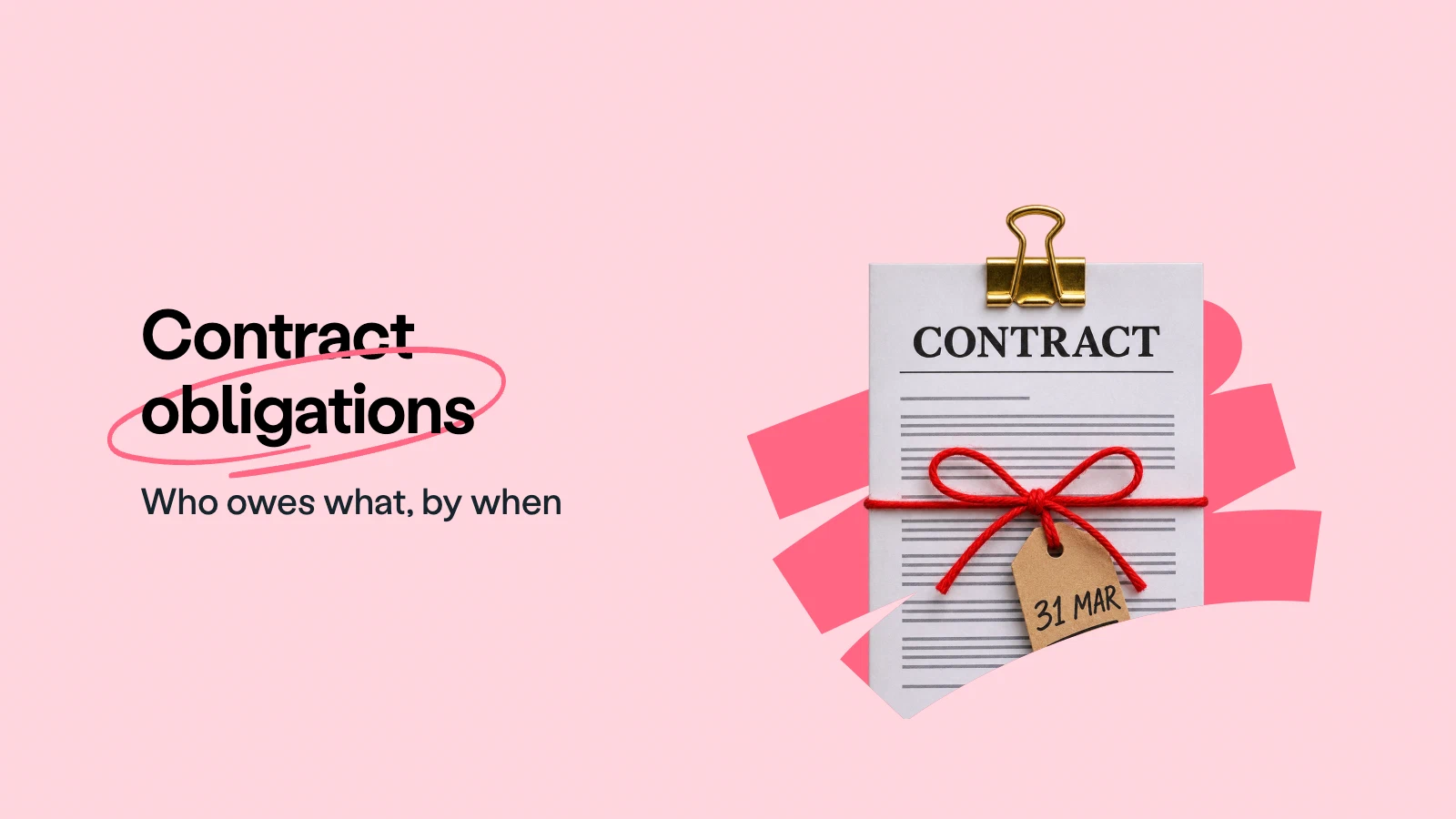
Contract obligation management helps teams track contractual duties, deadlines, owners, and proof of completion.
- Assign an owner to every obligation.
- Set reminders before action is due.
- Verify completion with evidence.
A customer asks for the quarterly report. Sales forwards the email to ops, then finance. The contract is attached. The report isn’t.
Contract obligation management turns those signed promises into assigned work, with deadlines and proof of completion. Each duty needs an owner and a next action before it becomes another forwarded email.
What is contract obligation management?
Contract obligation management turns the duties in a signed agreement into work that people can schedule, carry out, and verify.
An obligation might be a payment, a delivery, a report, or a promise to keep information confidential. Some have fixed dates. Others repeat or become due only when something happens.
Storing a contract preserves the wording. Obligation management puts that wording to work: someone knows what to do, when to do it, and what record will show it’s finished.
It also gives contract compliance something concrete to check. Obligation management organizes delivery of each promise; compliance checks whether actual behavior meets the agreed terms.
What types of contract obligations should you track?
Track obligations involving money, delivery, reporting, service levels, key dates, certificates, and information, including duties that depend on an event.
Start by sorting them into three practical groups:
- Obligations you owe: your company must deliver something, such as sending a customer’s quarterly usage report.
- Obligations owed to you: another party must deliver something, such as a supplier providing a current insurance certificate.
- Mutual or conditional obligations: both sides have responsibilities, or an event triggers a duty. For example, a requested scope change may require a written estimate before work begins.
Then compare the clauses with the work each team handles:
| Type | Example obligation | Usual internal owner |
|---|---|---|
| Payment | Pay an invoice after the agreed acceptance condition is met | Finance |
| Delivery | Supply replacement equipment by the agreed shipment date | Operations |
| Reporting | Send a quarterly usage report to a customer | Customer success or sales |
| Service levels | Provide support within the agreed response window | Support or operations |
| Renewal and notice | Send notice by the contractual deadline if the company decides to end the agreement | Procurement or the contract owner |
| Insurance and certificates | Provide a replacement insurance certificate before the current one expires | Procurement or operations |
| Confidentiality and data | Restrict access to confidential files and delete specified data when required by the contract | IT or security, with legal support |
| Conditional obligations | Provide a revised estimate when the customer requests extra work | Project lead or sales |
The owner column names the team that handles or checks the work inside your company. The contract still determines which party owes it.
Why do contract obligations get missed?
Contract obligations get missed when the promise stays in the document while responsibility, timing, and follow-up sit elsewhere.
Sales remembers the customer discussion. Finance sees the invoice. Procurement has the insurance certificate that expired in March. Everyone has part of the picture, and nobody has the open task.
Even finding the agreement can be a problem: Wolters Kluwer reports that 49% of in-house legal teams struggle with missing or unfindable contracts. And EY Law and BUJ found that 64.1% of German legal departments that track data still use Word or Excel files.
A tracker helps only if it reaches the people doing the work. A beautifully formatted overdue date is still overdue.
How do you track contract obligations?
Track contract obligations by extracting each promise, assigning a task, planning reminders, and checking completion against evidence.
Use the following sequence for each agreement. Work from the actual clauses, including schedules and agreed amendments, so the task reflects what was signed.
Step 1: Pull out the promises, including the awkward ones
Read for actions: pay, deliver, provide, notify, maintain, return, or delete. Capture the promised action and its source clause so you can check the wording later.
Include duties without a convenient calendar date. A requirement to maintain insurance throughout the agreement needs attention even if the contract doesn’t list every certificate expiration.
Contract metadata extraction captures facts about the agreement. Your obligation list takes the next step by spelling out the work those facts require.
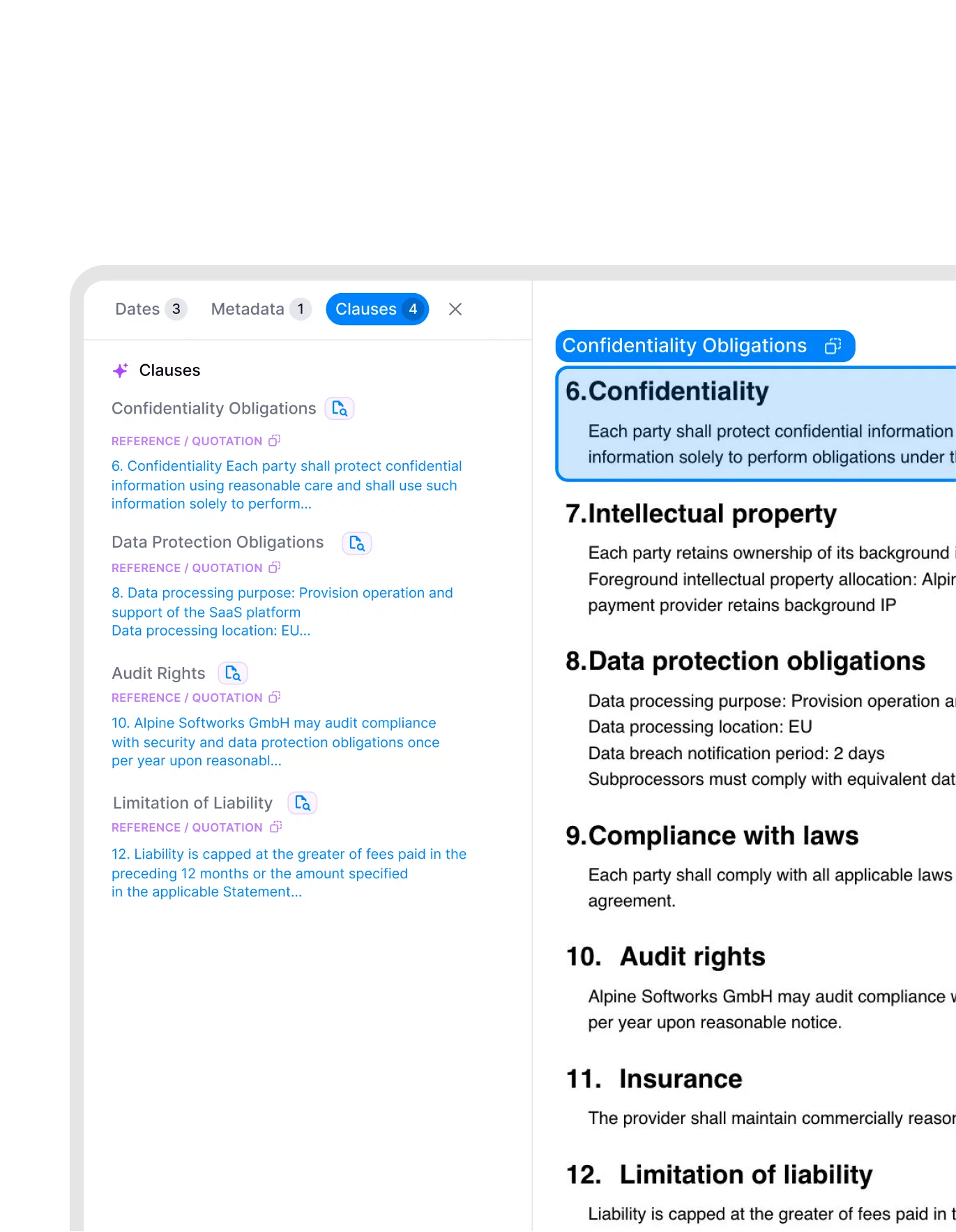
fynk’s AI import lets you upload existing contracts. Its AI analysis finds key information such as start dates, end dates, renewals, and notice periods, reducing the initial copying. Check those details against the wording and review the other obligations before assigning work.
Step 2: Replace clause language with a named task
Write each obligation as an action with a responsible person, a trigger, a due date, and a clear completion requirement. That makes the clause usable by someone who wasn’t in the negotiation.
Suppose an agreement requires a quarterly usage report by July 10. The task could read: “Jordan sends the April through June usage report to the customer’s reporting contact by July 10.” Record quarter-end as the trigger and the sent report as evidence.
Keep the party that owes the obligation separate from your internal owner. If a supplier owes you a certificate, your procurement contact owns requesting and checking it.
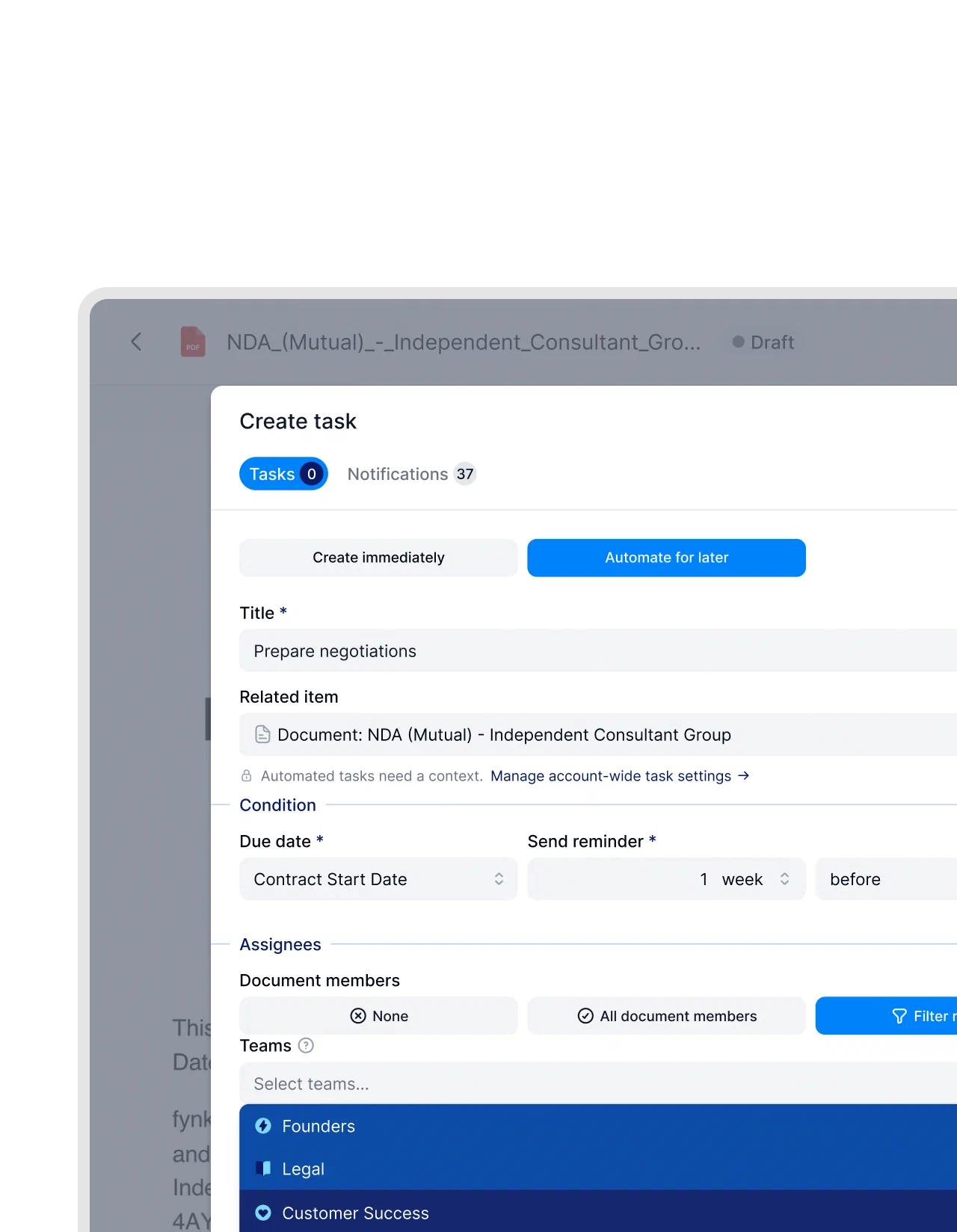
In fynk, tasks and reminders keep that work inside the contract. Assign a task to a person with a due date, so the responsibility stays connected to the agreement.
Step 3: Put the reminder before the scramble
Work backward from the deadline to decide when the owner needs to start. Allow time for preparation, approval, and any response from the other party.
For an insurance certificate, the owner may need to contact the supplier, wait for its broker, and check the replacement. An alert on the expiration date leaves all that work undone.
Do the same for commercial decisions. The price review window that closed last week needed an earlier task to assess costs and prepare a request. For a contract renewal or extension, record the decision date as well as any notice deadline.
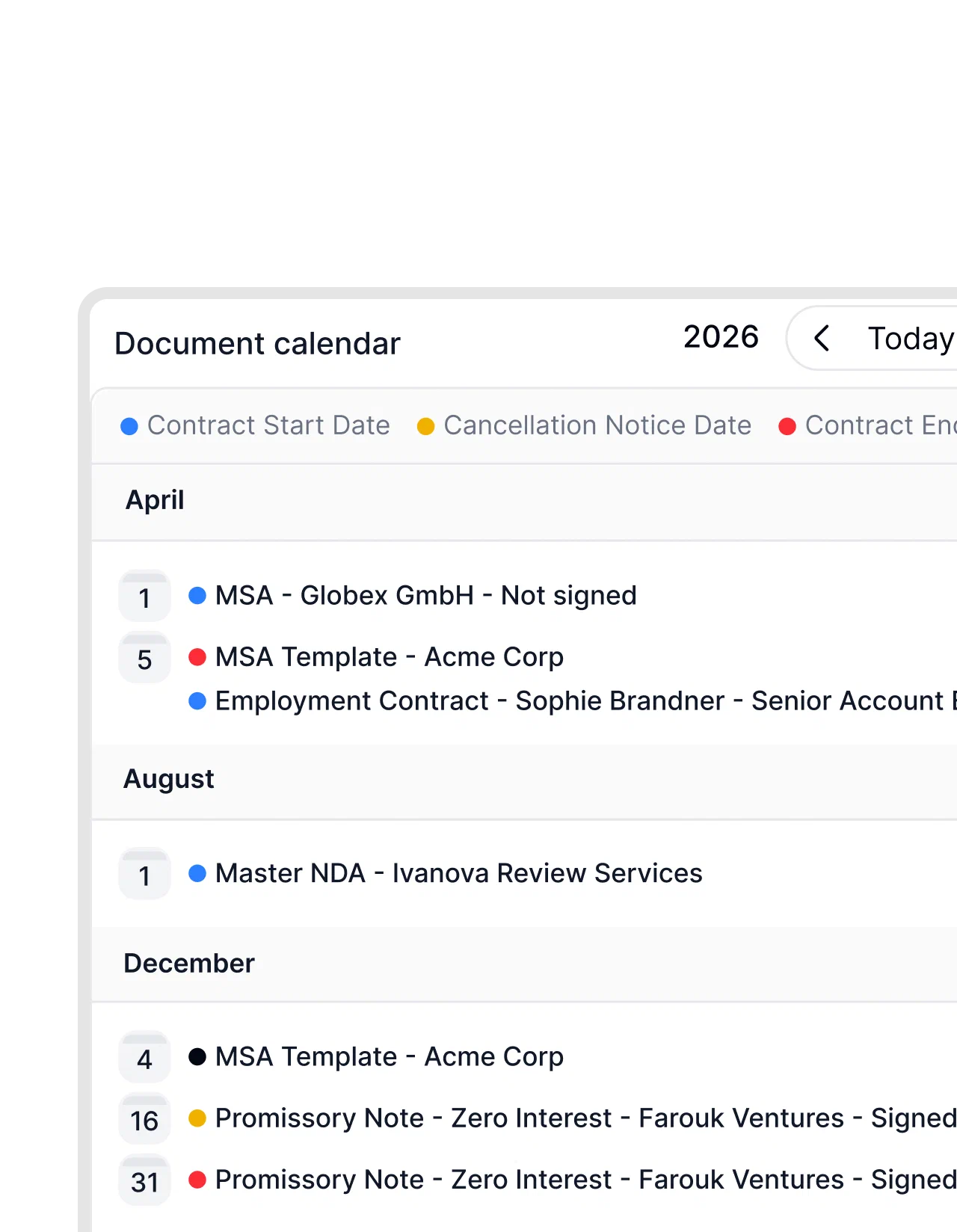
fynk’s contract calendar shows contract dates and tasks together, filterable by team, contract, or role. Its configurable notifications let you choose how you, your team, and the parties receive updates, per document if needed.
I simply uploaded all of our documents and within minutes we had a complete overview of all contract data, including reminders before deadlines expire.
Step 4: Plan the next occurrence and watch for triggers
Record the repeat schedule for recurring obligations, and name who will spot events that activate conditional duties. Otherwise, the first completed task can hide the next one.
For the quarterly report, keep each reporting period separately so completing one doesn’t make the annual obligation look finished. For certificate checks, record the next expiration when the replacement arrives.
For event-based duties, write the rule before the event happens. Suppose a contract requires a revised estimate after a scope request. Record who receives those requests, who prepares the estimate, and how the due date is calculated from the contractual trigger.
Some promises continue after the agreement ends. Keep a contractually required data deletion or confidentiality duty under review for as long as its wording requires.
Step 5: Ask what would prove this is done
Check the actual deliverable before marking an obligation complete. Record enough evidence for someone else to verify the result.
For a replacement insurance certificate, check that it covers the agreed party, period, and requirements. Record the document and when you checked it. A request email proves you asked; it doesn’t prove the certificate arrived.
If the evidence is missing or incomplete, keep the obligation open and assign the next action. When a deadline has already passed, record the gap, contact the responsible party, and agree on follow-up.
Step 6: Review the work that’s still waiting
Review open, upcoming, and overdue obligations on a regular schedule. Bring in the owners who can remove blockers, and review sooner when an important trigger occurs.
Give every open item a next action. A delayed certificate needs a follow-up owner. A blocked report needs someone to supply the missing usage data. Reassign work when people change roles so obligations don’t quietly leave with them.
Use fynk’s AI search to ask plain-language questions such as which contracts require a quarterly report. That helps you find the agreements behind the work and check whether your review has overlooked a reporting commitment.
fynk also tracks start, end, renewal, and notice dates, with automatic reminders before they’re due. Those dates give your obligation review a useful starting point.
Build a contract management dashboard around the dates your team needs to review.
Stop relying on memory for deadlines that
cost money.
What should a contract obligations tracker include?
A contract obligations tracker should record the promise, its source, who owes it, who manages it, when action is due, and how completion is verified.
Use one entry for each obligation, with these fields:
- 📌 Obligation: the specific action or continuing requirement.
- 📄 Clause: a reference to the contract and wording behind the task.
- 🏢 Party: the company or person that owes the obligation.
- 👤 Owner: the named person responsible for delivery or follow-up internally.
- 📅 Due date or trigger: a fixed date, or the event and rule used to calculate it.
- 🔁 Recurrence: the repeat schedule and next occurrence, if applicable.
- 📎 Evidence: the record that demonstrates completion.
- 🚦 Status: for example, not triggered, scheduled, in progress, overdue, or verified complete.
A spreadsheet stops working when owners need separate calendar alerts and someone must keep reconciling those alerts with the rows. fynk connects assigned tasks and reminders to the contract, with dates and tasks together in its calendar, so people can act without maintaining that separate reminder system.
Common questions about contract obligations
For practical tracking, group obligations into those you owe, those owed to you, and mutual or conditional obligations. Examples are a report you must send, an insurance certificate a supplier must provide, and a revised estimate required after a scope change.
Contract obligation management identifies promises, assigns responsibility, and tracks delivery. Contract compliance checks whether actions and results meet the agreement's terms. They overlap: the obligation record tells you what needs doing, and the compliance check tests whether it was done as agreed.
It should connect the agreement to assigned work, due dates, and reminders. Check how it handles the dates and tasks your team needs, and whether recurring or conditional duties will require manual follow-up. Test it with a real contract before choosing.
Turn the next quarterly report into assigned work before it becomes a customer follow-up. Try fynk to keep the contract, task, and deadline together.
Searching for a contract management solution?
Find out how fynk can help you close deals faster and simplify your eSigning process – request a demo to see it in action.
Please keep in mind that none of the content on our blog should be considered legal advice. We understand the complexities and nuances of legal matters, and as much as we strive to ensure our information is accurate and useful, it cannot replace the personalized advice of a qualified legal professional.




Get a regular dose of insightful contract management content

Take control of your agreements. Move your business forward.
Run agreements the way they should run: fast, clear, and on your terms.
No setup headaches
Go live in days, not quarters
No lock-in
Full export anytime
No hidden fees
Signatures included, no envelope fee