
Contract compliance: how to keep both sides on track

Rezvan Golestaneh
Published · 8 min read
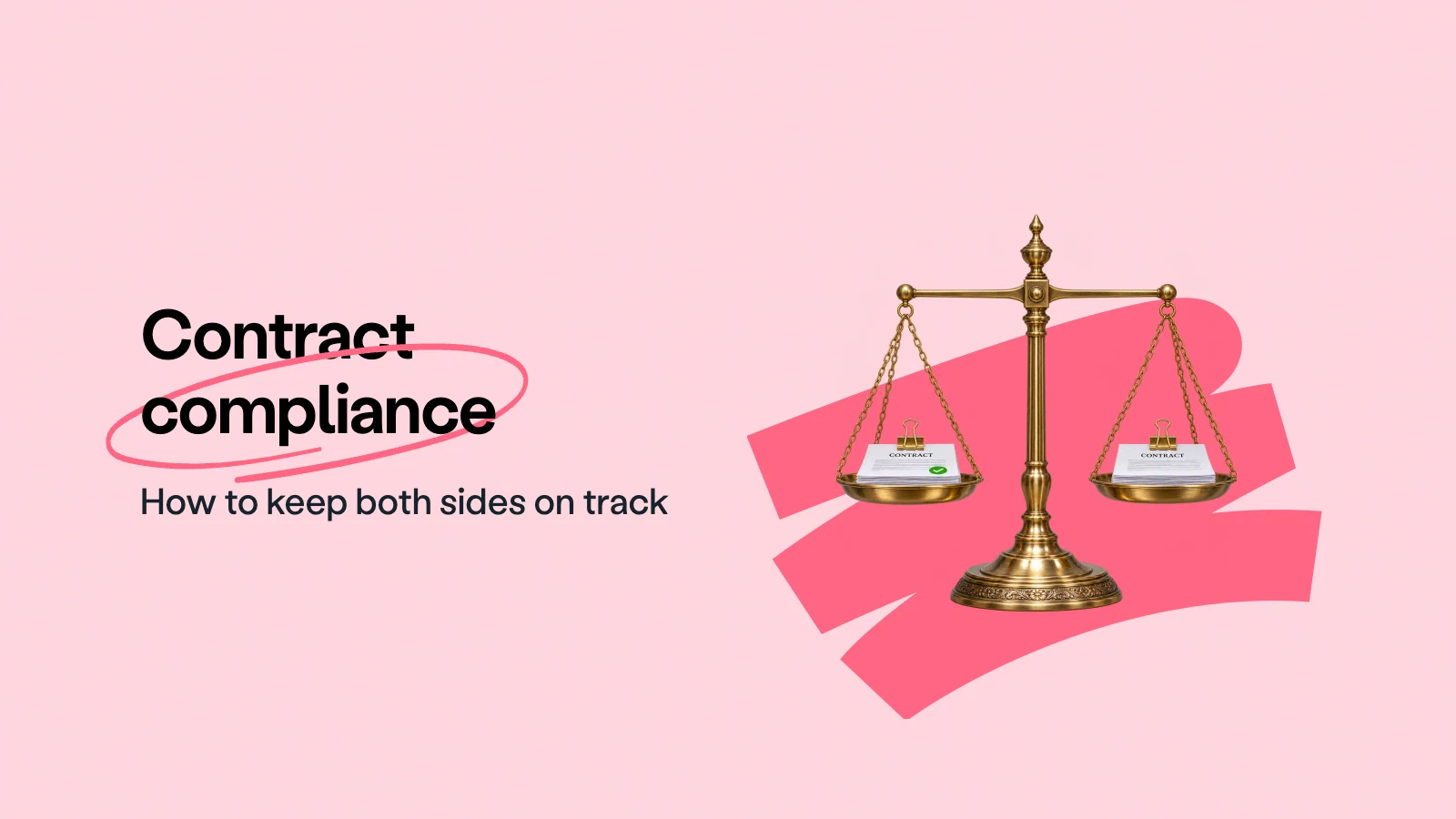
Contract compliance means checking that both parties meet a signed agreement’s terms, with clear owners, deadlines and evidence.
- Assign an owner and deadline to each obligation.
- Check invoices, service reports and delivery records.
- Track overdue work, missing evidence and follow-up.
Contract compliance means checking that both parties keep the promises in a signed agreement. A supplier misses a service target, but nobody claims the credit. Finance pays a higher renewal invoice without checking the agreed price. The terms are there. Someone needs to turn them into assigned checks, evidence and follow-up.
What is contract compliance?
Contract compliance is the ongoing work of checking that agreed terms match what both parties actually do.
It reaches beyond paying invoices on time. The terms worth checking include:
- Pricing and payment: agreed rates, discounts, billing conditions and payment dates.
- Service levels: performance targets, reporting duties and any process for claiming credits.
- Delivery: milestones, quantities, quality standards and acceptance conditions.
- Renewal and notice: when the agreement continues or ends, and how and when to give notice.
- Data and confidentiality: permitted uses, access restrictions and agreed handling or deletion requirements.
- Regulatory clauses: commitments written into the agreement, such as providing specified compliance evidence.
For example, suppose your software supplier misses the uptime target in its service level agreement (SLA). Checking compliance means comparing the service report with the target, confirming whether a credit is available and submitting any claim the contract requires. Then someone checks that the credit reaches the invoice. Spotting the outage is only the beginning.
Why do signed contracts drift out of compliance?
Signed contracts drift out of compliance when their terms never become part of someone’s everyday work.
The agreement gets filed. Its terms sit in a PDF nobody can search across. Sales hands over the customer, but the promised reporting schedule stays behind. A renewal date lives in a former colleague’s calendar. Someone agrees to a delivery change by email, and the team keeps working from the old schedule.
Scattered information makes these gaps harder to spot. In PwC’s Global Compliance Survey, 63% of executives said complex, scattered data across their organization made compliance more difficult.
The financial effects can accumulate too. WorldCC and Deloitte Legal estimate average contract value erosion at 8.6%. Missed credits and unchecked charges can contribute to contract value leakage, although that broader estimate covers more than compliance failures.
Nobody needs to be careless for this to happen. A clause without an owner has nowhere to go after signing.
How do you manage contract compliance?
Manage contract compliance by turning signed terms into assigned checks, reviewing the evidence and acting when performance falls short.
Start with agreements where a missed promise would hurt: a critical supplier, a major customer or a renewal approaching its notice deadline. Build a repeatable process before expanding it.
Step 1: Gather the signed agreement and its amendments
Put the signed contract and every agreed amendment in one shared location so everyone checks the same terms.
Include schedules and service agreements that contain obligations. A neat main agreement won’t help if the pricing schedule is still attached to somebody’s email. Confirm which documents are current before you start recording dates or assigning work.
With fynk’s AI import, you can upload existing signed contracts and extract their key data. That reduces the copying needed to turn a folder of agreements into a working contract record. Check the extracted details against the signed wording.
Step 2: Record the terms you’ll actually check
Capture important terms as structured data so people can find and compare them without rereading the agreement.
Record the parties, contract value, payment terms, renewal date, notice period and responsible owner. For each obligation, note who owes it, what counts as completion, when it’s due and where the supporting clause sits.
For example, record both the renewal date and the last date for giving notice. Those dates serve different purposes. Use a contract management checklist to keep the handoff consistent across agreements.
fynk’s metadata saves key dates, values and owners as structured fields for filters, reports and reminders. The renewal review can start from recorded terms instead of another PDF hunt.
Step 3: Give every obligation an owner and a due date
Assign a named person to deliver or verify each obligation, with a deadline and a clear definition of done.
For obligations owed by a supplier, your internal owner checks performance and follows up. For your own promises, the owner makes sure the work happens. “Operations” is a department. It still needs a person.
Suppose a customer contract requires a monthly service report. Name who prepares it, when it must be sent and what evidence confirms delivery. For a supplier SLA, name who checks the report and submits any credit claim before the contractual cutoff.
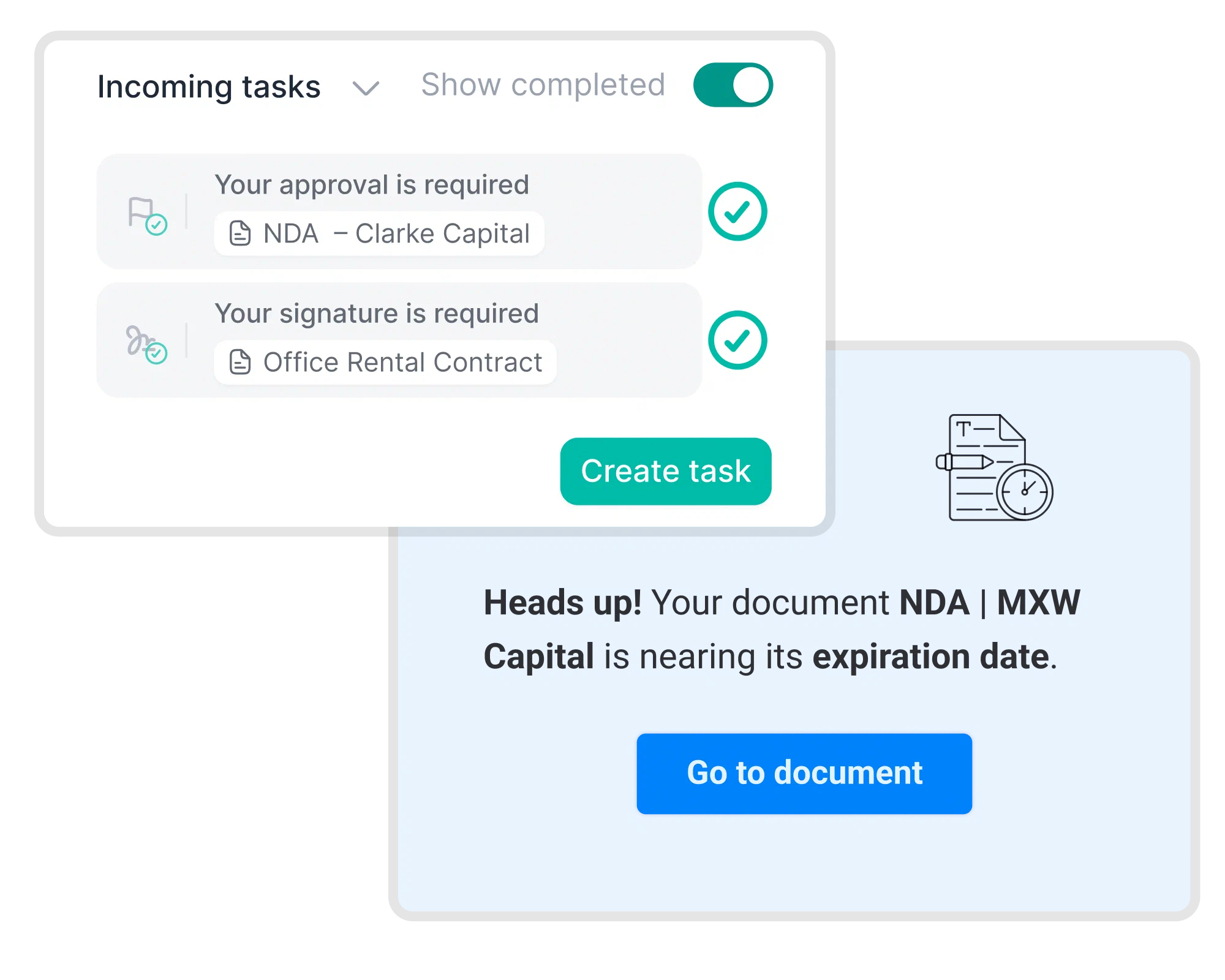
In fynk, tasks and reminders keep work linked to the contract, with tasks assigned to a person and given a due date. Reminders before renewals, expirations and other key dates give the owner time to act.
With fynk, we maintain an overview of our contracts, deadlines, obligations, and risks. We also use it to create and sign standard contracts efficiently.
Step 4: Check new commitments against your rules
Check new contracts and amendments against your company’s rules before signing so you don’t inherit promises your team can’t keep.
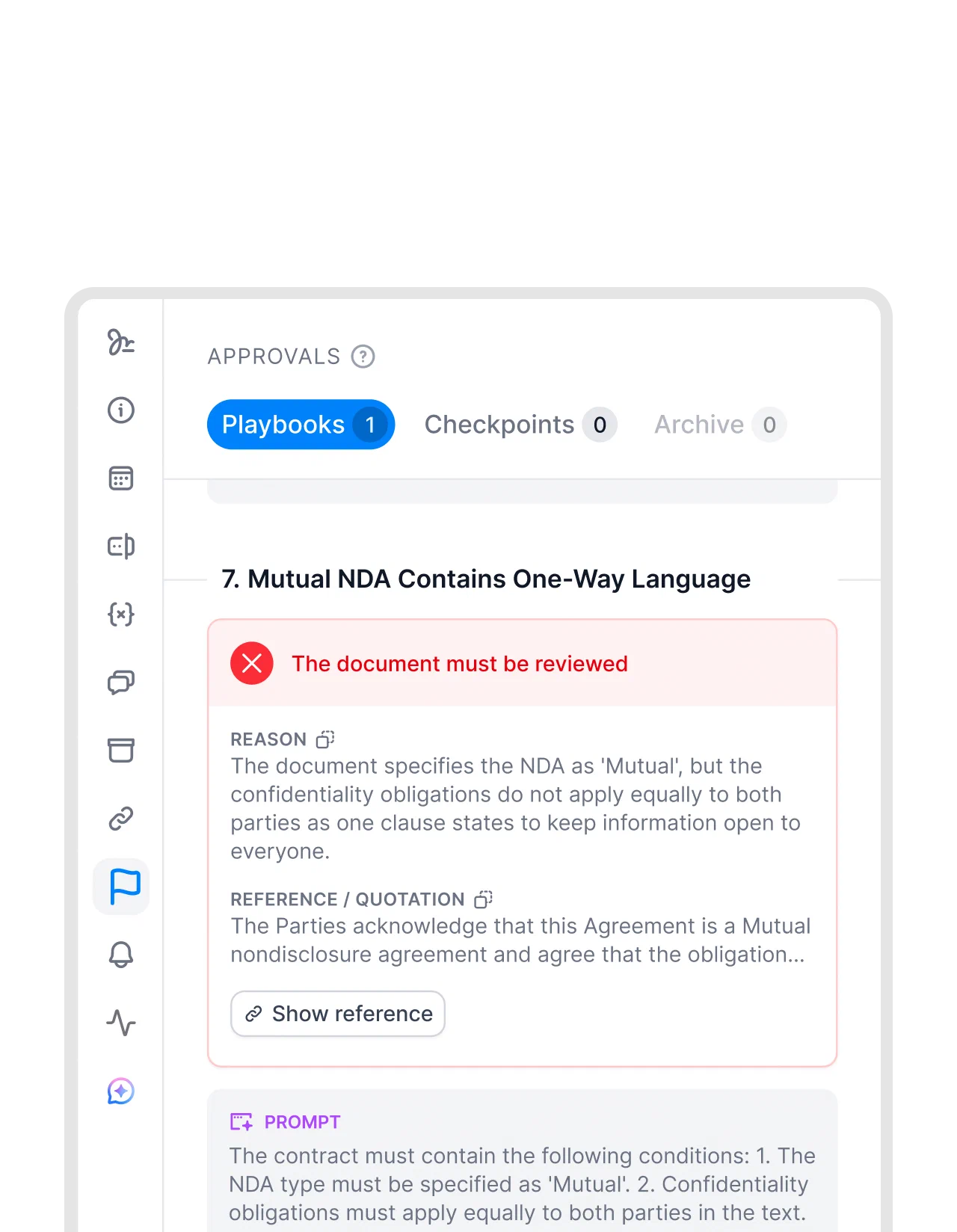
A contract playbook records acceptable terms, fallback positions and issues that need review. Include operational questions: can your team meet the reporting schedule? Does the proposed data clause match how the service actually handles customer information?
With fynk’s AI review, contracts are checked against your own playbooks and rules before legal review. It flags wording that doesn’t fit, giving reviewers specific issues to address.
After signing, assign checks for the obligations you accepted. A clause passing review doesn’t tell you whether anyone is following it.
Step 5: Review performance and report on exceptions
Review due obligations on a fixed schedule and report the gaps that need a decision.
A weekly check of upcoming work and a monthly review with finance and operations can be a practical starting rhythm. Adjust it to the contract’s deadlines and the consequences of missing them. Check again when prices, services or agreed terms change.
Contract compliance reporting should show what’s due, what’s overdue, what’s verified and what still lacks evidence. Include the owner and next action for each exception. “Not checked” needs its own status. It isn’t the same as “compliant.”
Compare invoices with agreed rates, service reports with SLA targets and delivery records with milestones. Check a data deletion promise against confirmation from IT before marking it complete. If a renewal invoice rises, check whether the agreement permits the increase.
When you find a mismatch, record it, contact the other side and assign follow-up through to closure.
fynk’s dashboards provide a portfolio overview by stage, type and team to organize those reviews. Assess performance using the underlying records. Recurring gaps can also warrant a contract management audit of the process behind them.
Build your contract management dashboard around the dates, values and owners you’ve recorded.
Step 6: Keep evidence of actions and changes
Keep a dated record of checks, decisions and agreed changes so another person can follow what happened.
Save the service report behind a credit claim, the response and the invoice showing the adjustment. If delivery dates change, retain the agreed amendment and update the tracking record. Otherwise, next month’s review starts with the same unanswered question.
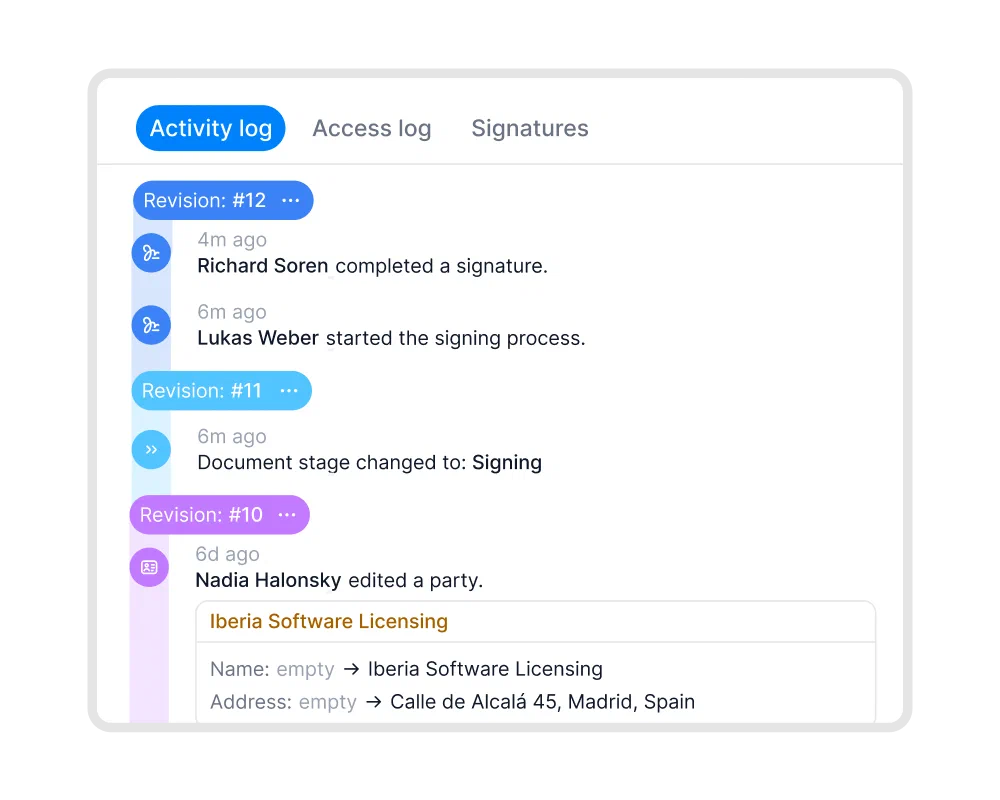
fynk’s audit trail automatically logs every view, edit, approval and signature, and the log cannot be changed afterward. That gives you a reliable history of contract activity alongside the performance evidence you collect.
The contract calendar brings every contract date and task into one view, so the next review doesn’t depend on whose calendar survived the handoff.
Don’t let contract deadlines
surprise you!
Can you track contract compliance in a spreadsheet?
Yes, a spreadsheet can support contract compliance tracking when the workload is manageable and someone keeps it current.
Use a row for each obligation, with its contract reference, owner, due date, status, evidence and next action. A single row per contract can hide very different duties behind one green cell.
Spreadsheet vs fynk
| What you need | Spreadsheet | fynk |
|---|---|---|
| Capture existing terms | Enter data and check it manually | AI import extracts key data from uploaded contracts |
| Compare dates, values and owners | Maintain columns and filters | Structured metadata supports filters and reports |
| Assign work and remember deadlines | Record owners and arrange separate alerts | Contract-linked tasks have assignees, due dates and reminders |
| Review the portfolio | Build and maintain summary views | Dashboards show contracts by stage, type and team |
| Trace contract activity | Maintain a separate activity record | Views, edits, approvals and signatures are logged automatically |
Keep the spreadsheet if it works. When keeping it accurate becomes a job of its own, fynk brings the contract data, assigned work and activity history together. Your team can spend the review checking performance instead of reconciling trackers.
Contract compliance FAQ
Contract compliance means checking that both parties follow a signed agreement's terms. Contractor compliance concerns vetting and monitoring the people or businesses you hire, including their qualifications, insurance and work requirements. The topics can overlap when those requirements appear in a contract.
Assign a contract owner to coordinate checks, then give each obligation a named owner. Finance checks pricing and payments, operations checks delivery and service levels, sales hands over customer commitments, and legal interprets terms and reviews exceptions. In a small team, one person may cover several roles.
A useful way to group contract compliance is: your own obligations, the other side's obligations, and legal or regulatory rules written into the contract. Track all three so you check what you must deliver as well as what you're entitled to receive.
Match checks to the obligations and their risk. Check invoices when they arrive, review service levels when reports are due, and assess renewals before the notice deadline. Review overdue work regularly and recheck obligations whenever an agreed change affects them.
Start with a signed contract whose next deadline is approaching. In fynk, import its terms, assign the next check and set a reminder. You’ll have a person responsible for the promise and a date to follow up.
Searching for a contract management solution?
Find out how fynk can help you close deals faster and simplify your eSigning process – request a demo to see it in action.
Please keep in mind that none of the content on our blog should be considered legal advice. We understand the complexities and nuances of legal matters, and as much as we strive to ensure our information is accurate and useful, it cannot replace the personalized advice of a qualified legal professional.


Get a regular dose of insightful contract management content


Take control of your agreements. Move your business forward.
Run agreements the way they should run: fast, clear, and on your terms.
No setup headaches
Go live in days, not quarters
No lock-in
Full export anytime
No hidden fees
Signatures included, no envelope fee