
Contract value leakage: where contracts lose money, stage by stage

Rezvan Golestaneh
Published · 10 min read
Contract value leakage starts before signing and keeps going after the PDF is filed.
- Approved templates reduce repeat drafting.
- Unsigned agreements leave revenue waiting.
- Missing contracts hide terms teams need.
- Auto-renewals and SaaS price changes make notice deadlines matter.
- Untracked obligations and late payments add costs.
Contract value leakage is the gap between what a contract should deliver and what it actually delivers. It includes extra drafting costs, missed savings, unfulfilled promises and payment chasing.
It happens at every stage, mostly where nobody looks. Drafts wait. Subscriptions renew unnoticed. Payment deadlines pass. Finance inherits the loose ends.
What is contract value leakage?
Contract value leakage means losing expected value through the way an agreement is created, completed or managed.
Average value erosion is estimated at 8.6% of contract value. (WorldCC and Deloitte Legal, 2023) The research covered 1,236 organizations using mixed research methods. The best performers lose a little over 3%, while the worst lose more than 20% of contract value. (WorldCC and Deloitte Legal)
Historical IACCM research estimated erosion at 9.2% of contract value. (WorldCC and Deloitte Legal, reporting the 2014 finding) This older figure measures contract value, not annual company revenue. Contracting costs plus value loss represent 2-4% of revenue in the average consumer goods company, rising to 15%+ in sectors involving high-value capital projects. (WorldCC and Deloitte Legal)
The average hides a wide spread. Contract value erosion and contracting costs as a share of revenue are different measures. The broader contract management statistics show related process problems; here, follow the money through each stage.
How does drafting from scratch cause contract leakage?
Drafting from scratch creates avoidable work when teams repeatedly rebuild terms they could approve and reuse.
Developing a custom contract with third-party advisors costs about US$200,000, according to a WorldCC chart. (WorldCC and Deloitte Legal) This approximate chart reading covers terms, reviews, approvals and negotiation, not a routine agreement’s price. Leaders with advanced template-based contract creation report outperforming financial goals 55% more often than organizations drafting agreements from scratch. (Deloitte and Docusign, 2025) This vendor study surveyed 1,400+ senior business leaders across 14 countries. Docusign sells agreement software.
Complex deals need tailored work. Routine agreements need a reliable starting point. The template finding is self-reported correlation, not proof that templates caused better finances. Start with approved terms and send exceptions for review instead of paying to reinvent the ordinary.
How much money gets stuck waiting for a signature?
Unsigned contracts can leave expected revenue pending and allow deals to stall without follow-up.
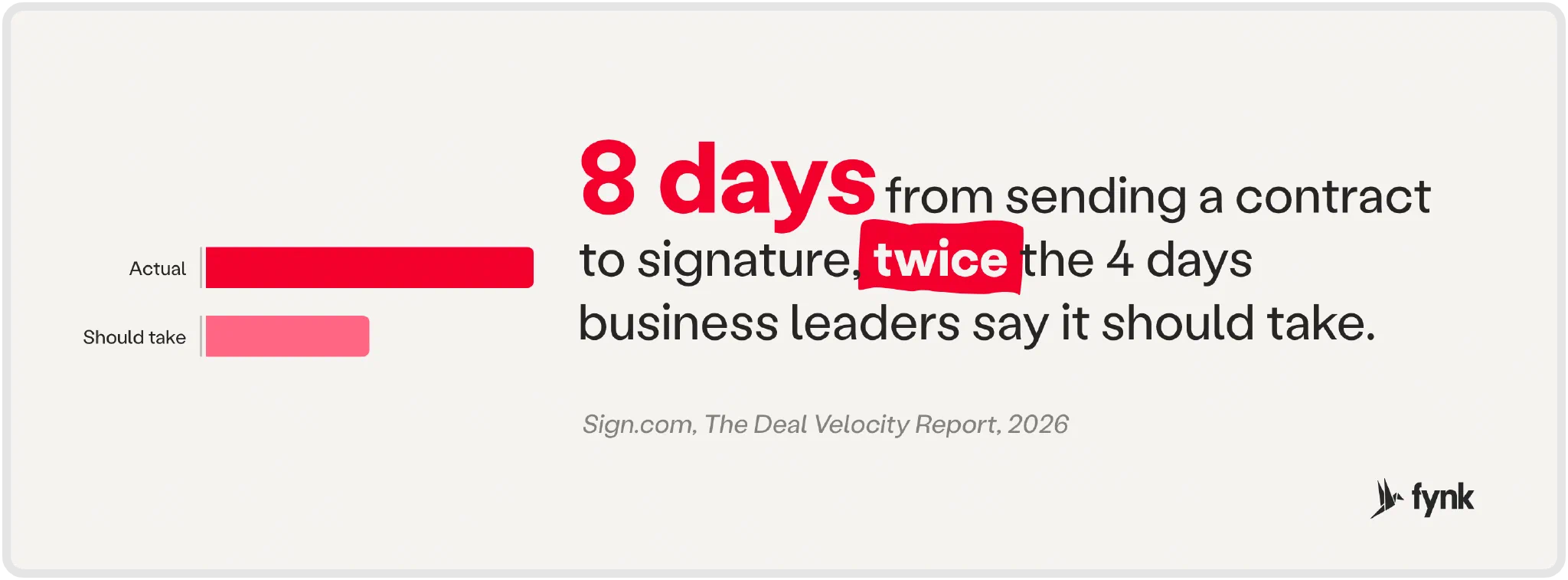
Contracts take an average of 8 days to sign after sending, compared with the 4 days leaders consider appropriate. (Sign.com) The e-signature vendor surveyed 502 US business leaders in 2026. The average organization in that survey reported $88,000 in revenue sitting in pending or unsigned contracts at any given time. (Sign.com)
Company sizes weren’t published. 51% of surveyed leaders reported stalled or lost deals because nobody followed up on a contract. (Sign.com) 33% of surveyed leaders said slow contract turnaround had cost their organization significant business. (Sign.com)
Pending revenue isn’t automatically lost revenue. These self-reported results aren’t a loss forecast for your business. Find the person holding the next action. Then give that action an owner, a deadline and a reminder.
How do missing contracts lead to value leakage?
Missing contracts make it harder to verify entitlements, deadlines and agreed terms when a decision is due.
49% of legal teams identified misplaced or missing contracts among their leading challenges. (Wolters Kluwer)
The Legisway contract software vendor surveyed 700+ in-house legal professionals in Europe and the US in 2025. 62% of companies struggled to locate and access previously approved contracts. (Deloitte and Docusign, 2024) This vendor study surveyed 1,000+ business leaders across 10 countries.
Neither study assigns a monetary loss to missing files. The practical risk is making decisions without the agreed wording. Find the signed terms before accepting a charge or dismissing a complaint. Make the current agreement, amendments and key dates searchable through a shared contract repository.
Why do auto-renewals cause contract value leakage?
Auto-renewals create leakage when spending continues without a timely decision about price, usage and need.
The average SaaS auto-renewal rate across categories was 69.7% of contracts. (Vertice, auto-renewal benchmark) Vertice, a SaaS buying platform, used contracts within over $75bn of global software spend processed on its platform in 2026. Auto-renewal clauses appeared in 95.5% of CRM contracts and 86.0% of sales-tool contracts in that benchmark. (Vertice, auto-renewal benchmark)
Annual SaaS price inflation reached 16.4% a year in the vendor’s index. (Vertice, SaaS Inflation Index H2 2026) It draws on 32,000+ vendors, 250,000+ negotiated contracts and 2 million+ price points. The index methodology isn’t published.
58% of software vendors raised prices during the preceding six months in the index. (Vertice, SaaS Inflation Index) Shrinkflation appeared in 27% of SaaS contracts in the vendor’s 2026 data available at publication: less value for the same or a higher price. (Vertice, SaaS Inflation Index) Switching from per-seat to usage-based pricing brought an average 22.6% cost increase in total contract cost. (Vertice, SaaS Inflation Index)
Vendors charging per user represented 32.4% of vendors in the index; Vertice says they rarely offer meaningful discounts outside renewal time without restarting the term. (Vertice, SaaS Inflation Index) Unwanted contract expiry or renewal was a leading challenge for 30% of legal teams surveyed. (Wolters Kluwer)
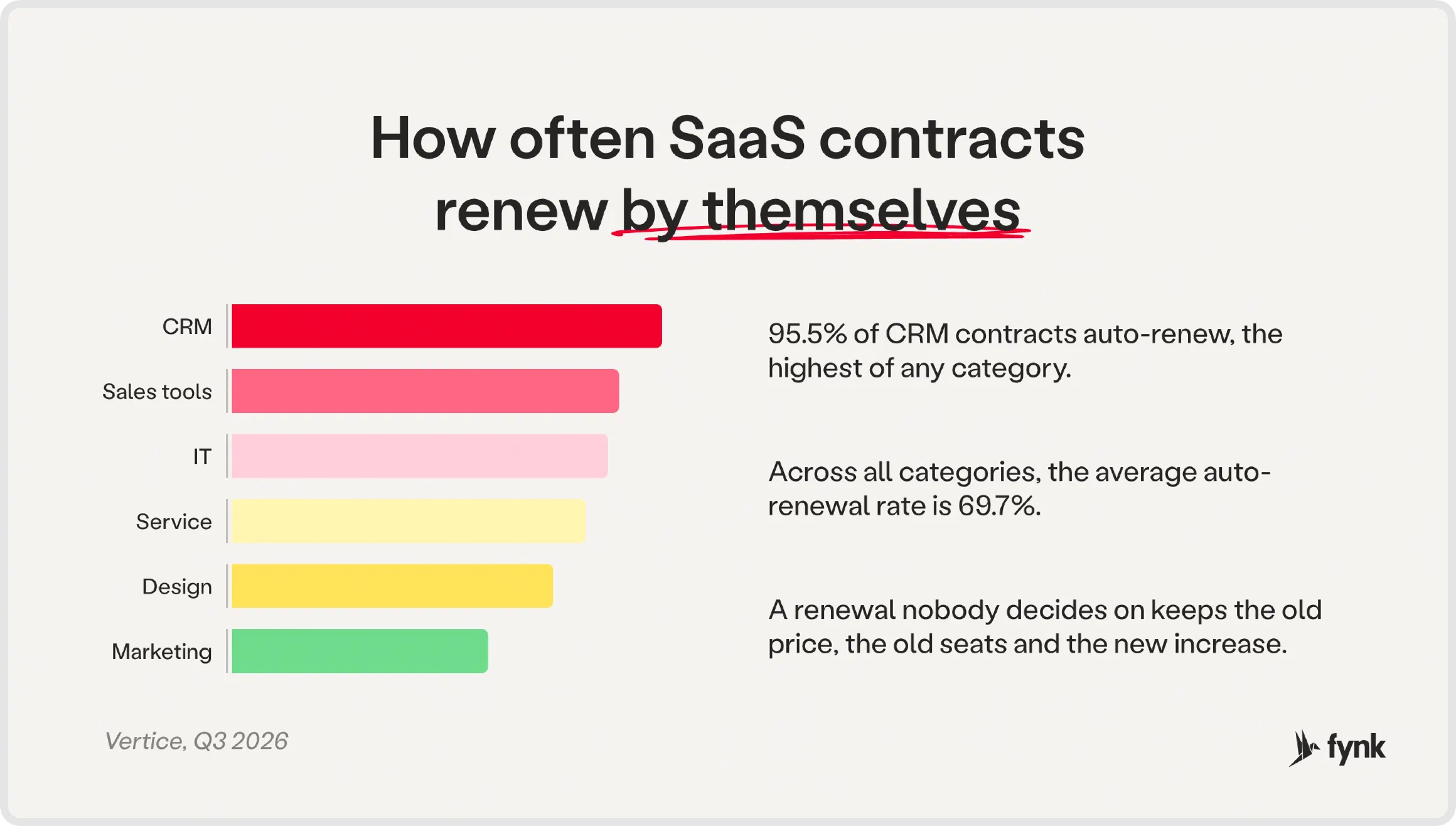
These platform findings describe Vertice’s data, not every software buyer. Don’t add the inflation and pricing-model figures together: they measure different things. The warning is that a renewal can change both the price and what that price buys.
Review the next term against the current agreement. Check included features, usage limits, discounts and the charging model. Ask the team using the software whether it still needs the purchase.
The decision needs to happen before the notice deadline. By the renewal date, the opportunity to cancel may already have passed. Assign an owner to each contract renewal, record its notice period and schedule the review while there’s still time to negotiate or leave.
Don’t let contract deadlines
surprise you!
What happens when nobody tracks contractual obligations?
Untracked obligations leave teams without clear responsibility for delivering promises or claiming what they’re owed.
Failure to understand or comply with contractual obligations ranked as the second-leading dispute cause in North American construction. (Arcadis, 2025) The construction consultancy’s survey sample size wasn’t disclosed. Errors or omissions in contract documents ranked as the leading dispute cause for that region’s 2024 disputes. (Arcadis)
The average dispute value reached $60.1 million in 2024, up from $43.0 million in 2023. (Arcadis) Large claims skew the average. Contract and specification reviews ranked as the most effective prevention technique for avoiding construction disputes. (Arcadis)
Construction’s dispute values aren’t a forecast for a smaller business. Connect agreed wording to actual work. Review requirements before signing, then turn deliverables, acceptance checks and reporting duties into assigned tasks with due dates and evidence of completion.
How do late payments erode contract value?
Late payments delay access to agreed money and consume staff time collecting it. These are invoice and payment studies, showing where a contract’s payment terms meet reality.
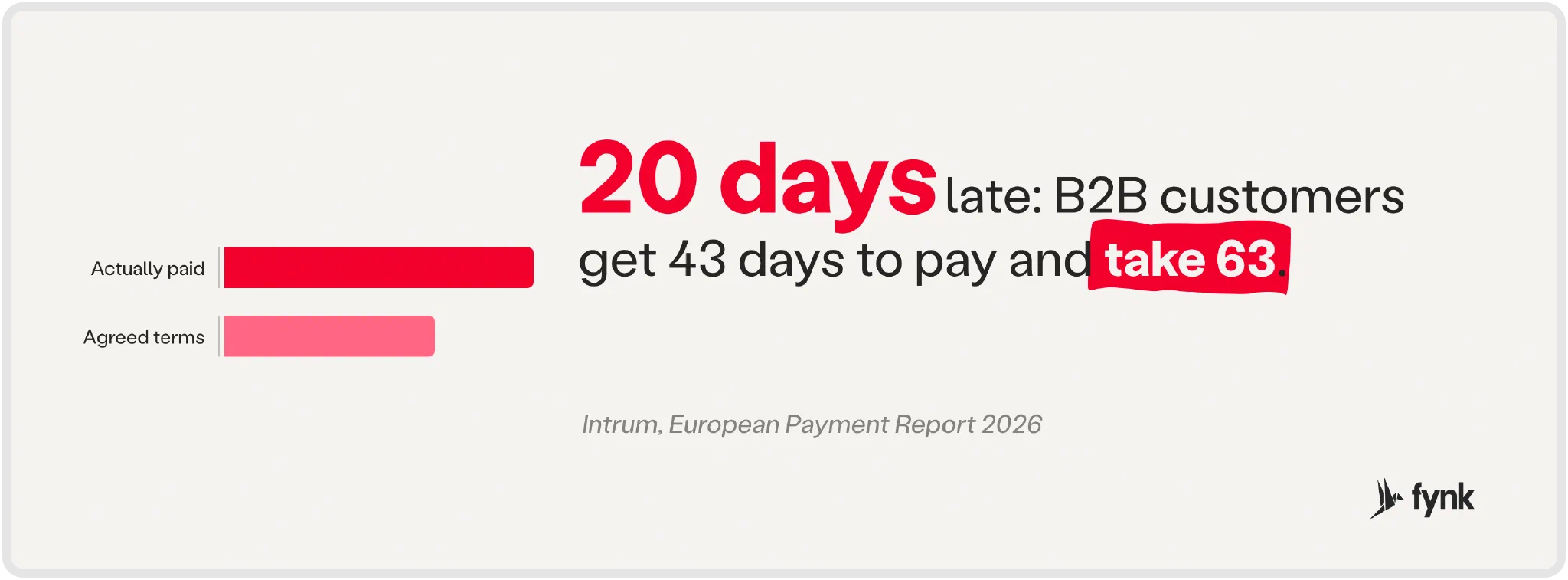
European B2B customers received 43 days to pay but took 63 days, leaving a 20-day payment gap. (Intrum) The credit management company’s 2026 survey covered 8,385 finance experts and executives across 20 European countries. Respondents said 12.13% of revenue was paid late. (Intrum)
That measures delayed revenue, not revenue permanently lost. 24% of invoices were paid late or not at all, split between 19% late and 5% unpaid. (EOS Group and Kantar) EOS, a receivables buyer and collector, commissioned the survey of 2,200 financial decision-makers across 11 European countries. The 2025 fieldwork combined B2B and B2C.
Customer-side internal approval delays were a leading reason for late invoices for 33% of German suppliers. (Atradius) The credit insurer surveyed 210 German businesses selling on B2B credit in 2026; 83% were micro firms. Businesses spent an average of 9.12 hours a week chasing late payments. (Intrum)
Revenue shares and invoice shares aren’t interchangeable, and neither should be added to the overall erosion estimate. The immediate task is operational: give finance the agreed terms, billing requirements and acceptance evidence, then assign follow-up when payment is overdue.
What does contract value leakage cost a company like yours?
Payment chasing alone can represent about EUR 21,360 a year in staff time per company in an illustration combining European survey hours with German labor costs.
Start with the average 9.12 hours spent chasing payments each week in Intrum’s European Payment Report.
Annual time: 9.12 hours a week = 474.24 hours a year (Intrum’s annual figure).
Hourly cost: EUR 45.04, Germany’s average employer labor cost per hour worked in 2025, according to Eurostat.
Annual staff-time cost: 474.24 hours × EUR 45.04 = about EUR 21,360 per company, before counting the late money itself.
This combines two sources. It isn’t a study result or promised savings. Swap in your own weekly hours and employer cost per hour to estimate the time your team spends collecting payment.
How do you stop contract value leakage?
Stop contract value leakage by giving each stage a repeatable process, a responsible person and a visible next action.
Step 1: Replace repeat drafting with approved templates
Choose a recurring agreement and agree its wording, fields and review rules. fynk’s document templates carry content, metadata, approvals and signing settings into new documents. Create documents from published templates through the Documents tab. A Word starting file holds wording; fynk also carries the process.
Step 2: Connect approval to signature
Define who reviews each contract type in approval workflows. fynk routes documents, notifies reviewers and requires approvals before signing. Then add signers, choose the signature type and click “Start signing” for e-signatures. fynk tracks signatures and reminds outstanding signers, giving the waiting agreement a follow-up process.
Step 3: Make signed terms findable
Collect signed contracts and amendments in fynk’s document hub, with metadata, version history and access controls. In the Document List search bar, ask AI search for contracts expiring this quarter. It applies filters to your document list. Check the underlying terms before acting.
Step 4: Review renewals before notice is due
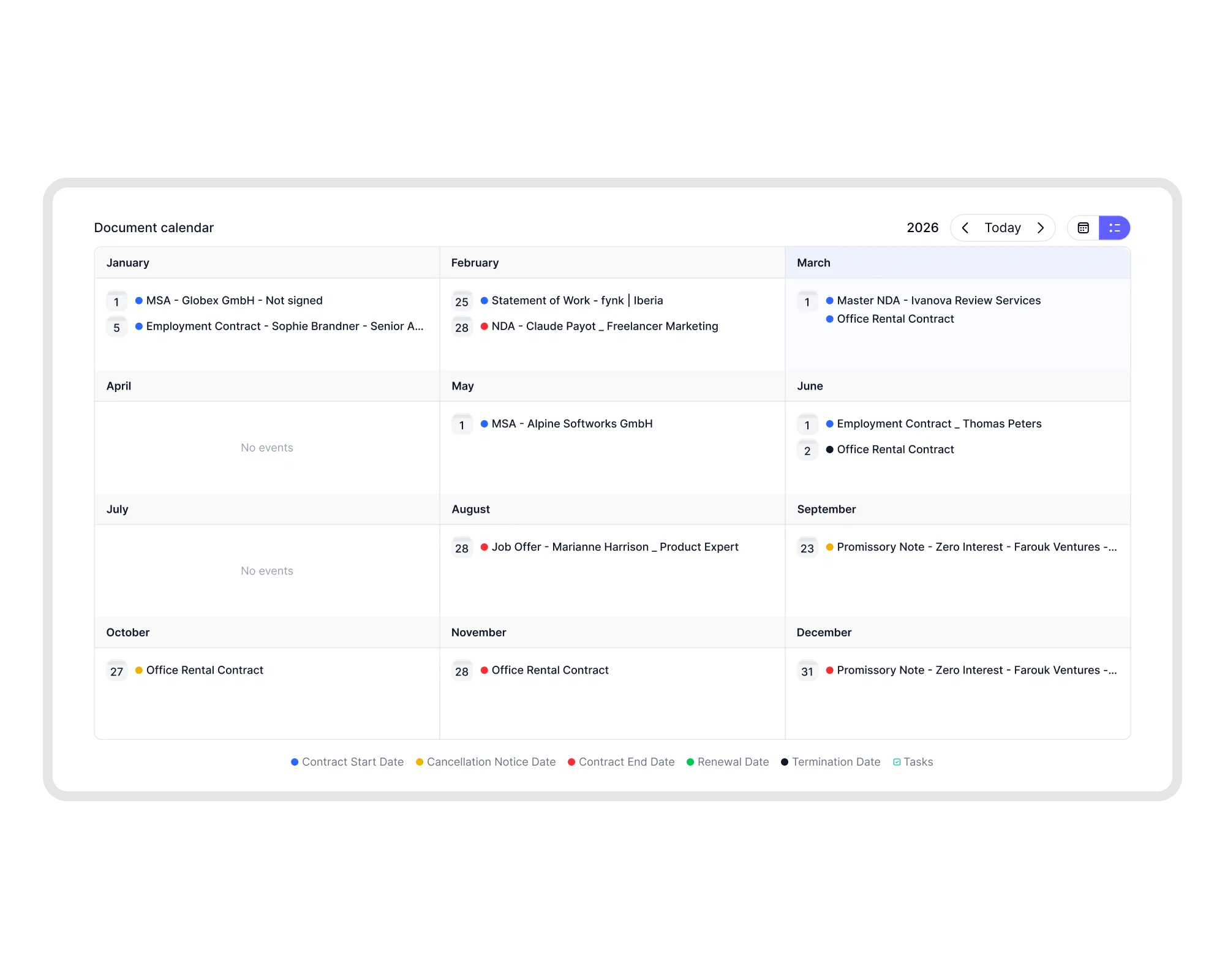
Record renewal dates and cancellation notice periods in structured date fields. Review them in the contract calendar, which shows contract dates and related tasks. Filter by team, contract type or stage. Give the owner time to check usage and pricing before the cancellation window closes.

Renewals and end dates on request, pulled from fynk through the MCP server.
Step 5: Assign the promises after signing
Open the contract and create tasks and reminders for deliverables, acceptance and reporting. Name each task, assign a team member and set a due date. Tasks stay linked to the contract and appear in the personal dashboard. Review pending work there instead of relying on somebody remembering the clause.
Step 6: Hand payment terms to finance
Confirm billing details, due dates, required purchase references and acceptance conditions before issuing the invoice. Keep the agreement accessible in the hub and assign a contract-linked task for any missing approval or delivery evidence. Finance can then chase the blocker with the terms at hand. Track the invoice and receipt in your accounting process.
Searching for a contract management solution?
Find out how fynk can help you close deals faster and simplify your eSigning process – request a demo to see it in action.
What else do people ask about contract value leakage?
Contract value leakage is the gap between what a contract should deliver and what it actually delivers. It can include avoidable drafting costs, missed savings, unfulfilled obligations and the cost of collecting late payments.
WorldCC and Deloitte Legal estimate average erosion at 8.6% of contract value. Best performers lose a little over 3%, while the worst lose more than 20%. These are shares of contract value, not company revenue.
Causes include repeated drafting, slow approvals and signatures, missing agreements, unwanted renewals, untracked obligations and payment delays. Assign responsibility for each stage.
Record the renewal date, cancellation notice period and renewal terms. Assign an owner and schedule a review before notice is due. Check usage, pricing and whether the agreement is still needed.
Sources
- WorldCC and Deloitte Legal, The ROI of Contracting Excellence, 2023; 1,236 organizations, mixed methods, April 2021 to December 2022; also recounts IACCM’s 2014 research, whose sample isn’t stated.
- Deloitte and Docusign, Digital Agreement Management Study, 2025; 1,400+ senior business leaders, 14 countries; vendor study.
- Sign.com, The Deal Velocity Report, 2026; 502 US business leaders; vendor survey.
- Wolters Kluwer, Benchmarkstudie 2025: Digitalisierung der Rechtsabteilung, 2025; 700+ in-house legal professionals, Europe and US; vendor survey.
- Deloitte and Docusign, Digital Agreement Management Study, 2024; 1,000+ business leaders, 10 countries; vendor study.
- Vertice, Contracts containing auto-renewal clauses by category, 2026; contracts within over $75bn of platform software spend; vendor benchmark.
- Vertice, SaaS Inflation Index H2 2026, 2026; 32,000+ vendors, 250,000+ negotiated contracts, 2 million+ price points; vendor index.
- Arcadis, Construction Disputes in Motion: North America, 2025; construction disputes survey; sample size undisclosed.
- Intrum, European Payment Report, 2026; 8,385 finance experts and executives, 20 European countries; December 2025 to February 2026.
- EOS Group and Kantar, European Payment Practices 2025, published 2026; 2,200 financial decision-makers, 11 European countries; March to May 2025.
- Atradius, Payment Practices Barometer: Germany, 2026; 210 German businesses selling on B2B credit; end of Q1 to start of Q2.
- Eurostat, Hourly labour costs, 2026 publication; 2025 labor-cost data, dataset lc_lci_lev.
Please keep in mind that none of the content on our blog should be considered legal advice. We understand the complexities and nuances of legal matters, and as much as we strive to ensure our information is accurate and useful, it cannot replace the personalized advice of a qualified legal professional.


Get a regular dose of insightful contract management content

Take control of your agreements. Move your business forward.
Run agreements the way they should run: fast, clear, and on your terms.
No setup headaches
Go live in days, not quarters
No lock-in
Full export anytime
No hidden fees
Signatures included, no envelope fee