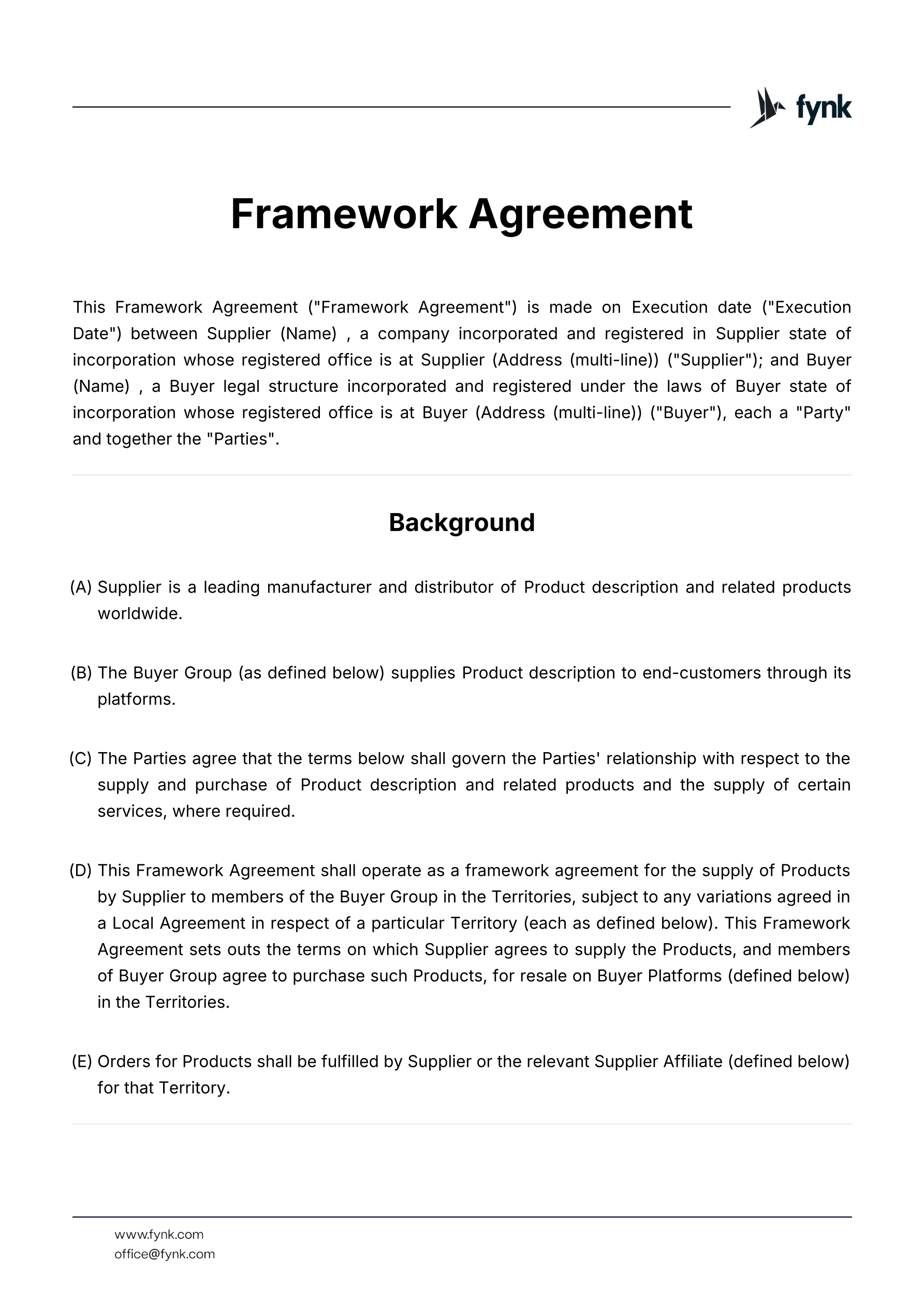
In order to clarify the rights and obligations of the buyer and the seller in the cooperation, according to the contract law of the relevant laws and regulations, the buyer and the seller have reached the framework agreement on cost procurement through friendly negotiation on the basis of long-term cooperation and mutual benefit.
Subject matter of the agreement
After the agreement comes into effect, the buyer agrees to purchase and the seller agrees to provide relevant goods and services under this agreement.
This agreement is a framework agreement and shall be executed in accordance with the contents of this agreement unless otherwise agreed. The specific list of goods and unit price required by the buyer shall be subject to the buyer’s order or annex.
The seller shall also provide the buyer with the following services for the goods supplied: training, installation, test and acceptance, service during the warranty period or after the warranty period (if involved).
Under the condition that the buyer performs its obligations in accordance with the agreement, the seller shall perform its obligations in accordance with the agreement.
Agreement price
The unit prices in the list of unit prices of goods refer to the prices of the agreed goods delivered at the place specified in the agreement and the seller’s full and correct performance of its obligations under the agreement, including all expenses incurred or related to the delivery of the goods to the place designated by the buyer.
The seller must provide the buyer with the specified goods according to the price in the unit price list of the goods. The seller shall not change the brand, specification and model of the goods without authorization.
Payment
Payment method: according to the settlement during the implementation of the agreement between both parties.
The seller shall issue separate invoice for settlement with the contract sub-order as the unit details. The product description on the invoice shall be consistent with that on the sub-order delivery note. If there is any change, please attach another explanation, which shall be signed by the buyer for confirmation.
Invoice information: subject to the sales contract information under the agreement.
Contract and delivery
This agreement is an annual framework agreement, and the delivery batch is expected to be delivered once a month, which shall be separately agreed in accordance with the contract.
Both the buyer and the seller must abide by the contract. The contents of the formally determined contract include: product name, product model, product price, product quantity, product delivery date, product delivery place, payment term, and all the attached instructions or terms of the contract.
According to the contract, the seller shall inform the buyer of the supply one day in advance, and the buyer shall determine the time and place of delivery.
Effectiveness of the agreement
This agreement shall come into force after both parties sign and affix their official seals (or contract seals). The term of validity of this agreement is Initial term, subject to the date of this agreement.
At the expiration of this agreement, if both parties have no written objection, this agreement will be automatically extended for Extension term, and only once.
In Witness Whereof, the Parties hereto have officiated this Agreement as of this Effective date.
Buyer (Name)
Pending
Buyer signatory name
Buyer signatory title
Seller (Name)
Pending
Seller signatory name
Seller signatory title
Disclaimer: The original creator, the author of this template, and fynk GmbH are not responsible for any damages or liabilities that may result from using this template. This template should not be considered a substitute for legal advice, and consulting with a legal professional is recommended before use. fynk GmbH, the original creator, and the author do not provide legal advice and will not be held accountable for any legal consequences arising from its use.
More than
3,000 teams
chose fynk to outgrow legal chaos.
What a procurement framework covers and how to use this template
Learn what a procurement framework agreement is, how it differs from a standalone purchase contract, the key provisions it must address, and how to customize this template for your procurement programme.
Use this template if:
You’re setting up a multi-year supply relationship and want pre-agreed terms so individual orders don’t need full renegotiation each time
Pricing schedules, quality standards, and liability caps need to be locked in upfront with a preferred supplier
Individual orders will be placed as call-offs against the framework rather than as standalone contracts
Audit rights to verify pricing accuracy and quality compliance throughout the term matter to you
Public sector procurement regulations (EU, UK, or equivalent) apply to your organization
What is a procurement framework agreement?
A procurement framework agreement (also called a framework contract or master supply agreement) is a standing contract that establishes agreed terms and conditions between a buyer and one or more suppliers for the supply of defined categories of goods or services over a fixed period, typically one to four years. The framework itself doesn’t obligate the buyer to purchase any minimum volume; instead, it creates a pre-negotiated structure from which individual purchase orders or call-off contracts can be issued quickly and on known terms.
Framework agreements are widely used in both public and private sector procurement. In the public sector, they’re a formal procurement mechanism under EU and UK procurement regulations. In the private sector, they’re used by enterprises seeking to reduce transaction costs, standardize supplier terms, and consolidate their vendor base. A well-structured framework reduces the time from purchase decision to contract execution from weeks to hours by eliminating the need to renegotiate commercial terms for each order.
The framework agreement is distinguished from a long-term supply contract by the absence of a firm purchase commitment: the buyer isn’t required to purchase anything unless they issue a call-off order. This structure benefits buyers who need flexibility, while suppliers benefit from being the preferred or approved supplier for defined categories of spend.
Key provisions in a procurement framework agreement
1. Scope of supply
Defines what the framework covers, often the most commercially important provision:
Categories of goods and services covered by the framework (may be defined broadly or restricted to specific product lines or service lines)
Whether the framework is exclusive (buyer must purchase all requirements in scope from this supplier) or non-exclusive (buyer may also use other suppliers)
Excluded categories or projects not covered by the framework
Mechanism for adding new categories of supply during the framework term
Geographic scope: sites, countries, or business units to which the framework applies
2. Pricing mechanism
Establishes how prices are set and updated throughout the term:
Fixed unit price schedules attached as an exhibit, reviewed annually or at defined intervals
Basis for price adjustment: CPI indexation, raw material cost pass-through, or agreed benchmarking process
Volume discounts or tiered pricing applicable at defined purchase thresholds
Currency of invoicing and payment, and applicable exchange rate mechanism for cross-border supply
Most-favoured customer pricing commitments (if applicable): supplier must offer buyer terms no less favourable than those offered to comparable customers
3. Call-off procedure
How individual orders are placed under the framework:
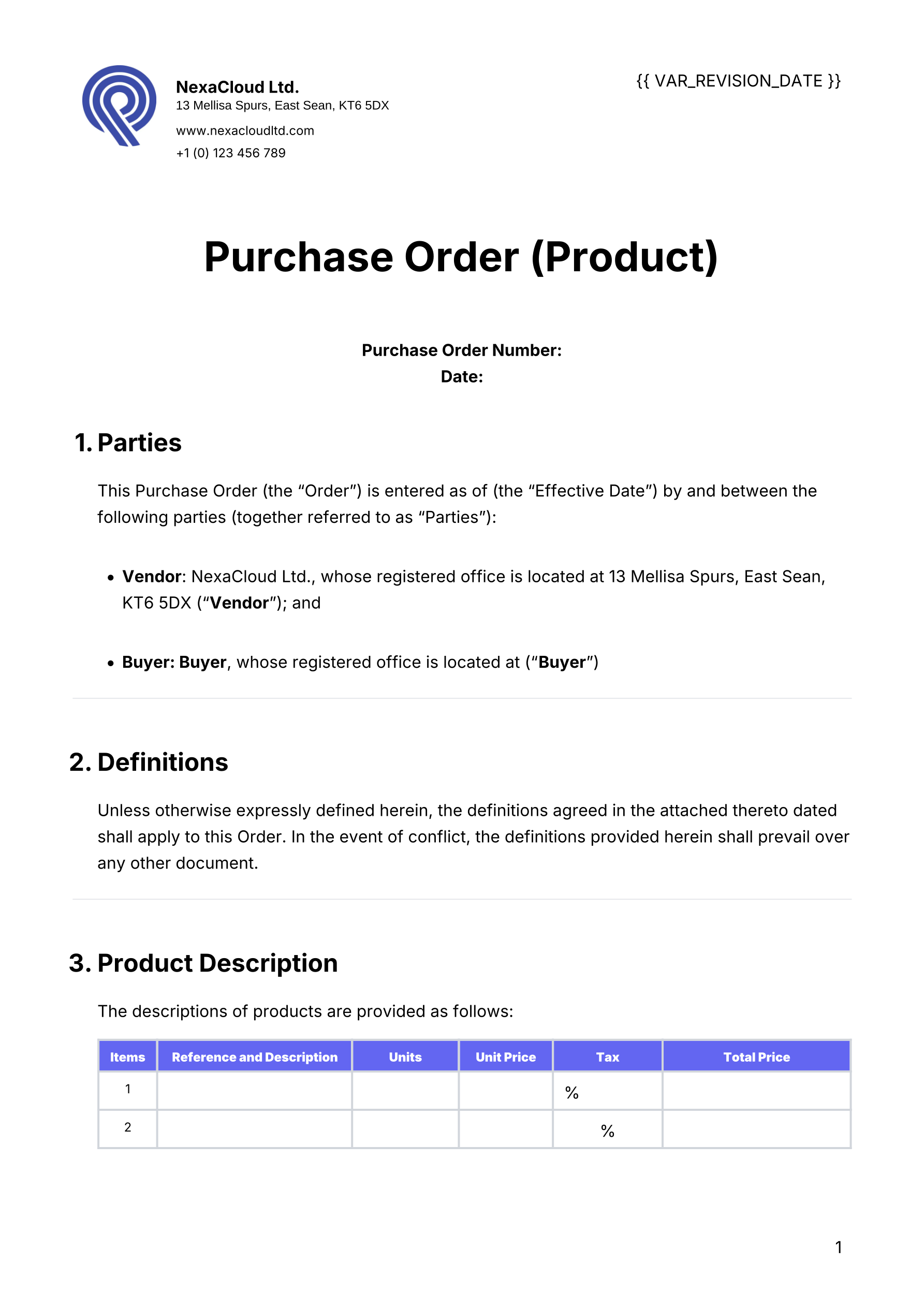
Buyer issues a call-off order (purchase order) referencing the framework agreement
Supplier must confirm acceptance within a defined period (commonly 2-5 business days)
Call-off order terms: quantity, delivery date, delivery address, and applicable pricing
Whether the call-off order or the framework agreement takes precedence in the event of a conflict (framework should generally prevail for key commercial and legal terms)
Electronic ordering and EDI procedures where applicable
Logistics and quality control on receipt of goods or delivery of services:
Delivery lead times and the supplier’s obligation to notify delays promptly
Incoterms (for goods) or service delivery standards applicable to each call-off
Acceptance testing criteria and inspection period after delivery
Procedure for rejecting non-conforming goods or services: notification, return or remedy obligations, replacement timescales
Risk of loss and title transfer (for goods supply)
5. Quality and compliance standards
Ensures a consistent level of quality across the entire framework period:
Quality management system certifications the supplier must maintain (e.g., ISO 9001)
Compliance with applicable laws, industry standards, and buyer’s supplier code of conduct
Representations and warranties regarding goods being free from defects, conforming to specifications, and fit for purpose
Supplier’s obligation to notify the buyer of any quality issues, recalls, or regulatory changes affecting supply
Audit rights to verify quality compliance: see provision 7 below
6. Liability caps and indemnities
Allocates financial risk between the parties:
Each party’s aggregate liability under the framework capped at a defined amount (commonly the value of orders placed in the preceding 12 months, or a fixed sum)
Mutual indemnity provisions: supplier indemnifies buyer for third-party claims arising from defective goods or services; buyer indemnifies supplier for misuse of supplied goods
Consequential loss exclusions: neither party liable for loss of profit, loss of business, or indirect losses beyond the cap
Carve-outs from the cap for death or personal injury, fraud, wilful misconduct, and data protection breaches
7. Audit rights
The buyer’s right to verify supplier performance and compliance:
Right to audit the supplier’s books, records, and facilities on reasonable notice (commonly 10 business days) to verify pricing accuracy, quality compliance, and regulatory compliance
Frequency limits on audits (e.g., once per calendar year absent cause)
Supplier’s obligation to maintain adequate records throughout the framework term and for a defined period after expiry
Procedure for raising and resolving audit findings
Procurement teams managing multi-year supplier relationships and seeking to reduce per-transaction negotiation time and cost
Operations teams that place frequent repeat orders for goods or services and need consistent delivery and quality standards across all orders
Legal teams tasked with standardizing supplier contracts and reducing legal risk in the supply chain through consistent liability and compliance provisions
Supply chain managers responsible for consolidating approved vendor lists and ensuring all purchases are made under pre-negotiated contractual protections
Enterprises with large vendor bases seeking to move from one-off purchase orders to structured framework arrangements that reduce procurement cycle times and provide commercial predictability
How to customize this template
Define the scope of supply precisely: attach a schedule listing the specific product or service categories covered, and explicitly exclude any categories that are out of scope to avoid ambiguity in later disputes.
Agree on the pricing mechanism and update cycle before signing: fixed schedules are simpler to administer but may not reflect market movements; index-linked pricing adds complexity but reduces renegotiation friction.
Draft the call-off procedure to match your operational reality: if your teams place orders electronically via an ERP system, ensure the procedure is consistent with your system’s purchase order workflow.
Set the liability cap at a level that reflects the value at risk: for high-value or safety-critical supply, the cap should be meaningfully higher than a single order value; for routine commodity supply, a rolling 12-month value cap is commonly acceptable.
Include specific compliance representations if your industry requires it: anti-bribery, modern slavery, data protection, or sector-specific regulatory certifications may need to be addressed explicitly in the quality and compliance section.
Confirm governing law and jurisdiction, particularly for cross-border frameworks where the supplier’s and buyer’s registered offices are in different countries.
This procurement framework agreement template is ready to customize in fynk. Adjust pricing schedules, call-off procedures, quality standards, and liability caps for your supply chain, then send for electronic signature.
With fynk, you can:
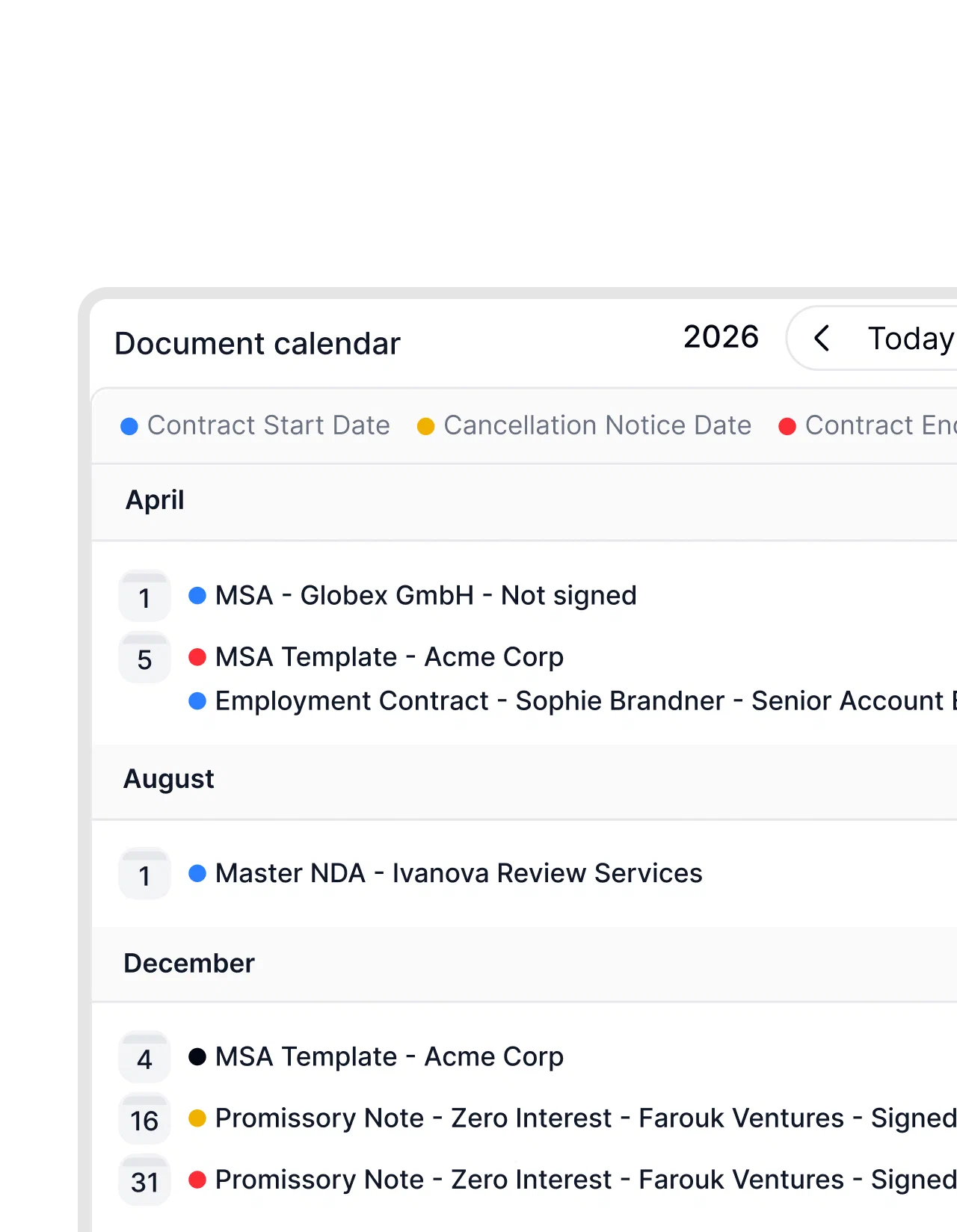
Track framework renewal dates and price review windows with automated reminders so procurement teams can renegotiate proactively rather than letting unfavourable terms roll over by default.
Set reminders for framework expiry and annual price review dates to stay ahead of renewal deadlines.
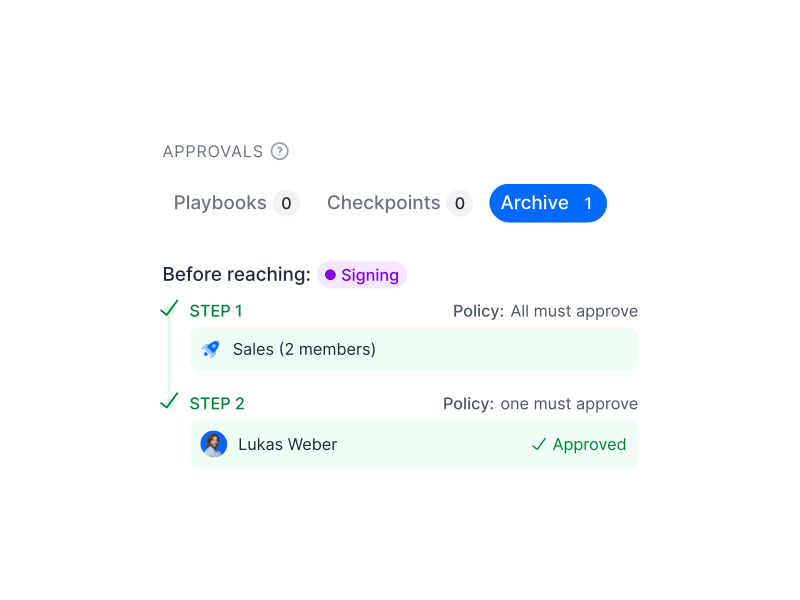
Run structured approval workflows for new framework agreements and major amendments, ensuring legal, finance, and procurement sign-off before any supplier is engaged.
Custom approval chains keep legal, finance, and procurement aligned before any framework goes live.
Maintain a full audit trail of every change to pricing schedules, liability caps, and compliance provisions, supporting the audit rights built into the framework.
Centralise framework agreements and all related call-off orders in a single document hub so procurement and legal teams always have the full picture of each supplier relationship.
FAQs
A procurement framework agreement is a master contract that establishes pre-agreed commercial and legal terms, pricing schedules, quality standards, liability caps, and delivery conditions, for the purchase of defined categories of goods or services from a supplier over a fixed period. Individual orders are placed as call-offs under the framework, eliminating the need to renegotiate terms for each purchase.
Typically no. A standard procurement framework agreement doesn't create a minimum purchase obligation: the buyer places orders only when needed. However, some frameworks include minimum purchase commitments or exclusivity obligations in exchange for better pricing or guaranteed availability. Whether a minimum commitment is included is a commercial negotiation between the parties.
A call-off order (or call-off contract) is the individual purchase order placed by the buyer under the framework. It references the framework agreement and specifies the quantity, delivery date, delivery location, and applicable price for a specific purchase. The framework's legal and commercial terms apply to each call-off without needing to be restated.
Most private sector frameworks have an initial term of two to four years, with an option to extend for one or more additional periods on notice. Public sector frameworks are typically capped at four years under procurement regulations. The term should be long enough to achieve procurement efficiencies but short enough to allow the buyer to re-tender and test the market periodically.
The terms are often used interchangeably, but there's a distinction in usage. A framework agreement typically focuses on creating a call-off structure under which orders are placed, without a firm purchase commitment. A master supply agreement often includes an ongoing supply obligation or minimum volume commitment. In practice, many organizations use 'procurement framework agreement' and 'master supply agreement' to describe the same document: the key is that the individual commercial terms are settled at the framework level.
Searching for a contract management solution?
Find out how fynk can help you close deals faster and simplify your eSigning process – request a demo to see it in action.