
Contract management strategy: a plan your team will follow

Rezvan Golestaneh
Published · 9 min read
This guide explains how to build a contract management strategy, with practical steps, a one-page example, and common mistakes to avoid.
- Set measurable goals and assign contract owners.
- Standardize templates, approvals, and contract records.
- Track obligations, renewals, and quarterly results.
Sales keeps contracts in the CRM, finance uses a shared folder, and operations has another folder plus a spreadsheet. Three teams, three folders, three ways of doing it.
A contract management strategy sets shared goals, assigns owners, and defines how your team creates, approves, signs, stores, and tracks contracts from request through renewal.
What is a contract management strategy?
A contract management strategy defines the agreed rules for how contracts are requested, created, approved, signed, stored, and followed up, and who owns each part.
It connects everyday contract decisions to business goals. If sales needs faster approvals, the strategy should define which agreements can follow standard rules. If finance wants fewer surprise renewals, it should require an owner and a review date for each supplier agreement.
The strategy sets the goals, responsibilities, and rules; the contract management process turns them into repeatable steps. A contract management plan assigns the work and deadlines needed to put those decisions into practice.
Strategic contract management also reaches beyond signing. It covers whether the company receives what it bought and delivers what it sold.
What should a contract management strategy include?
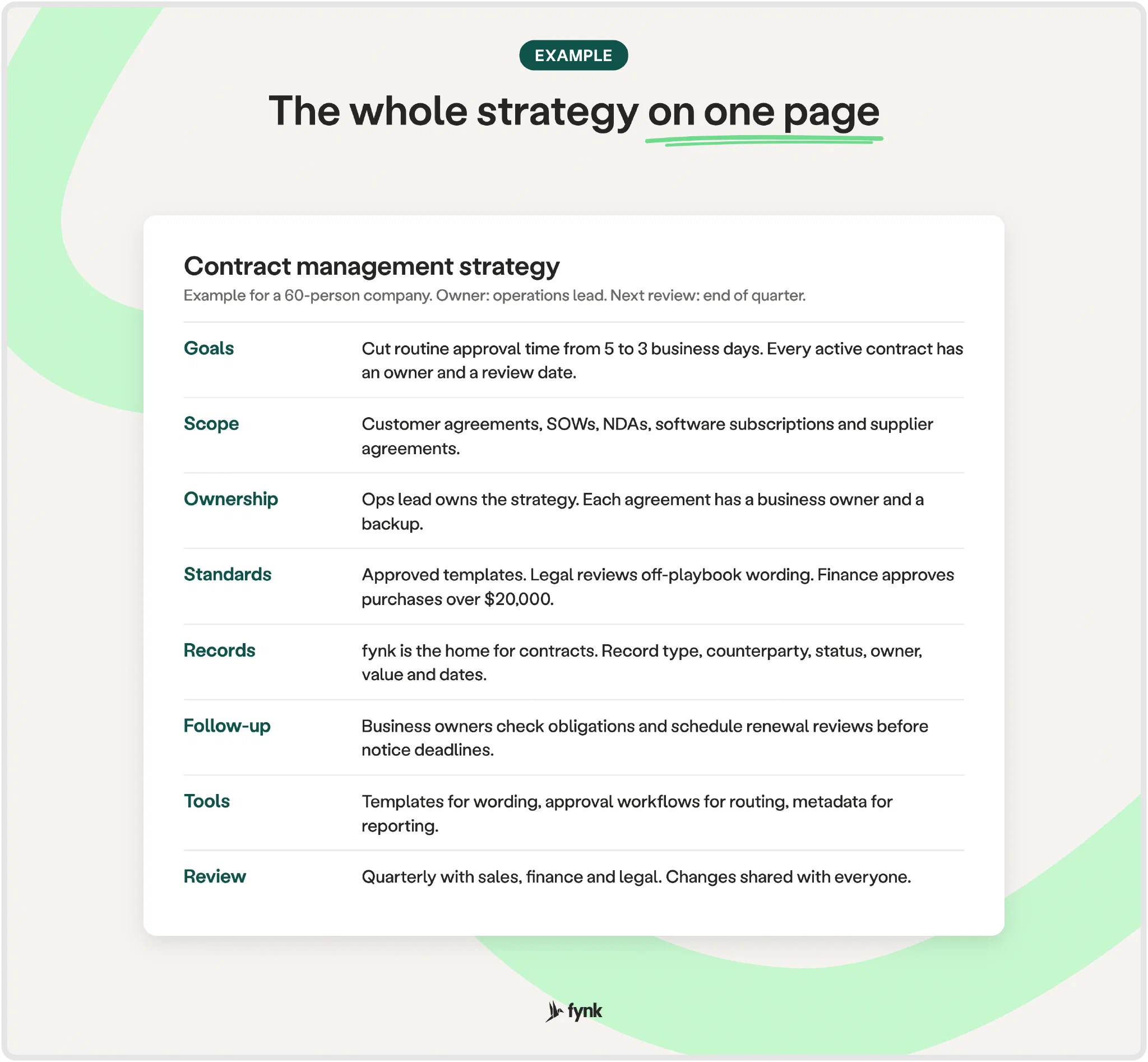
A contract management strategy should include measurable goals, scope, ownership, standards, a shared home for contracts and data, follow-up after signing, tools, and a review schedule.
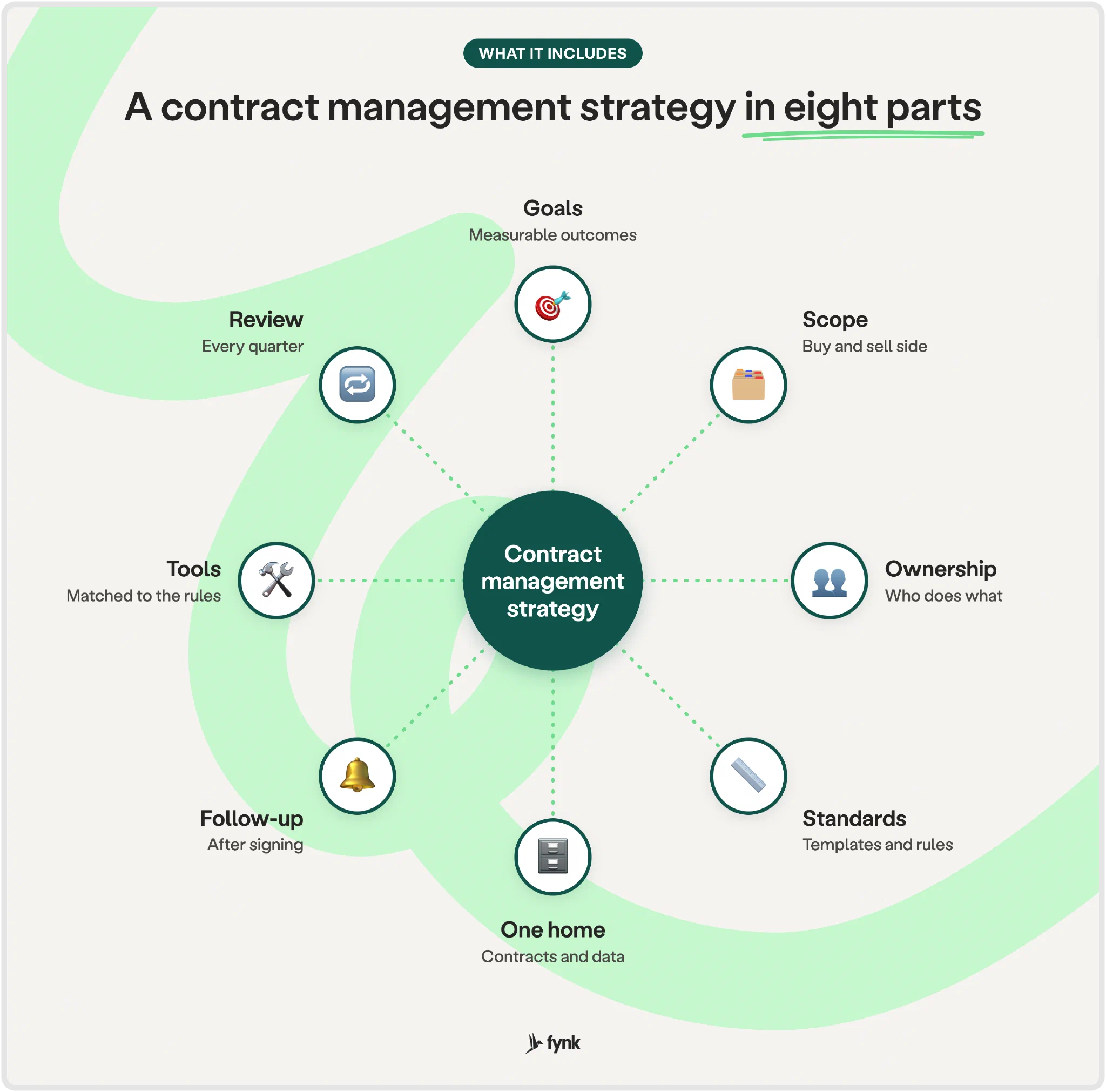
Keep each part short enough that someone can use it while handling a real agreement.
🎯 Goals you can measure. Choose outcomes such as shorter approval times, fewer unassigned contracts, or renewal decisions made before notice deadlines. “Improve visibility” needs a more specific job description.
🗂️ Scope. Name the contract types covered. Include the buy side, such as software subscriptions and supplier agreements, and the sell side, such as customer agreements and statements of work. Record anything you’ll address later.
👥 Ownership and roles. Name the strategy owner and define who requests, drafts, reviews, approves, and signs. Each signed agreement also needs a business owner responsible for follow-up.
📏 Standards. Specify approved templates, preferred clause positions, acceptable alternatives, and approval thresholds. Explain which changes need review and who may authorize signing.
🗄️ One place for contracts and their data. Choose where current drafts, signed agreements, and amendments belong. Define the required fields, including contract type, value, owner, status, and important dates.
🔔 Post-signature follow-up. Decide who checks obligations, supplier performance, customer commitments, renewals, and notice deadlines. A signature shouldn’t be the last recorded activity until the invoice causes a panic.
🛠️ Tools. Identify what supports drafting, approvals, signing, storage, and reporting. Choose tools against the rules and work you’ve defined.
🔁 Review rhythm. Assign a date and an owner for reviewing results. Record how changes to the strategy reach the people using it.
How do you build a contract management strategy?
Build a contract management strategy by taking stock of current contracts, choosing a few goals, assigning owners, setting standards, agreeing where information lives, and scheduling quarterly reviews.
Set aside an afternoon with representatives from operations, sales, finance, procurement, and legal, where those roles exist. In a smaller company, one person may cover several. Bring actual agreements and leave with written decisions. Cleaning up the entire archive can follow.
Step 1: Take stock of what you have
List your main contract types, where they live, who handles them, and where work gets stuck.
Review recent customer and supplier agreements. Include an ordinary contract, one that needed unusual terms, and one that’s approaching renewal. Follow each from request through signing and follow-up.
Ask practical questions: Which template did the requester use? Who approved the price? Can finance find the signed version? Who knows when the notice period ends?
Use a contract management checklist to keep the checks consistent. Record gaps without trying to fix every document during the meeting.
Your output is a short inventory and a list of recurring problems. “Supplier renewals have no owner” is useful. “Contracts are a mess” is harder to assign.
Step 2: Pick two or three goals
Choose goals that address the problems you found, then give each a measure and a target date.
For example, if routine internal approvals currently take a median of five business days, you might target three by the end of next quarter. Another goal could be giving every active contract a named owner and a recorded next review date.
Define the measurement before agreeing on the target. Does approval time begin when someone sends an incomplete request or when the required information is ready? Record the rule so next quarter’s comparison means something.
Different contract management strategies can prioritize different outcomes. A sales team may need quicker routine approvals. Procurement may need earlier renewal decisions. Pick the combination that addresses your company’s current problems.
Step 3: Decide who owns what
Name one person to maintain the strategy, then assign responsibilities for individual agreements.
For a small company, an operations lead might coordinate the work while legal defines wording rules and finance controls spending approvals. The strategy owner needs authority to resolve gaps and a senior sponsor who can settle disagreements.
For each contract, identify:
- Requester: supplies the business details and required timing.
- Business owner: stays responsible for the relationship, obligations, and renewal decision.
- Reviewers and approvers: check the terms, spending, and exceptions relevant to their roles.
- Authorized signer: signs after the required approvals.
- Backup: takes over when the owner is unavailable or leaves.
One person can hold several roles. Write that down too.
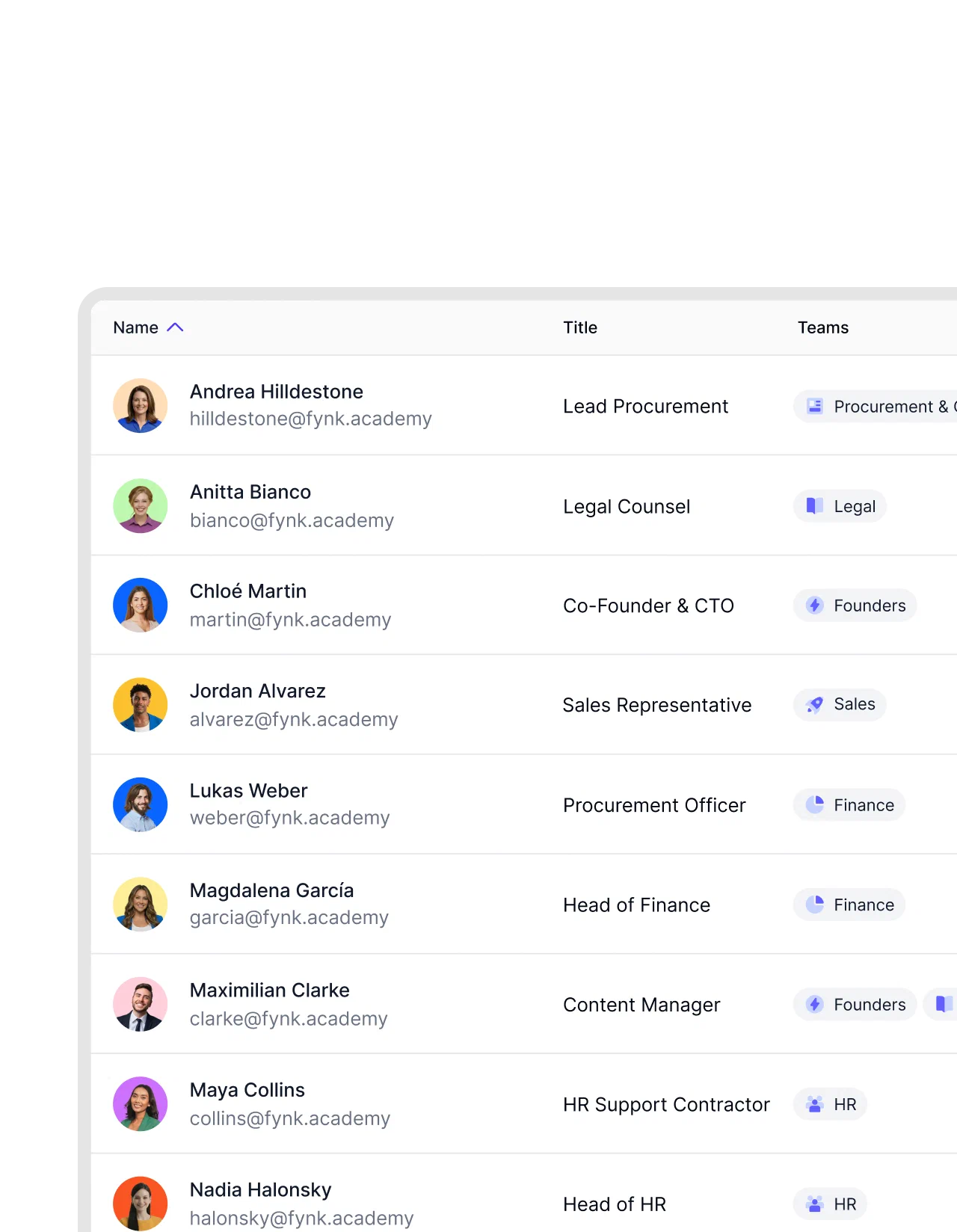
In fynk, teams and user roles let each team see and work on its own contracts, with access ranging from view-only to full. Those permissions help put your ownership decisions into practice.
Step 4: Standardize the common contracts
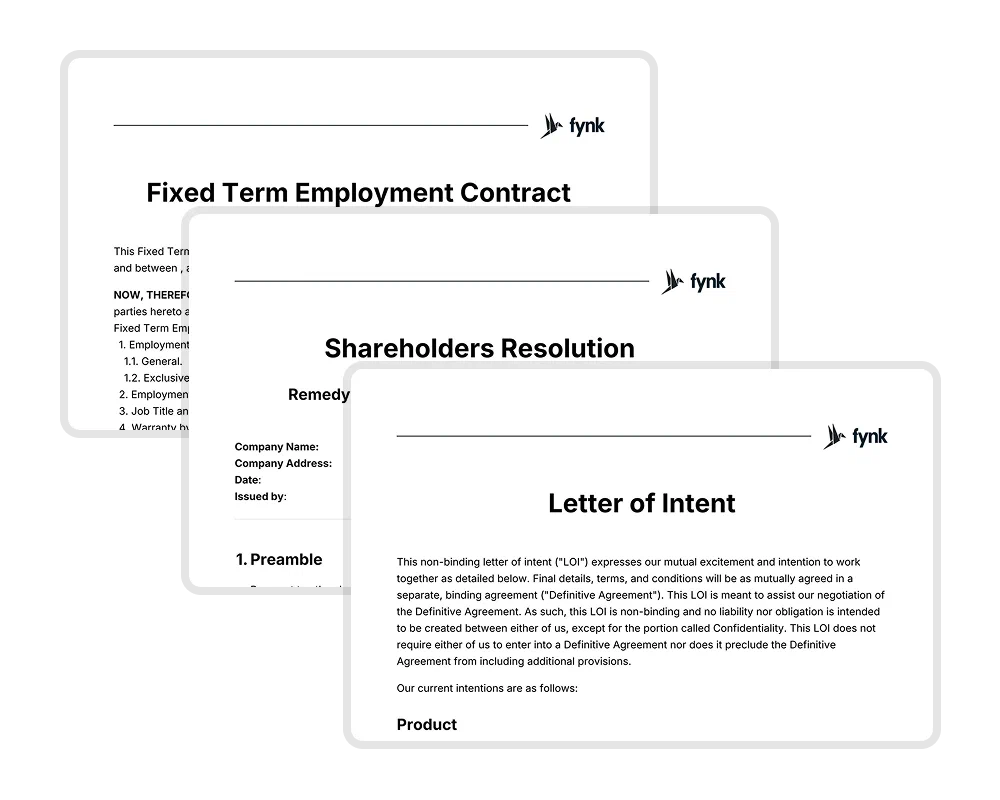
Start with the agreements your team handles repeatedly. Approve a current template for each, name its maintainer, and retire the outdated copies.
Next, write the rules for using it. Define preferred terms, acceptable alternatives, and changes that need review in a contract playbook. Include commercial details such as scope, pricing, payment, and delivery responsibilities.
Only 16% of negotiators think contract negotiations focus on the right topics, according to WorldCC. Your standards should direct attention to the commitments that affect the deal, including whether the team can deliver them.
Make approval rules specific. An illustrative internal policy might require finance approval for purchases above $20,000 in total committed value, plus legal review whenever wording falls outside the playbook. Value alone shouldn’t decide whether a contract needs review.
fynk’s document templates hold approved wording and rules so every team starts from the same version. Its approval workflows route documents to the right reviewers before signing, for example by value. That puts the agreed standards into the daily work.
Step 5: Choose where contracts and their data live
Agree on one place for current contract records, such as the document list in fynk, with signed agreements and amendments kept together. Define where drafts belong and how people identify the current version.
Then choose the data everyone must record. A practical starting set is:
- Contract type, counterparty, and status.
- Business owner and responsible team.
- Contract value.
- Start, end, renewal, and notice dates, where applicable.
- Next review date.
With fynk’s metadata, key dates, values, and owners become structured fields for filters and reports. A folder can hold the PDFs; structured fields let the team compare the information inside them.
For us it was really important to extract the key metrics that we designed for ourselves.

Define the handoff after signing too. The business owner should check the recorded dates, assign important obligations, and schedule follow-up. For a supplier, that might mean reviewing service reports. For a customer, it might mean assigning a promised delivery milestone.
Record a renewal review early enough to make a decision before the contract’s notice deadline. The renewal date alone may leave you admiring a commitment you can no longer change.
Step 6: Measure and review every quarter
Compare results with your goals each quarter and change the rules where the evidence shows a problem.
Keep the review focused. Check whether routine approvals are faster, whether contracts have owners, and whether renewal decisions happen on time. Choose contract management KPIs that match those questions.
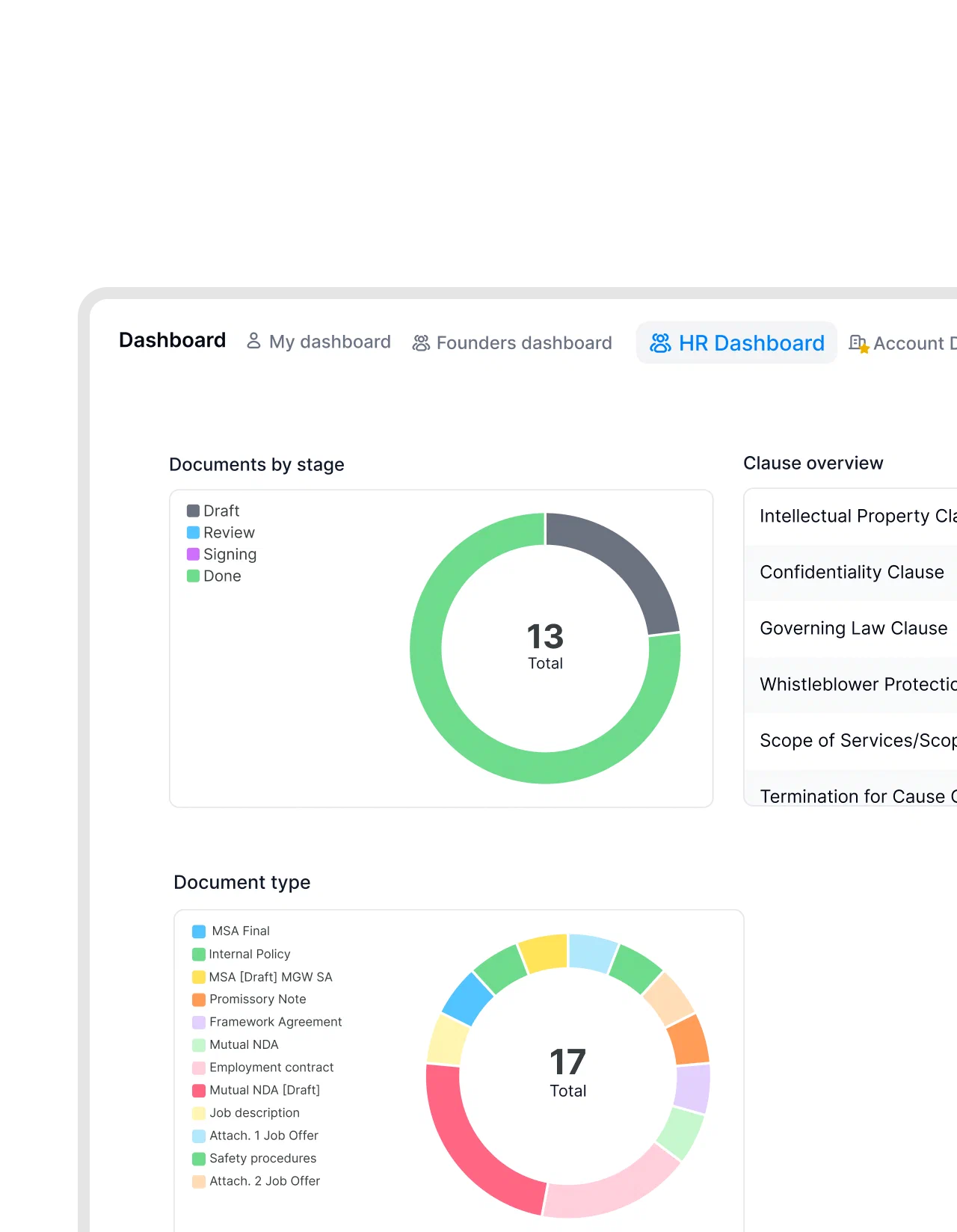
fynk’s dashboards provide a portfolio overview by stage, type, and team. Use that contract management dashboard to organize the review, then investigate delays and gaps in the underlying records.
If standard agreements keep waiting for the same approval, check whether the rule is necessary or the reviewer needs a backup. If owners are missing, fix the handoff.
Before rolling the strategy out across the company, test it on a routine customer agreement and a supplier agreement. Have the people handling them explain the next action and who owns it. Fix any unclear rules, then share the agreed page with the team.
It’s about time your documents
find a home.
What are common contract management strategy mistakes?
Common mistakes include writing an unreadable document, choosing tools before rules, covering only sales contracts, and leaving the strategy without an owner.
- Writing 40 pages nobody reads. Keep the core decisions on one page, with supporting detail where it belongs. Test whether a new colleague can identify the right template, approver, and business owner.
- Buying tools before agreeing on rules. Decide how contracts should work, then test tools against that work. Software still needs someone to decide who approves an unusual commitment.
- Only covering sales contracts. Include supplier agreements and subscriptions. Money leaving the company deserves the same attention as money coming in.
- Naming a department instead of an owner. Give one person responsibility for maintaining the strategy, with a backup and a sponsor. “Legal and ops” is how a task acquires two audiences and no taker.
Contract management strategy FAQ
A practical way to group them is people, process, data, and tools. People own decisions and obligations. Process defines the steps. Data makes terms and deadlines usable. Tools support the work. Your strategy should explain how all four fit together.
The strategy sets the goals, scope, ownership, and rules for managing contracts. The plan turns those decisions into assigned work and deadlines, such as approving templates, moving signed agreements, and filling missing owner fields.
Choose one person with visibility across teams and authority to coordinate changes, often an operations lead, legal lead, or finance lead. Give them a senior sponsor. Individual business owners remain responsible for their own contracts and follow-up.
Review it quarterly as a practical starting point, and sooner when repeated failures, new contract types, or team changes expose a gap. Check contract deadlines on their own schedule. A quarterly strategy review doesn't replace day-to-day follow-up.
Bring a customer agreement and a supplier agreement to the table. Agree on the owner, starting template, approval rules, storage location, and next check for each. Write those decisions down while everyone is still in the room.
Then put them to work in fynk through approved templates, defined access, approval workflows, and structured contract data. Your strategy becomes something the team uses on the next agreement.
Searching for a contract management solution?
Find out how fynk can help you close deals faster and simplify your eSigning process – request a demo to see it in action.
Please keep in mind that none of the content on our blog should be considered legal advice. We understand the complexities and nuances of legal matters, and as much as we strive to ensure our information is accurate and useful, it cannot replace the personalized advice of a qualified legal professional.



Get a regular dose of insightful contract management content

Take control of your agreements. Move your business forward.
Run agreements the way they should run: fast, clear, and on your terms.
No setup headaches
Go live in days, not quarters
No lock-in
Full export anytime
No hidden fees
Signatures included, no envelope fee