
Inspection contingency
An inspection contingency gives a buyer a set period to inspect a property and to negotiate repairs or cancel the purchase, with the deposit returned, if the results are unacceptable.
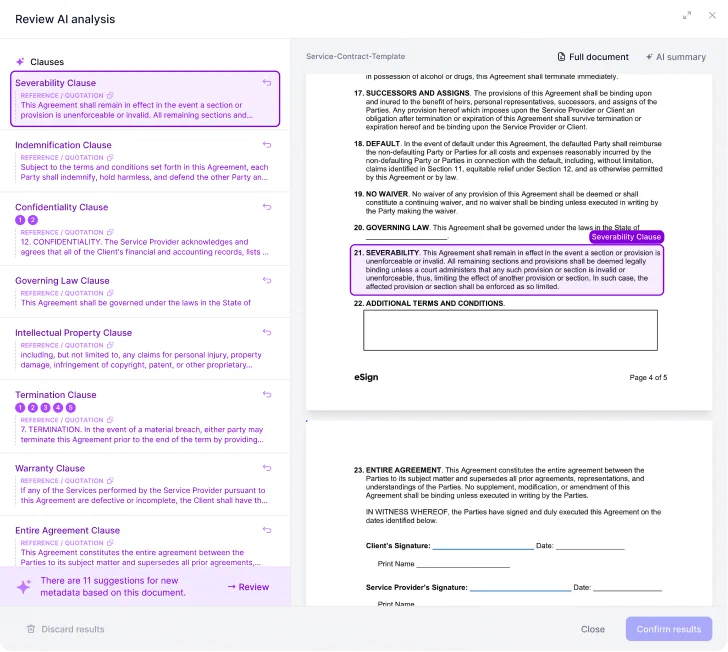
Analyze your contracts. Extract important clauses.
Try our AI contract analysis and extract important clauses and information from existing contracts.
Save your favourite clauses
Insert directly with a single click
Upload preferred precedents
Sample Inspection contingency clauses
Source
TRI VALLEY CORP- BUYER’S INVESTIGATION OF PROPERTY AND MATTERS AFFECTING PROPERTY:
A.
Buyer’s acceptance of the condition of, and any other matter affecting the Property is a contingency of this Agreement, as specified in this paragraph and paragraph 17. Within the time specified in paragraph 17, Buyer shall have the right, at Buyer’s expense unless otherwise agreed, to conduct inspections, investigations, tests, surveys and other studies (“Buyer investigations”) including, but not limited to, the right to: (i) inspect for lead-based paint and other lead-based paint hazards; (ii) inspect for wood destroying pests and organisms; (iii) confirm the insurability of Buyer and the Property; and (iv) satisfy Buyer as to any matter of concern to Buyer, Without Seller’s prior written consent, Buyer shall neither make nor cause to be made; (i) invasive or destructive Buyer investigations or; (ii) inspections by any governmental building or zoning inspector, or government employee, unless required by Law.
B.
Buyer shall complete Buyer Investigations and, as specified in paragraph 17, remove the contingency or cancel this Agreement. Buyer shall give Seller, at no cost, complete Copies of all Buyer Investigation reports obtained by Buyer. Seller shall make the Property available for all Buyer Investigations. Seller shall have water, gas, electricity and all operable pilot lights on for Buyer’s Investigations and through the date possession is made available to Buyer.
6.3 Formal Inspection Period. Holdings’ obligation to close under this Agreement is subject to and conditioned upon Holdings’ investigation and study of and satisfaction with the Property as set forth in this Section 6. Holdings shall have until 5:00 p.m.
E.S.T. on the Inspection Date in which to make such investigations and studies with respect to the Property as Holdings deems appropriate and to terminate this Agreement, by written notice delivered to Duke, if Holdings is not, for any reason, satisfied with the Property, in which case the Earnest Money shall be returned to Holdings and neither party shall have any further obligations hereunder except for those obligations of Holdings set forth in Sections 6.2 and 6.4. If Holdings fails to deliver written notice to Duke of its election to terminate this Agreement on or before 5:00 p.m. E.S.T. on the Inspection Date, then this Agreement shall be deemed to have been terminated by Holdings, the Earnest Money shall be returned to Holdings and neither party shall have any further obligations hereunder, except as expressly survive termination of this Agreement.
3.2 Expiration of Feasibility Period. If any of the matters in Section 3.1 or any other title or survey matters are unsatisfactory to Purchaser for any reason, or for no reason whatsoever, in Purchaser’s sole and absolute discretion, then Purchaser shall have the right to terminate this Contract in its entirety with respect to all Properties (but not in part with respect to less than all Properties) by giving written notice to that effect to Sellers and Escrow Agent no later than 5:00 p.m. on the date of expiration of the Feasibility Period. If Purchaser provides such notice, this Contract shall terminate and be of no further force and effect subject to and except for the Survival Provisions, and Escrow Agent shall return the Deposit to Purchaser. If Purchaser fails to provide Sellers with written notice of termination prior to the expiration of the Feasibility Period, Purchaser’s right to terminate under this Section 3.2 shall be permanently waived and this Contract shall remain in full force and effect, the Deposit shall be non-refundable (except as otherwise expressly set forth herein), and Purchaser’s obligation to purchase the Properties shall be conditional only as specifically provided in this Contract.
- Feasibility Period. During the period commencing on the Effective Date and expiring 5:00 pm Central Standard Time, sixty (60) days after the Effective Date of this Contract (the “Feasibility Period”), Buyer shall have the right to investigate and inspect the Property to determine whether or not the Property is suitable for Buyer’s intended use. Among the factors to be considered by Buyer are ability to use the Property for its intended purposes and any or all other matters which Buyer may deem relevant in its sole and absolute discretion. If Buyer determines in its sole discretion that the Property is not suitable for Buyer’s intended use or is otherwise unacceptable to Buyer, Buyer shall give Seller written notice of such fact on or before the end of the Feasibility Period. If such notice from Buyer is timely and properly given, this Contract shall terminate and the Title Company shall deliver $100.00 of the Earnest Money to Seller (as independent consideration for the inspection and review rights granted to Buyer during the Feasibility Period) and shall refund the balance of the Earnest Money to Buyer, and both parties shall be released from all further obligations under this Contract except those that expressly survive termination. If Buyer does not timely and properly send the written notice to Seller, then it shall be deemed that the Property is suitable for Buyer’s intended use, and this Contract shall not terminate.
(e) Buyer’s Inspections. Upon 24 hours prior notice from Buyer to Seller, Seller shall permit Buyer and its authorized agents and consultants to enter upon the Property during reasonable business hours to make and perform inspections and investigations of the Property Conditions (as defined in Section 4(g) below). Prior to entering upon the Property, Buyer shall provide to Seller a certificate of insurance evidencing Buyer’s or Buyer’s agents’ and/or consultants’, as applicable, procurement of a commercial general liability insurance policy in the amount of One Million Dollars ($1,000,000) combined single limit for injury to or death of one or more persons in an occurrence, and for damage to property in an occurrence. In conducting any inspections, investigations or tests of the Property, Buyer and its agents and representatives shall: (i) not interfere with the tenants business operations on the Property; (ii) not perform any invasive or destructive testing or sampling without first obtaining Seller’s approval of the work plan and consultant, which approval shall not be unreasonably withheld; (iii) not injure Seller, its agents or tenants or their respective agents, guests, invitees, contractors and employees or subtenants; (iv) comply with all applicable laws; (v) promptly pay when due the costs of all tests, investigations, and examinations done with regard to the Property; (vi) not permit any liens to attach to the Property by reason of the exercise of its rights hereunder; (vii) promptly repair any damage to the Property resulting directly or indirectly from any such inspection or tests; and (viii) not reveal or disclose prior to Closing any information obtained by Buyer prior to Closing concerning the Property or documents related thereto, except as may be otherwise required by law or as part of Buyer’s communications with Buyer’s consultants as may be required to complete Buyer’s Due Diligence and to Close Escrow. Buyer shall afford Seller the opportunity to have a representative of Seller present to accompany the party undertaking such evaluations, inspections, tests and other investigations of the Property.
Buyer’s obligations under this Section 4(d) survive any termination of this Agreement.
What is an inspection contingency?
An inspection contingency, or home inspection contingency, makes a purchase conditional on the buyer being satisfied with the property’s condition. During a set inspection period, the buyer can hire inspectors, review the results, ask the seller for repairs or credits, and cancel the contract with the earnest money returned if the problems are not resolved.
Example: a buyer has a 10-day inspection contingency. The inspector finds a roof near the end of its life and old electrical wiring. The buyer asks the seller for a $15,000 credit. The seller offers $8,000, the buyer accepts and removes the contingency on day 9. Had they not agreed, the buyer could have cancelled before day 10 and recovered the deposit.
In commercial deals, the same protection is usually called an inspection period, feasibility period or due diligence period, and covers far more than the building’s condition.
How the inspection contingency works, step by step
- Inspection period starts when the contract is signed, often 7 to 17 days for homes and 30 to 90 days for commercial property.
- Inspections: general home inspection, plus specialists as needed, such as roof, sewer line, pests, radon, mold or structural engineer.
- Review the reports and decide what matters: safety, major systems and expensive defects rather than cosmetic issues.
- Repair request: the buyer asks for repairs, a price reduction or a closing credit.
- Negotiation: the seller agrees, counters or refuses.
- Decision before the deadline: the buyer removes the contingency and proceeds, or cancels in writing.
What happens when the deadline passes
This is where contracts differ most, and the sample clauses above show both approaches:
| If the buyer does nothing by the deadline | Effect | Who it protects |
|---|---|---|
| Contingency deemed satisfied or waived | The buyer is bound, and the deposit is at risk | The seller |
| Contract deemed terminated | The deal ends unless the buyer actively confirms | The buyer |
Most residential forms and many commercial contracts use the first rule: silence means acceptance. Some commercial buyers negotiate the second, which forces an active “go” decision. Either way, missing the deadline by a day can decide the outcome, so it pays to know which rule your contract uses.
Can you back out for any reason?
It depends on the wording. Many inspection contingencies, especially in commercial contracts, let the buyer terminate if the property is unsatisfactory “for any reason or no reason” in its sole discretion, which in practice works as a free option during the inspection period. Others only allow termination for defects found in the inspection, or set a dollar threshold for repairs. In some forms, the seller keeps a small part of the deposit as consideration for that option, as in one sample above.
Inspection contingency vs. other contingencies
| Contingency | Protects against |
|---|---|
| Inspection contingency | Physical defects and the property’s condition |
| Appraisal contingency | A value below the purchase price |
| Financing contingency | Not getting the loan |
| Title contingency | Liens, easements and ownership problems |
| Due diligence contingency | Anything the buyer’s broader investigation turns up |
Waiving the inspection contingency
In competitive markets, buyers sometimes waive the contingency to make their offer stand out. The risk is buying a property with hidden problems and no way out except losing the deposit. Middle-ground options:
- Pre-offer inspection, done before making the offer.
- Informational-only inspection: the buyer may cancel for major issues but agrees not to ask for repairs.
- Shorter inspection period, such as five days instead of ten.
- Repair cap: the buyer can only cancel if repairs exceed a set amount.
Seller protections during inspections
Sellers let buyers and their inspectors onto the property, so contracts usually require the buyer to:
- give advance notice and inspect during reasonable hours;
- avoid invasive or destructive testing without consent;
- carry liability insurance;
- repair any damage and keep the property free of liens;
- share copies of the reports, and keep them confidential.
Inspection contingency clause example
Sample clause: Inspection contingency
Add this clause to a contract, send it and get it signed in fynk.
Use it in fynk for freeKeeping track of open contingencies
A brokerage or property investor may have a dozen deals in progress, each with its own inspection deadline. With the AI assistant in fynk, you can search your whole repository in plain language, for example for purchase agreements with an inspection period still running, without opening each contract.
Which contracts include an inspection contingency?
Residential and commercial real estate purchase agreements, land and development contracts, purchase options, and sales of vessels, vehicles and equipment, where the buyer inspects before accepting. These free templates include one:
Free templates with this clause
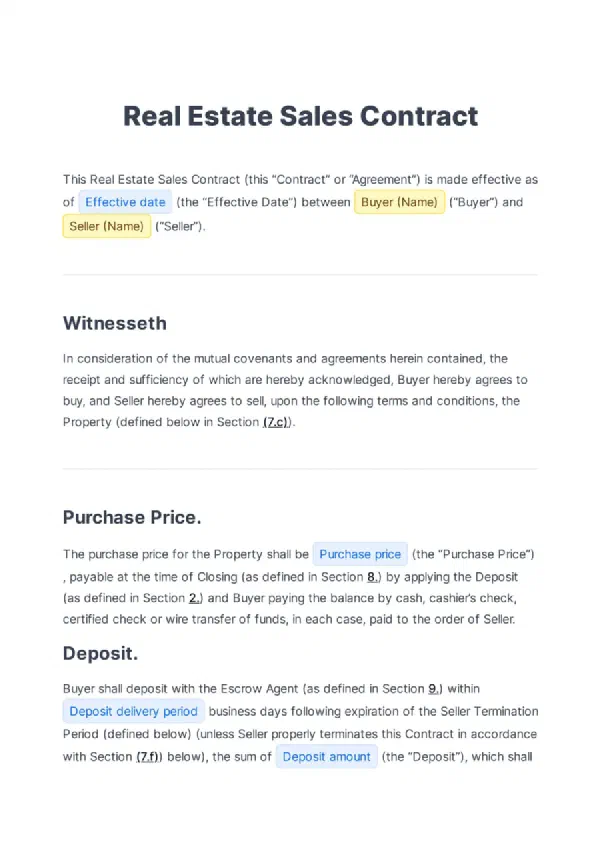 Real estate sales contract template
The buyer may terminate for any reason during the inspection period and recover the deposit; silence means the buyer affirms the contract.
Use the free template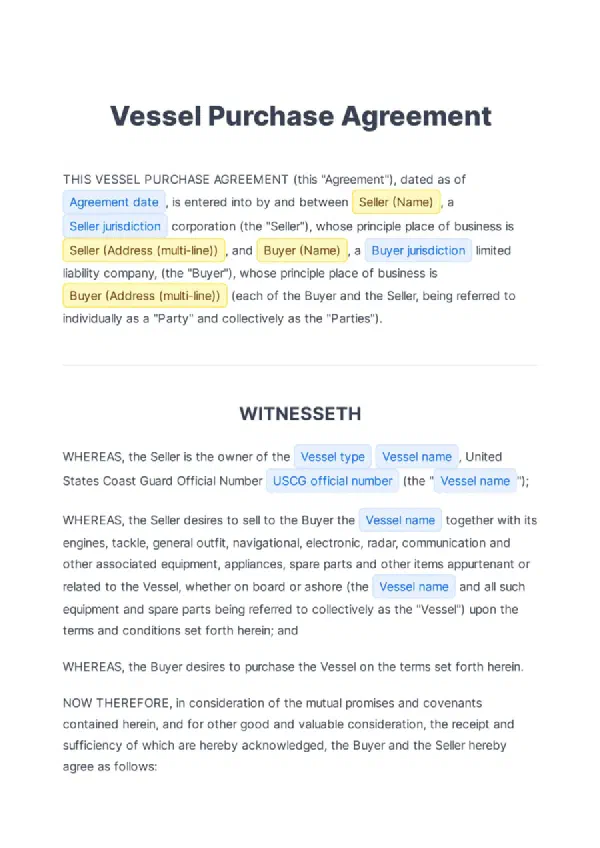 Boat sale agreement template (vessel purchase contract)
The buyer may inspect the vessel during the inspection period and is responsible for losses and liens its inspection causes until closing.
Use the free template
Related clauses
- Due diligence period The due diligence period in a contract is a designated timeframe during which the buyer is allowed to thoroughly inspect and evaluate the property or assets involved in the transaction. This period aims to ensure the buyer can identify any potential issues and make informed decisions before finalizing the agreement.
- Appraisal contingency An appraisal contingency lets a buyer renegotiate or cancel a purchase, with the deposit returned, if the property appraises below the agreed price.
- Financing contingency A financing contingency is a contract clause that allows a buyer to cancel a purchase agreement without penalty if they are unable to secure the necessary financing within a specified timeframe. This provision protects the buyer by ensuring they are not obligated to complete the transaction if they cannot obtain a loan or suitable financing terms.
- Inspection and acceptance The "Inspection and Acceptance" clause outlines the buyer's right to examine and evaluate the goods or services provided by the seller before formally accepting them. This clause typically includes the process, timeline, and conditions under which the buyer can reject goods or services that do not meet specified quality or performance standards.
- As is purchase An as-is purchase means the buyer accepts the property or goods in their current condition, with all faults, and the seller makes no repairs and gives no warranties about quality. It does not let a seller hide known defects or skip disclosures the law requires.
Frequently asked questions
A clause that gives the buyer a period to inspect the property and then ask for repairs or cancel the purchase, with the earnest money returned, if the results are unacceptable.
Whatever the contract sets. For homes it is often around 7 to 17 days; for commercial property, often 30 to 90 days.
Under most contracts, the buyer is treated as having accepted the property, and cancelling afterwards may cost the deposit. Some contracts instead treat silence as termination.
Only if the contingency allows termination for any reason during the inspection period. Some contingencies limit cancellation to defects found or to repair costs above a threshold.
It strengthens an offer but removes your exit if serious defects appear. A pre-offer or informational-only inspection keeps some protection.
More clauses from the library
See allInsurance clause
An insurance clause requires a party to carry specific insurance while the contract runs, with minimum limits, and to prove it with certificates of insurance. It usually names the other party as an additional insured and makes sure there is money behind the indemnity.
6 example clauses
Insuring agreement
An insuring agreement is a fundamental component of an insurance policy that outlines the scope of coverage provided by the insurer, including the types of risks or perils that are covered, the parties involved, and the conditions under which a claim can be made. It serves as the foundation of the policy, detailing the insurer's obligation to indemnify the policyholder for losses incurred from specified events.
9 example clauses
Integration clause
An integration clause, also known as a merger clause, ensures that the written contract represents the complete and final agreement between the parties by superseding all prior negotiations, discussions, or agreements, whether written or oral. This clause prevents any party from claiming that external statements or documents should be considered part of the agreement, thus providing clarity and reducing potential disputes.
22 example clauses
Analyze your contracts. Extract important clauses.
Try our AI contract analysis and extract important clauses and information from existing contracts.
Save your favourite clauses
Insert directly with a single click
Upload preferred precedents