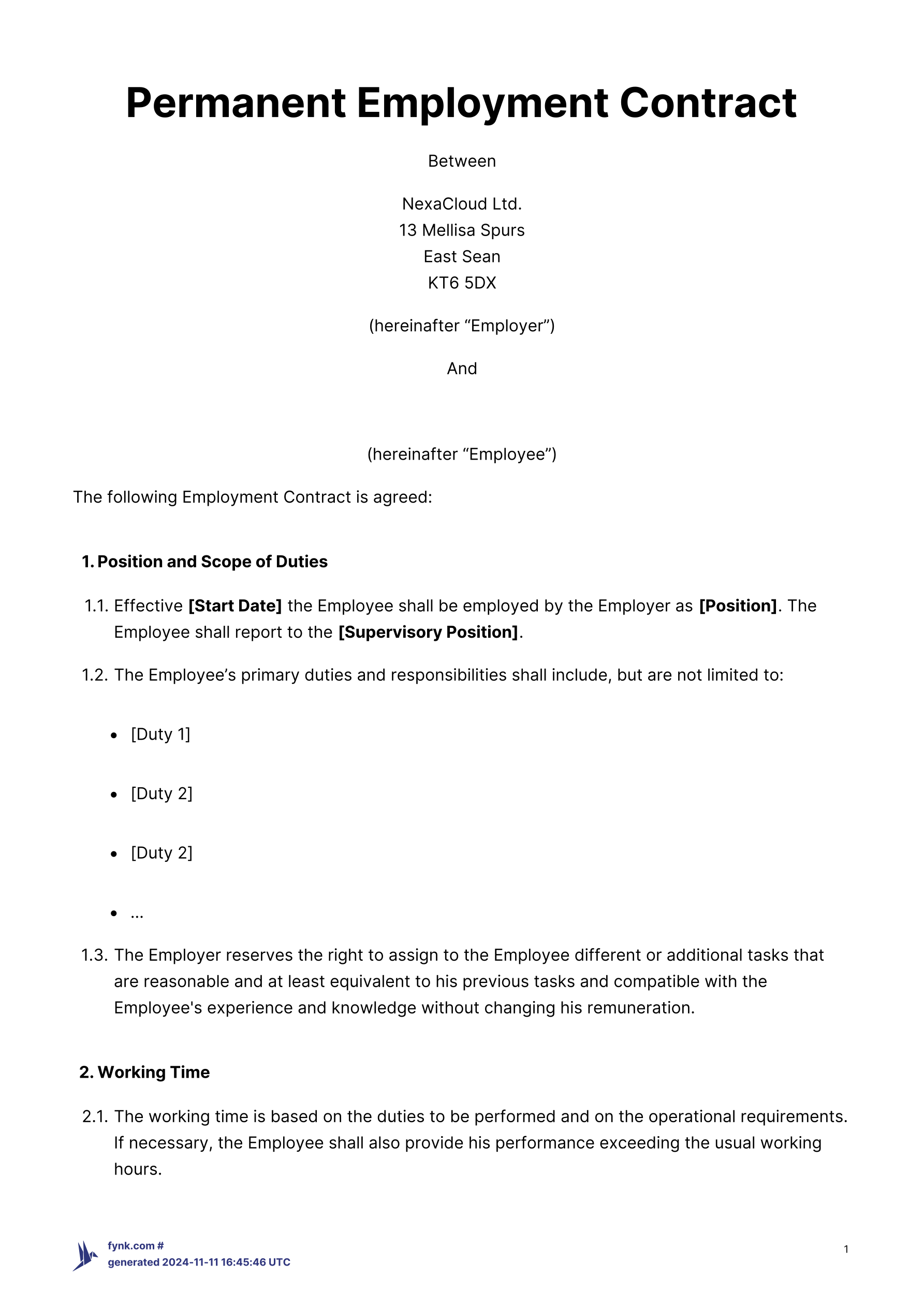
A job offer letter formally outlines the key terms of employment between an employer and a prospective employee. It provides clarity on the role, compensation, benefits, and expectations before employment begins.
With fynk’s customizable job offer letter template, companies can create consistent, professional offers that reflect their hiring standards while remaining flexible across roles, locations, and employment types.
The full content of the template is available, when you want to edit the text and enter your details make sure to click on the button to use the template.
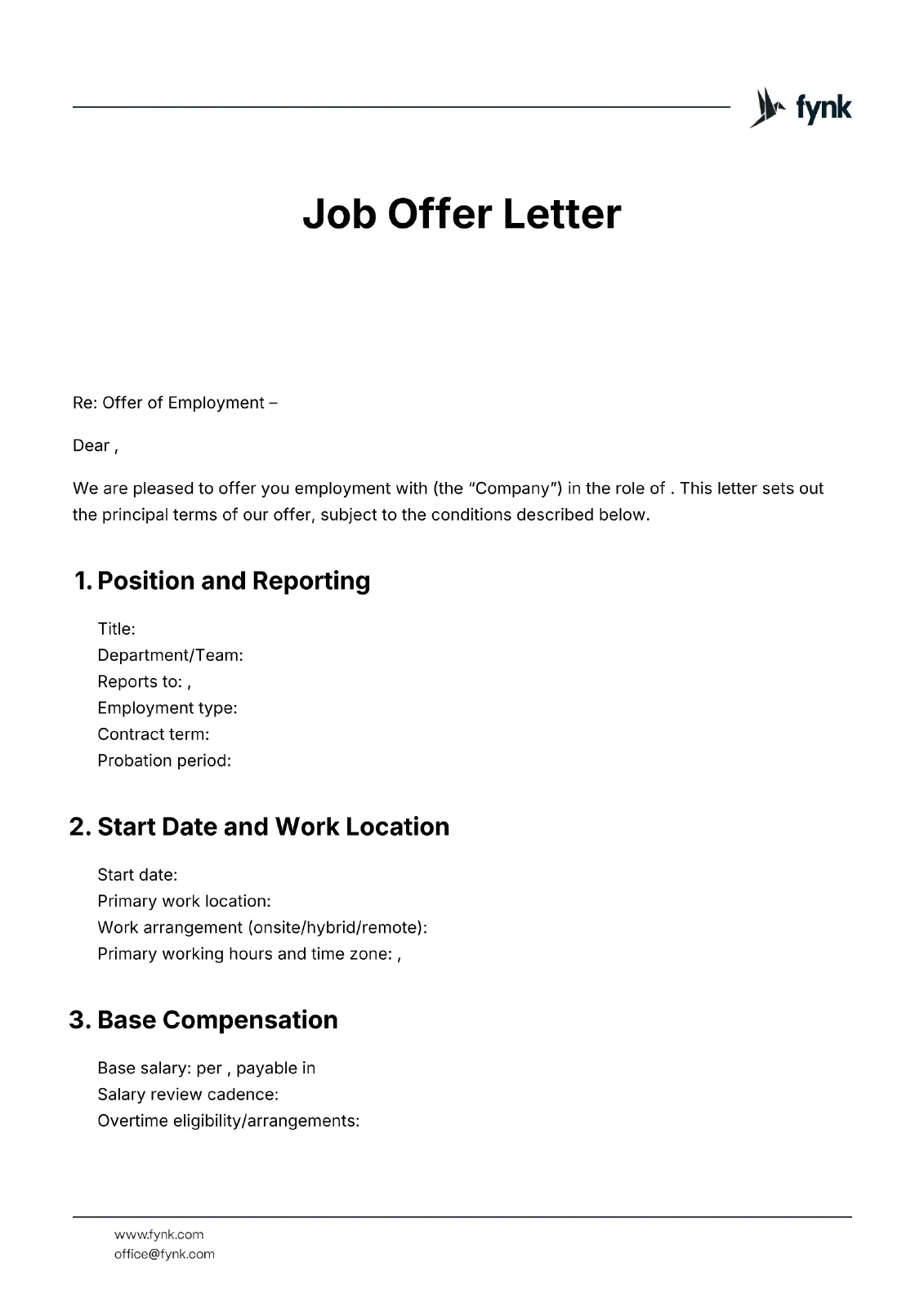
Job Offer Letter
Job Offer Letter
Re: Offer of Employment –
Dear ,
We are pleased to offer you employment with (the “Company”) in the role of . This letter sets out the principal terms of our offer, subject to the conditions described below.
Start date: Primary work location: Work arrangement (onsite/hybrid/remote): Primary working hours and time zone: ,
Base Compensation
Base salary: per , payable in Salary review cadence: Overtime eligibility/arrangements:
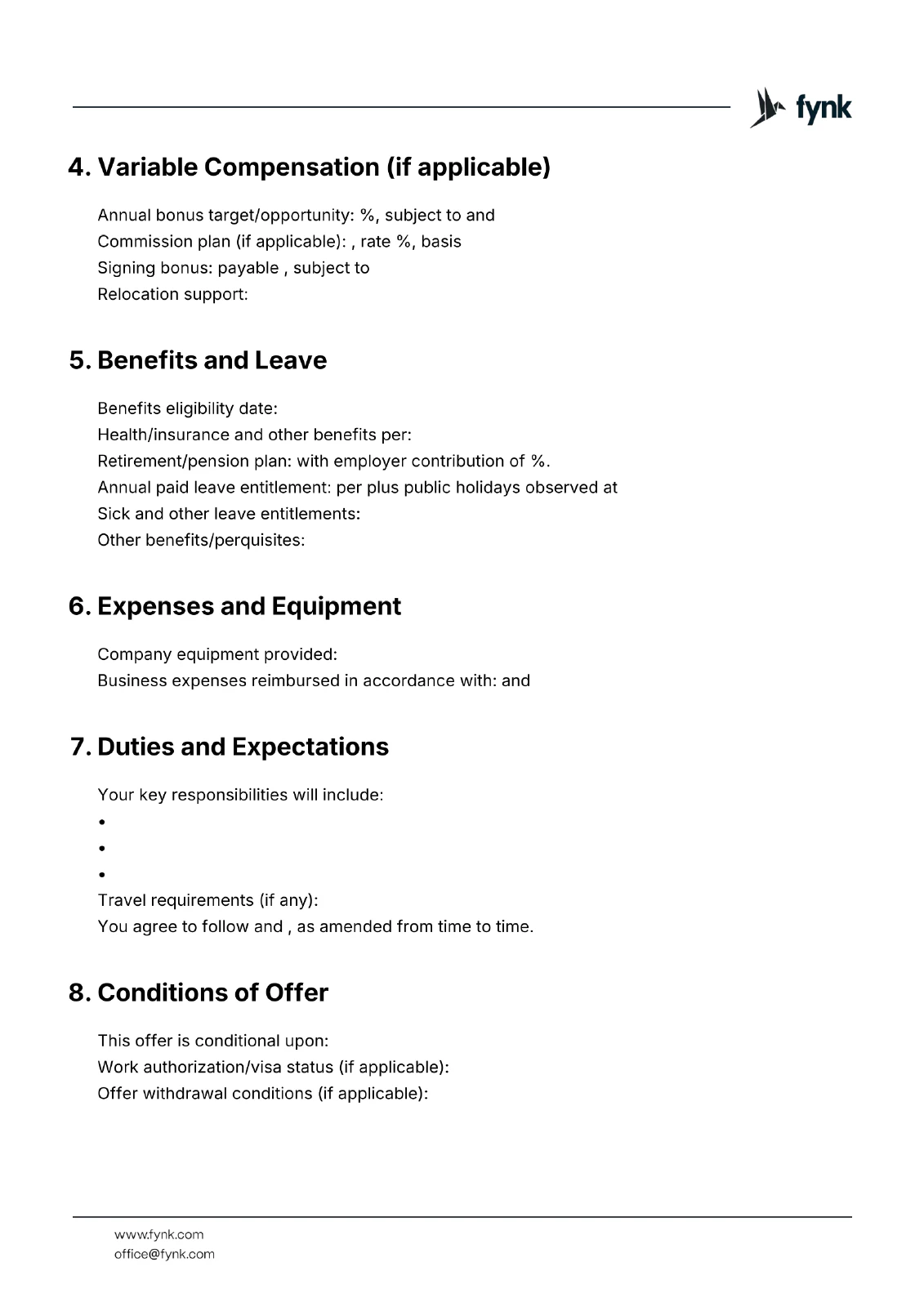
Variable Compensation (if applicable)
Annual bonus target/opportunity: %, subject to and Commission plan (if applicable): , rate %, basis Signing bonus: payable , subject to Relocation support:
Benefits and Leave
Benefits eligibility date: Health/insurance and other benefits per: Retirement/pension plan: with employer contribution of %. Annual paid leave entitlement: per plus public holidays observed at Sick and other leave entitlements: Other benefits/perquisites:
Expenses and Equipment
Company equipment provided: Business expenses reimbursed in accordance with: and
Duties and Expectations
Your key responsibilities will include: • • • Travel requirements (if any): You agree to follow and , as amended from time to time.
Conditions of Offer
This offer is conditional upon: Work authorization/visa status (if applicable): Offer withdrawal conditions (if applicable):
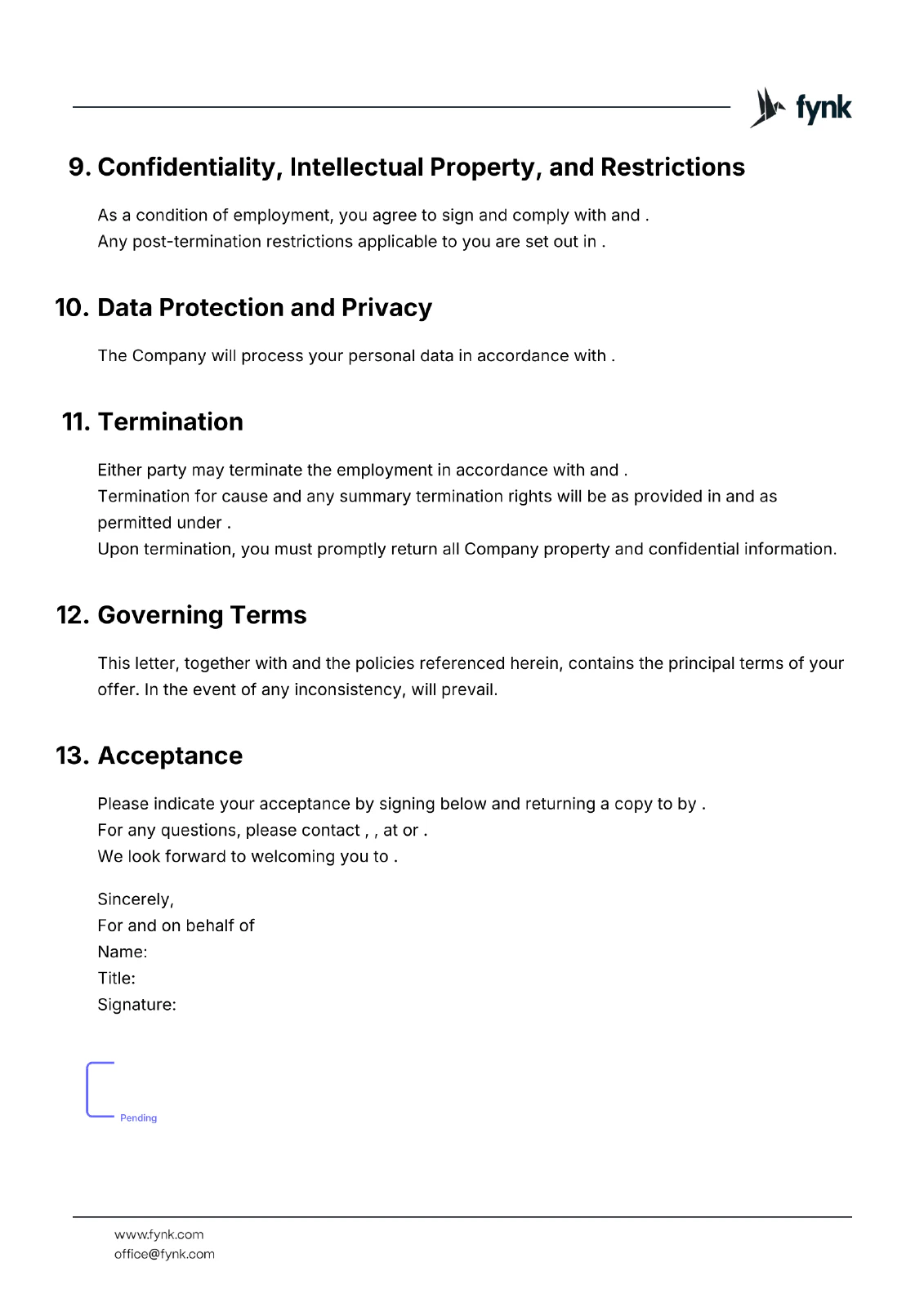
Confidentiality, Intellectual Property, and Restrictions
As a condition of employment, you agree to sign and comply with and . Any post-termination restrictions applicable to you are set out in .
Data Protection and Privacy
The Company will process your personal data in accordance with .
Termination
Either party may terminate the employment in accordance with and . Termination for cause and any summary termination rights will be as provided in and as permitted under . Upon termination, you must promptly return all Company property and confidential information.
Governing Terms
This letter, together with and the policies referenced herein, contains the principal terms of your offer. In the event of any inconsistency, will prevail.
Acceptance
Please indicate your acceptance by signing below and returning a copy to by . For any questions, please contact , , at or . We look forward to welcoming you to .
Sincerely, For and on behalf of Name: Title: Signature:
Pending
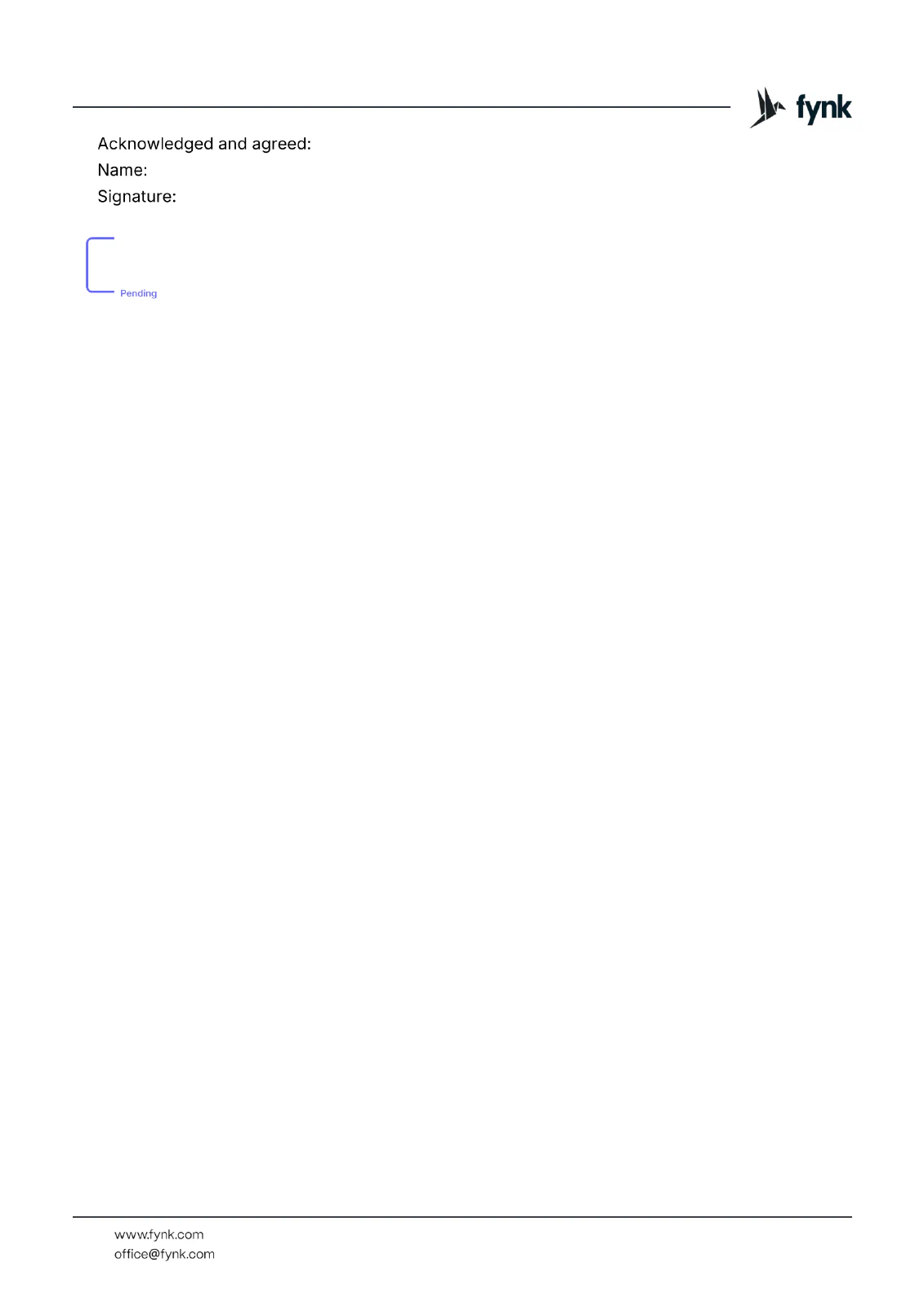
Acknowledged and agreed: Name: Signature:
Pending
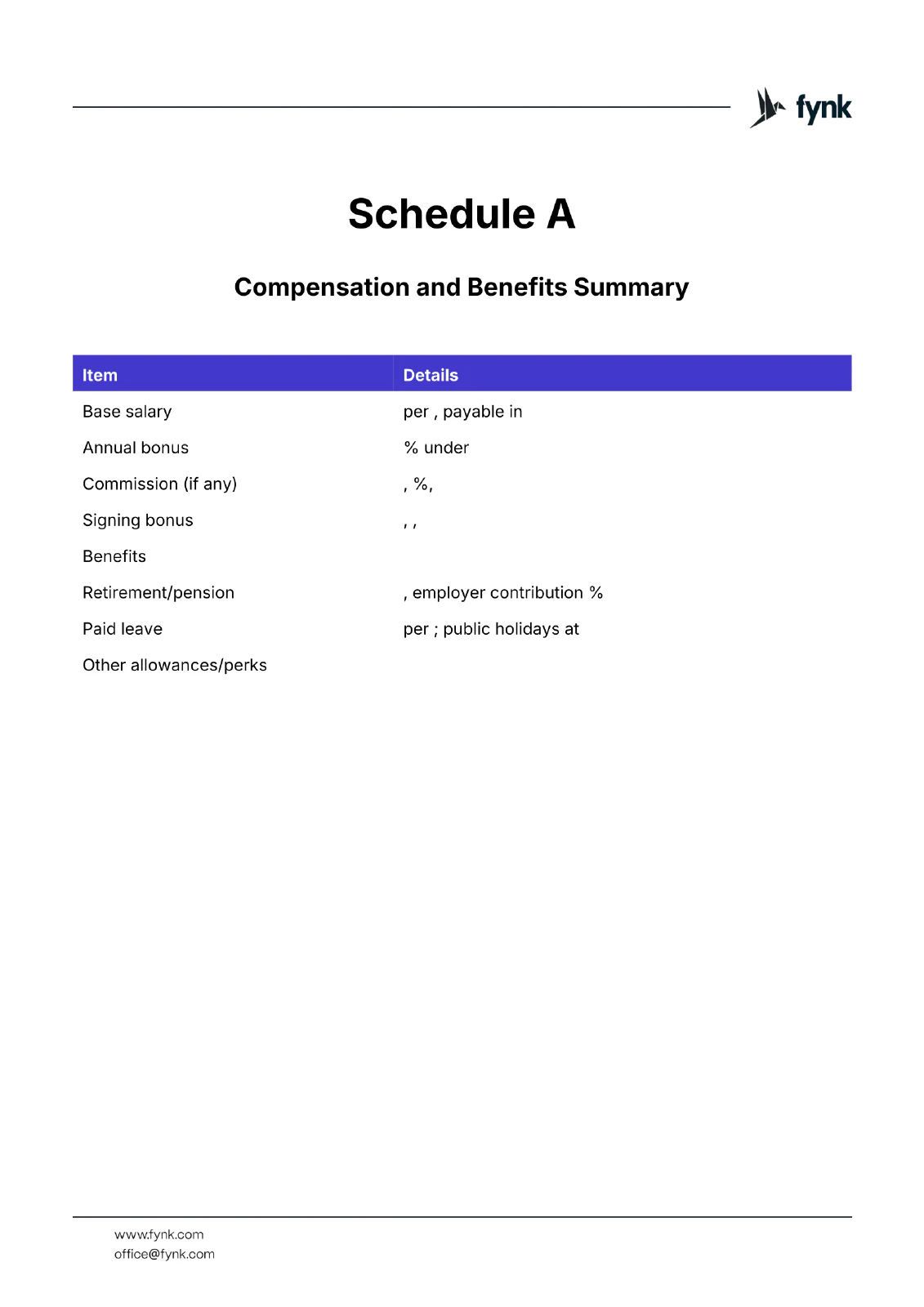
Schedule A
Compensation and Benefits Summary
Item
Details
Base salary
per , payable in
Annual bonus
% under
Commission (if any)
, %,
Signing bonus
, ,
Benefits
Retirement/pension
, employer contribution %
Paid leave
per ; public holidays at
Other allowances/perks
Schedule B
Role Description
• • • • …
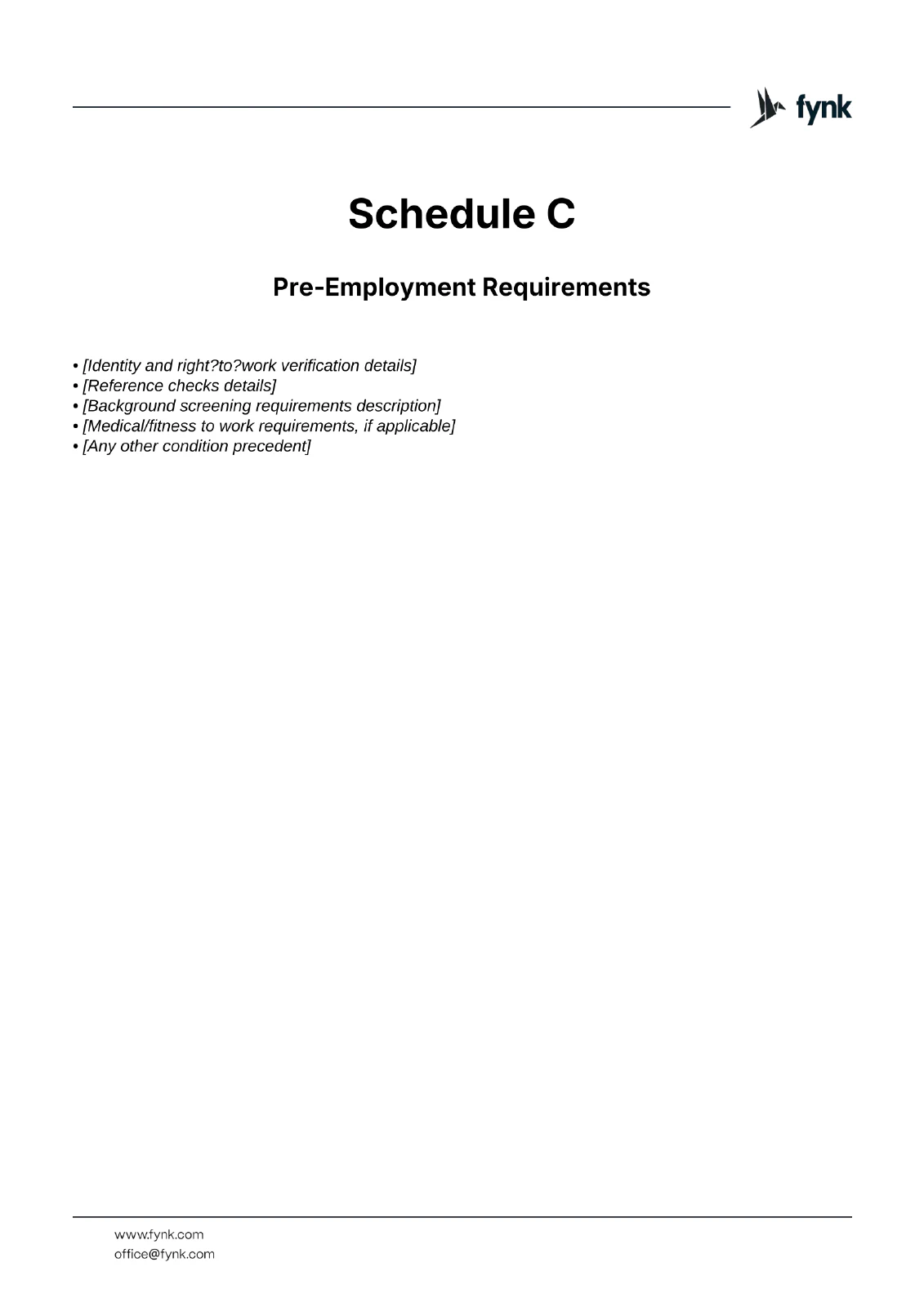
Schedule C
Pre‑Employment Requirements
• [Identity and right‑to‑work verification details] • [Reference checks details] • [Background screening requirements description] • [Medical/fitness to work requirements, if applicable] • [Any other condition precedent]
Disclaimer: The original creator, the author of this template, and fynk GmbH are not responsible for any damages or liabilities that may result from using this template. This template should not be considered a substitute for legal advice, and consulting with a legal professional is recommended before use. fynk GmbH, the original creator, and the author do not provide legal advice and will not be held accountable for any legal consequences arising from its use.
Making contract management easier for companies such as
Background Information
Job Offer Letter Easily Explained.
Learn everything that is about job offer letters.
What is a job offer letter?
A job offer letter is a formal document issued by an employer to a candidate selected for a role. It outlines the principal terms of employment and serves as written confirmation of the offer before the employee starts work.
While it is not always as detailed as a full employment agreement, a job offer letter typically includes:
The employee’s job title and reporting structure
Start date and work location
Compensation and benefits
Key duties and expectations
Conditions that must be met before employment begins
Once signed, a job offer letter often becomes legally binding with respect to certain terms, depending on jurisdiction and wording. For this reason, clarity and accuracy are essential.
Why are job offer letters important?
Job offer letters play a crucial role in the hiring process for several reasons.
First, they set expectations early. Candidates know exactly what they’re agreeing to like salary, working hours, location, benefits, and key responsibilities, before leaving their current role or making major life decisions.
Second, they reduce legal risk. Clearly documenting employment terms helps prevent disputes related to compensation, benefits eligibility, confidentiality, or termination rights.
Finally, they create a professional candidate experience. A structured, well-written offer letter signals that your organization is organized, transparent, and serious about its commitments.
Who should use a job offer letter?
Job offer letters are used by employers across virtually every industry and company size. They are particularly important for:
HR teams managing multiple hires and requiring consistency
Founders and startup leaders making early or strategic hires
Growing companies expanding across regions or employment types
Global employers hiring remote or hybrid employees
Organizations with structured compensation or benefits plans
Any employer extending a formal offer of employment should use a job offer letter to document the key terms clearly and professionally.
What should a job offer letter include?
While job offer letters can vary by role and jurisdiction, most effective ones include the following core sections.
This section outlines how employment may be terminated and clarifies which documents govern the relationship in case of inconsistencies. It often includes:
Notice requirements
Termination for cause provisions
Obligation to return company property
Governing documents and policies
Free job offer letter template
Drafting a job offer letter from scratch can be time-consuming and risky—especially when hiring across roles, regions, or employment types.
fynk’s job offer letter template provides a structured, legally sound foundation that you can customize in minutes. It’s designed to support modern hiring needs while remaining flexible enough to adapt to different jurisdictions and organizational structures.
What makes our template stand out?
Comprehensive structure covering role details, compensation, benefits, and conditions
Flexible compensation sections for salary, bonuses, commissions, and incentives
Clear benefits and leave summaries aligned with company policies
Built-in schedules for compensation details, role descriptions, and pre-employment requirements
Professional formatting that enhances the candidate experience
Simplify hiring with fynk
With fynk, you don’t just get a job offer letter template—you get a complete contract management workflow.
"What really makes it a selling point for me is not just the time it saves, but that I actually like doing contracts now."
Alina Heiner– Founder and Director at maven
Key features include:
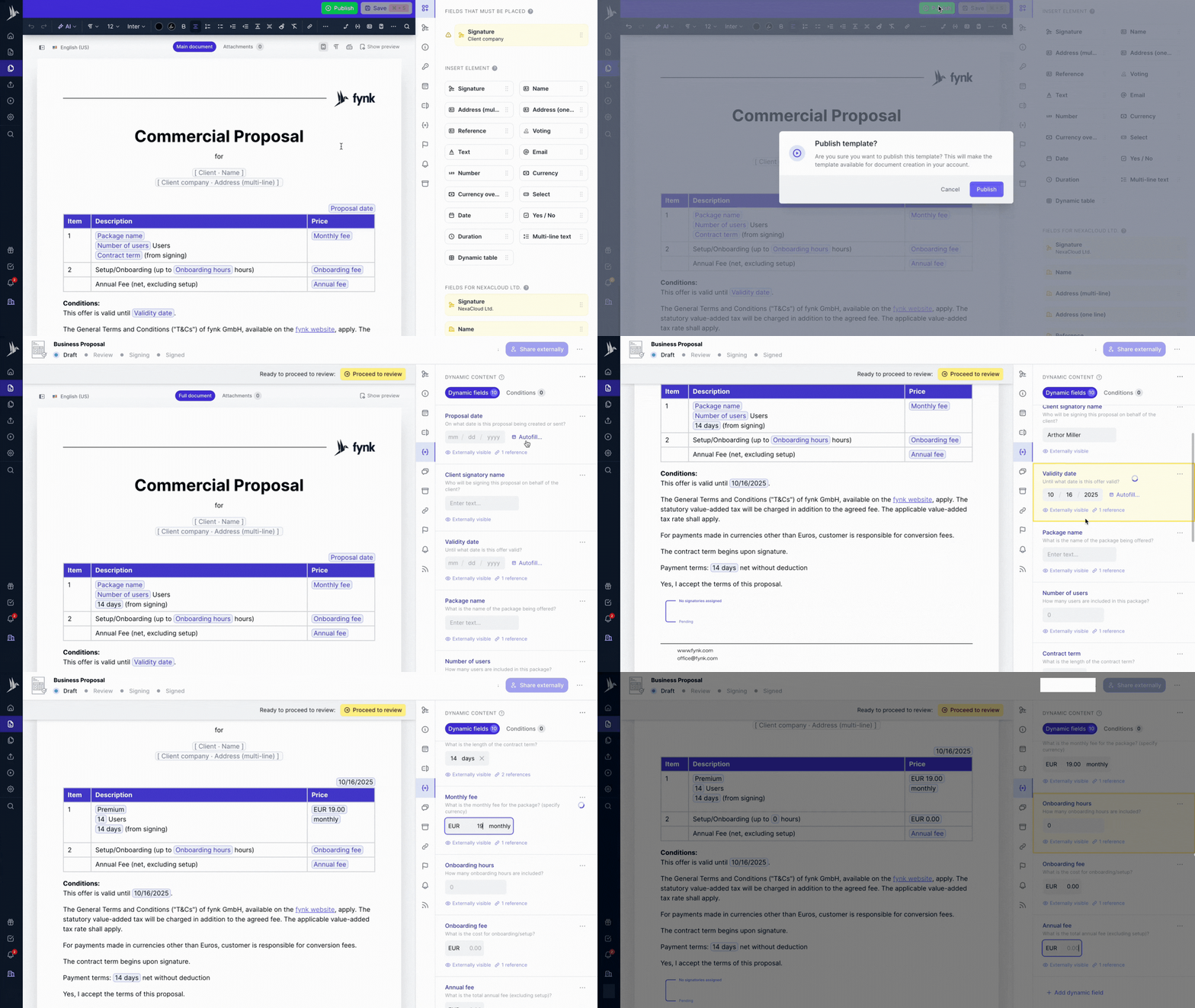
Templates: Create reusable job offer letters with consistent structure across teams and regions.
Create docs from templates in fynk
Dynamic fields: Automatically populate names, dates, compensation figures, and locations across the document.
A job offer letter formally confirms the terms of employment, including role details, compensation, benefits, and conditions, before the employee starts work.
Is a job offer letter legally binding?
A job offer letter can be legally binding depending on its wording and applicable law, particularly with respect to compensation, confidentiality, and conditions of employment.
Can a job offer letter include bonuses and commissions?
Yes. Job offer letters often include base salary as well as variable compensation such as bonuses, commissions, signing bonuses, or other incentives.
What conditions are typically included in a job offer?
Common conditions include work authorization, background checks, confidentiality obligations, probation periods, and acceptance deadlines.
An early termination right clause allows one or both parties to terminate the contract before the agreed end date under specified conditions, often involving notice periods and sometimes fees or penalties. This clause provides flexibility to adapt to changing circumstances but can also introduce uncertainty regarding the contract's duration.
The "Job Title and Duties" clause outlines the specific position an employee is hired for, detailing the title and primary responsibilities associated with the role. This clause helps ensure clarity in expectations and scope of work, serving as a reference point for performance evaluations and potential role changes.
A workplace location clause specifies the designated location where an employee is expected to perform their job duties, which can include specific details such as the address or city. This clause may also outline any expectations regarding remote work, travel requirements, or potential relocations.
A "Working Hours" clause typically outlines the agreed-upon days and times an employee is expected to work, including any provisions for overtime, breaks, and flexibility. It serves to set clear expectations for both the employer and employee regarding work schedules and helps ensure compliance with applicable labor laws.
The compensation clause outlines the payment terms agreed upon between the parties involved in a contract, specifying the amount, schedule, and method of payment for services rendered or work completed. It ensures transparency and sets expectations regarding financial responsibilities and obligations.
The Annual Bonus Eligibility clause outlines the conditions under which an employee qualifies for a yearly bonus, typically based on factors like individual performance, departmental goals, or overall company success. It specifies any criteria, such as employment duration or achievement of specific milestones, that must be met for the employee to receive the bonus.
A signing bonus is a financial incentive offered to an employee or contractor upon agreeing to and signing a contract, often used to attract top talent or compensate for potential losses incurred by leaving a previous position. This one-time payment is typically provided in addition to other salary or compensation benefits and might be contingent on fulfilling specific terms of the contract, such as staying with the company for a predetermined period.
The Annual Leave clause outlines the entitlement of employees to take paid time off from work each year for rest and relaxation, specifying the number of days or weeks available and any conditions for taking this leave. It may also include details about the process for requesting leave, notice requirements, and provisions for carrying over unused leave to subsequent years.
The Sick Leave clause outlines the conditions under which an employee can take time off due to illness, including the amount of leave allowed, any documentation required for extended absences, and whether the leave is paid or unpaid. It ensures that employees have the necessary time to recover from illness without fear of job loss or penalty.
The reimbursement of expenses clause outlines the conditions under which one party will repay the other for costs incurred while performing contractual obligations, typically requiring the expenses to be deemed reasonable and necessary. This clause often specifies the process for submitting expense claims, documentation requirements, and any limits or exclusions regarding which expenses are eligible for reimbursement.
The "Compliance with Company Policies" clause typically requires employees, contractors, or partners to adhere to the organization's established policies, procedures, and ethical standards as a condition of their engagement. This clause ensures that all parties are aware of and agree to follow the rules and guidelines intended to maintain a safe, lawful, and cohesive working environment.
The intellectual property clause in a contract defines the ownership rights and usage conditions for any creations, inventions, or proprietary information that are developed, exchanged, or used during the course of the agreement. It typically outlines whether the intellectual property rights are retained by the creator, transferred to another party, or shared among parties, detailing any limitations and obligations associated with these rights.
23 example clauses
Related Templates
Are you looking for more templates? fynk has them all!