Learn everything there is about circular resolution for loan agreements. What they are, when to use them for and what they should contain.
What is a Circular Resolution for a Loan Agreement?
A circular resolution for a loan agreement is a way for you and other shareholders or board members to approve a loan without needing to meet in person. For example, if your company needs to secure a loan to finance new equipment or cover operational costs, you can use a circular resolution to approve the decision. Instead of gathering everyone for a formal meeting, each shareholder or board member can review and sign the resolution remotely, whether it’s through email or an online platform. This makes the process faster and more convenient, especially when you need to move quickly—say, to secure funding before an opportunity expires or to meet urgent financial needs.
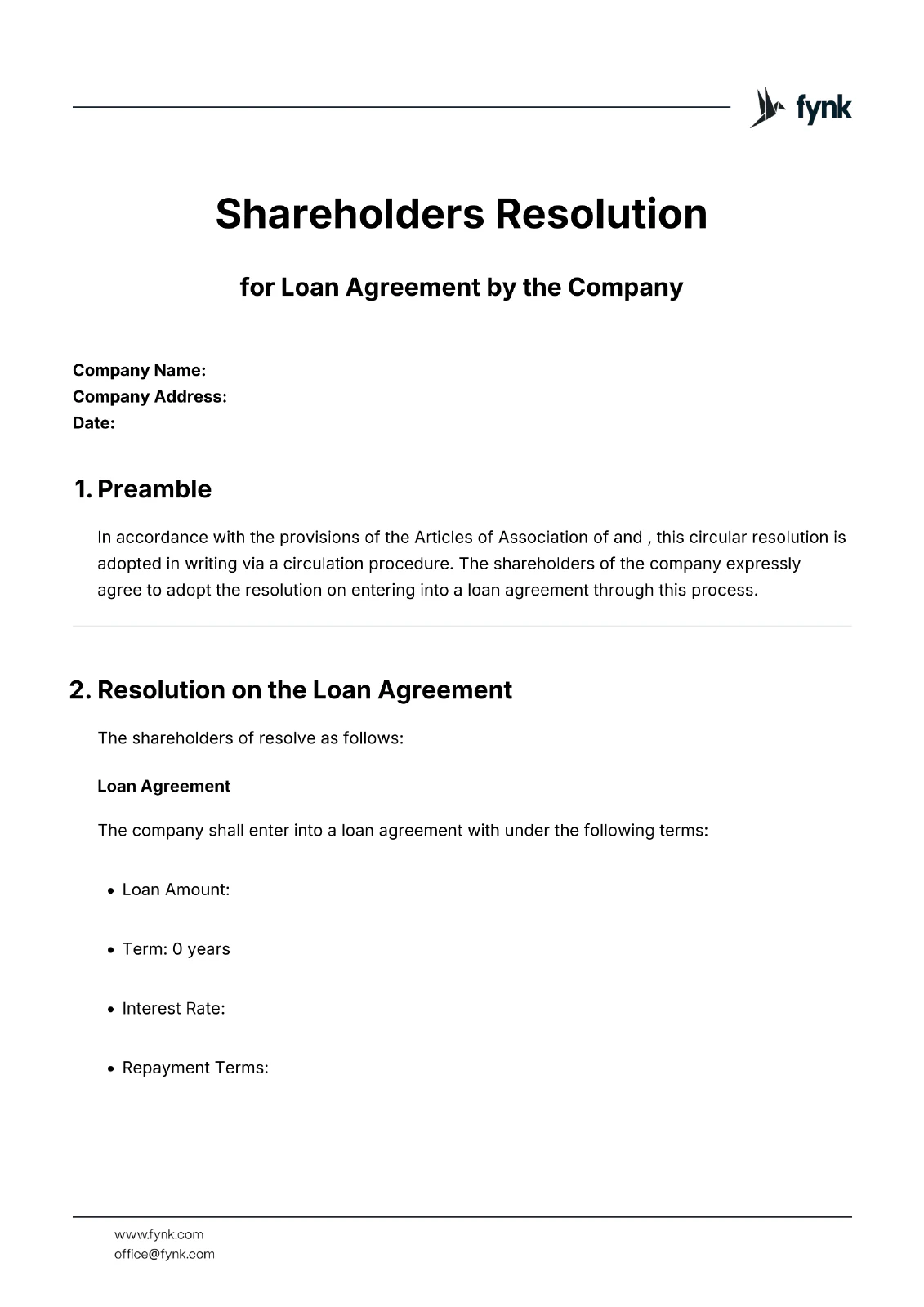
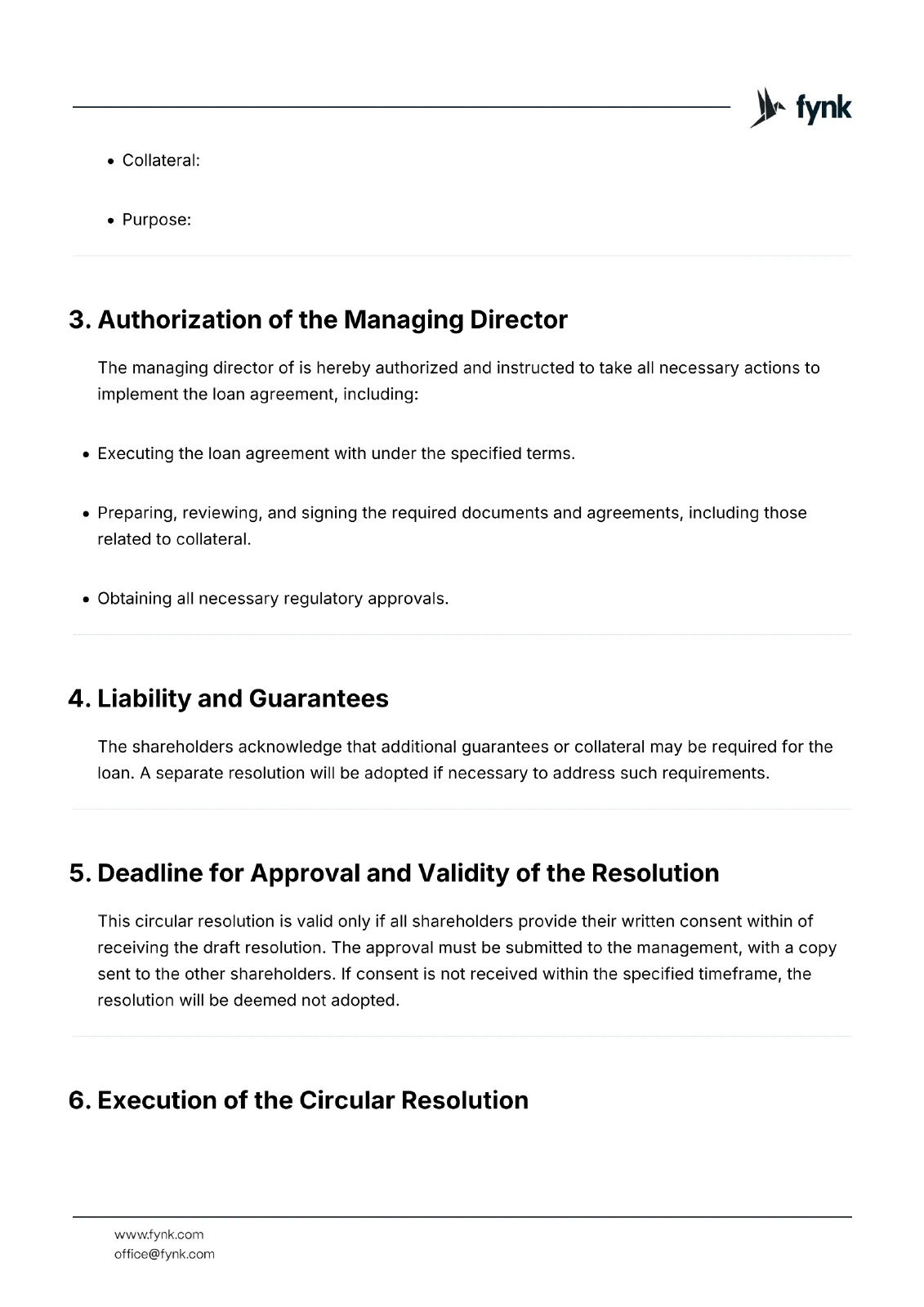
The resolution typically includes all key details, such as the loan amount, interest rate, repayment terms, and any necessary collateral. It also includes authorization for your board members or management to take the necessary steps to finalize the loan agreement. By using a circular resolution, you can ensure that your company can move forward with its financial plans in a timely and legally compliant manner. This approach is efficient, as it allows everyone involved to make their decision based on well-documented, clear information, with no delays due to logistics or scheduling conflicts.
Benefits of Circular Resolution for Loan Agreements
Using a circular resolution for a loan agreement brings several advantages to the table. First, it allows you to make quick decisions, which is essential when securing financing for time-sensitive opportunities, such as taking advantage of favorable interest rates or funding an urgent project.
Another key benefit is the convenience. You can collect approvals from shareholders or board members no matter where they are, eliminating the need to coordinate schedules for a meeting. This means you can move forward with the loan agreement process faster. Additionally, the remote approval process is more efficient, reducing the potential for delays due to logistical challenges or scheduling conflicts. Plus, by using a pre-drafted template for the resolution, you ensure all the necessary details are captured and nothing is overlooked, maintaining accuracy and compliance throughout.
Legal Framework for Circular Resolution for Loan Agreements (§ 48 GmbHG)
The legal framework for circular resolutions in Germany, specifically outlined in § 48 GmbHG, makes it easier to pass decisions like entering into a loan agreement using a circular resolution. This section allows shareholders or board members to vote remotely, provided everyone agrees in writing. So, if your company needs to secure a loan and you can’t hold an in-person meeting, the law gives you the flexibility to proceed with a circular resolution instead.
Template for Circular Resolution for Loan Agreements
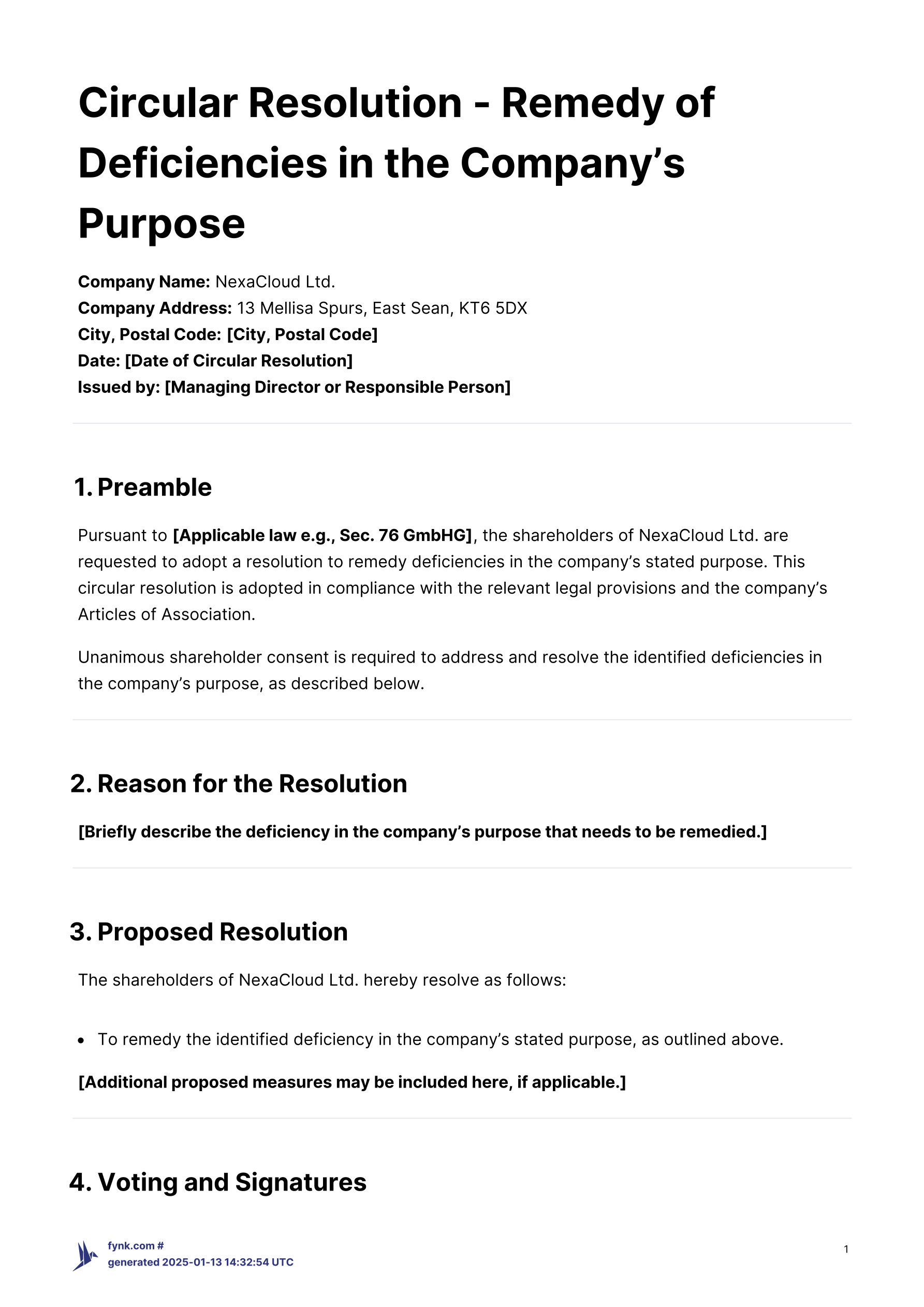
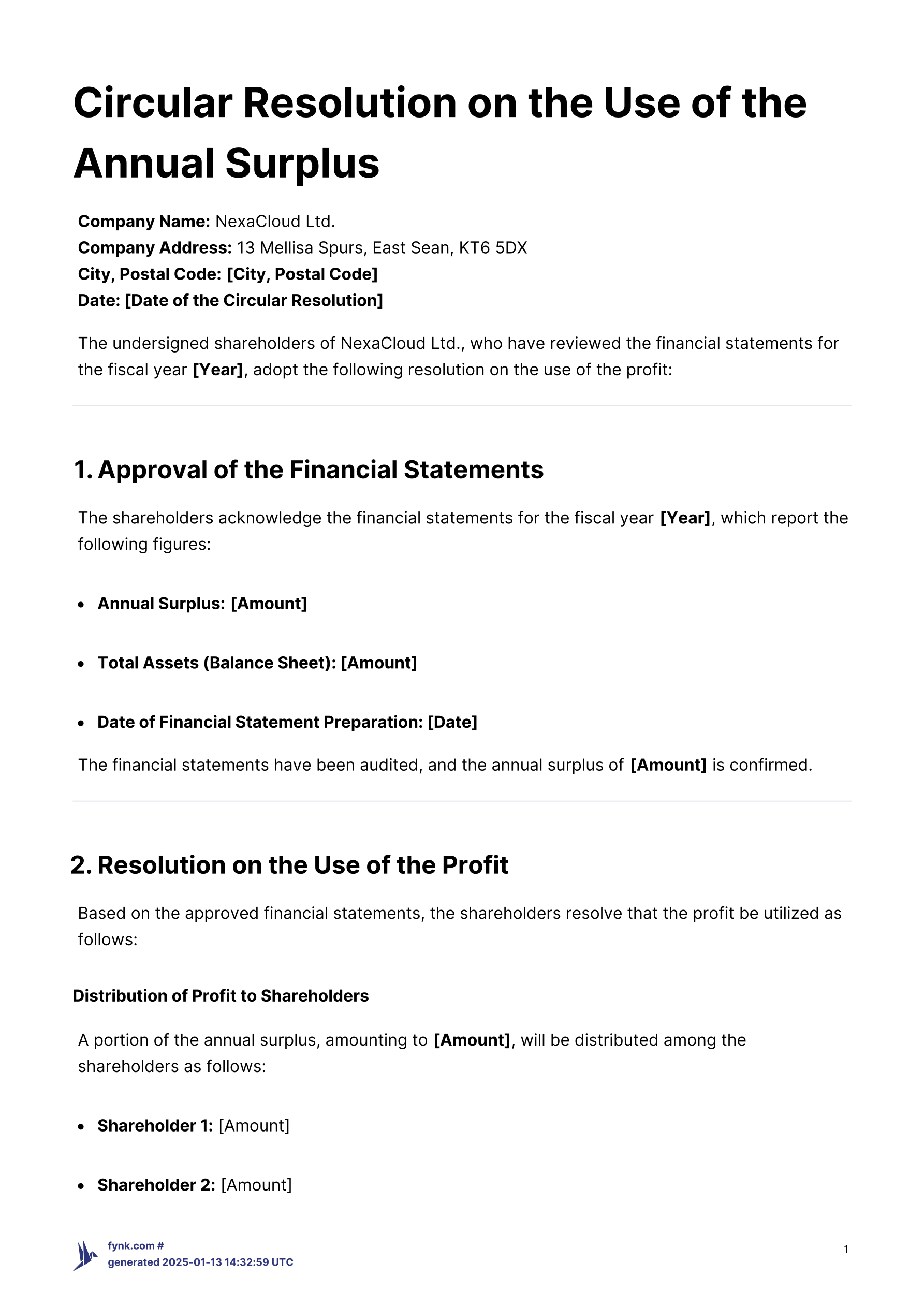
Our template for a circular resolution to approve a loan agreement is designed to make the process simple and stress-free. Whether you’re securing a loan to invest in new projects, cover operational expenses, or capitalize on a time-sensitive opportunity, this template covers all the important details. It includes fields for loan amount, interest rate, repayment terms, and any collateral required.
Give it a free try!
FAQs
- Can a circular resolution be used to approve any type of loan or loan agreement?
- Yes, a circular resolution can be used to approve any type of loan or loan agreement, as long as it aligns with the company’s articles of association and the relevant legal requirements.
- How can I ensure that the loan terms are legally compliant?
- You can ensure legal compliance by reviewing the terms of the loan with legal counsel to confirm that they align with applicable laws and regulations, and by using a reliable template that captures all necessary legal details.
- Can a circular resolution be used for a loan agreement in any type of company structure?
- A circular resolution can be used in various company structures, such as GmbH or AG, as long as the company’s internal governance rules and local laws permit it. Always check the specific legal framework governing your company type.
 Shareholder 1