
leverage ratio
A leverage ratio clause specifies the maximum amount of debt a company can have relative to its equity or earnings, acting as a financial covenant in loan agreements. This clause is designed to ensure that borrowers maintain a certain financial stability and minimize the risk of default by limiting excessive borrowing.
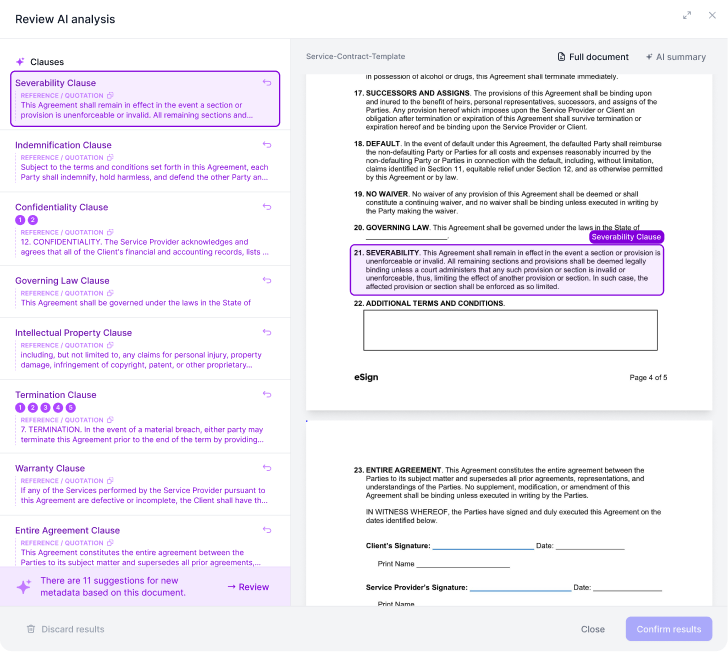
Analyze your contracts. Extract important clauses.
Try our AI contract analysis and extract important clauses and information from existing contracts.
Save your favourite clauses
Insert directly with a single click
Upload preferred precedents
Sample leverage ratio clauses
A leverage ratio is a widely-used measure of ability to repay outstanding debt obligations and is a meaningful metric to investors in evaluating financial leverage.
Consistent with our stated strategy, we are staying disciplined on returns and demonstrating accelerated debt paydown as we march towards our long-term leverage ratio target of less than 1.0x.
Source
SemGroup Corp[Company’s] leverage ratio may not exceed 4.50 to 1.00 as of the last date of any fiscal quarter; provided, that if [Company] consummates a material acquisition, the leverage ratio may not exceed 5.00 to 1.00 as of the last date of the fiscal quarter in which such material acquisition occurs, and as of the last date of the two fiscal quarters immediately following thereafter.
With the sale of these…shares, the Company expects to achieve a debt leverage ratio of 4.7x by year end, compared to the expected 4.8x at year end announced on the release of its third quarter results. The Company’s debt leverage ratio was 4.9x at the end of Q3.
What is a leverage ratio?
A leverage ratio is a financial metric that evaluates the extent to which a company is utilizing borrowed money (debt) to finance its operations and growth. It is a measure of a company’s financial health, indicating how much of the company’s assets are funded by equity as opposed to debt. Leverage ratios are crucial for understanding the financial risk associated with a company’s capital structure.
When should I use a leverage ratio?
A leverage ratio should be used when assessing a company’s financial stability, risk profile, and ability to meet its financial obligations. It is particularly useful for:
- Investors evaluating the risk associated with investing in a company.
- Creditors determining the risk of lending money to a company.
- Company management analyzing the firm’s capital structure to optimize performance and planning future investments.
How do I write a leverage ratio?
To write or calculate a leverage ratio, you’ll need to understand the specific type of leverage ratio you’re interested in. Common leverage ratios include:
Debt-to-Equity Ratio: [ \text{Debt-to-Equity Ratio} = \frac{\text{Total Debt}}{\text{Shareholders’ Equity}} ]
Debt Ratio: [ \text{Debt Ratio} = \frac{\text{Total Debt}}{\text{Total Assets}} ]
Equity Multiplier: [ \text{Equity Multiplier} = \frac{\text{Total Assets}}{\text{Shareholders’ Equity}} ]
Each ratio highlights different aspects of financial leverage and should be calculated using figures from a company’s financial statements.
Which contracts typically contain a leverage ratio?
Leverage ratios are often included in the following types of contracts:
Loan Agreements: Lenders may include covenants that require the borrower to maintain specific leverage ratios to ensure they can repay the loan.
Bond Covenants: Similar to loan agreements, bond contracts may include leverage ratio requirements that the issuer must maintain throughout the life of the bond.
Merger and Acquisition Agreements: These contracts may use leverage ratios to assess the financial health and risk associated with the target company.
Investor Agreements: Private equity and venture capital agreements might use leverage ratios to assess risk and set performance benchmarks.
Understanding and monitoring leverage ratios can help parties involved in these contracts to manage financial risk effectively.
More clauses from the library
See allLiability cap
A liability cap is a contractual provision that limits the maximum amount one party can be held financially responsible for in the event of a breach or other specified issues. This clause helps parties manage risk by capping potential financial exposure, promoting predictability and stability in contractual relationships.
12 example clauses
Liability disclaimer
A liability disclaimer is a contractual clause designed to limit or waive one party's legal responsibility for certain damages or losses that may arise from the agreement. It serves to protect the disclaiming party from lawsuits or claims by specifying the risks that the other party assumes upon entering into the contract.
5 example clauses
Liability for breach of contract
A "Liability for breach of contract" clause outlines the responsibilities and obligations a party faces if they fail to fulfill their contractual duties, including potential compensation for damages incurred by the non-breaching party. It typically specifies the extent and limitations of liability, such as caps on damages or exclusions of certain types of loss.
20 example clauses
Analyze your contracts. Extract important clauses.
Try our AI contract analysis and extract important clauses and information from existing contracts.
Save your favourite clauses
Insert directly with a single click
Upload preferred precedents