
full disclosure
A full disclosure clause requires a party to reveal all relevant information that may impact the other party's understanding of the contract. This ensures transparency and allows both parties to make informed decisions based on complete and accurate data.
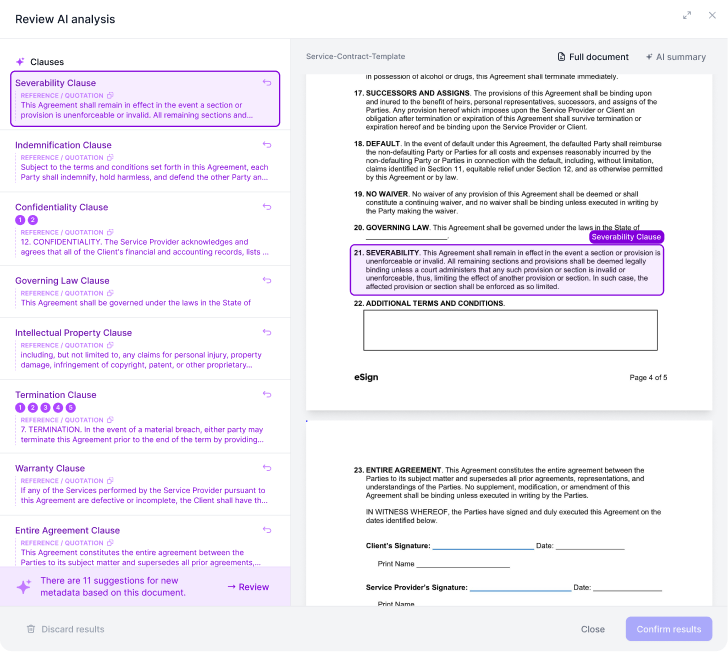
Analyze your contracts. Extract important clauses.
Try our AI contract analysis and extract important clauses and information from existing contracts.
Save your favourite clauses
Insert directly with a single click
Upload preferred precedents
Sample full disclosure clauses
Full disclosure to the public generally means a press release followed by publication in the print media, typically The Wall Street Journal. A speech to an audience, a TV or radio appearance or an article in an obscure magazine do not qualify as full disclosure. Full disclosure means that the securities markets have had the opportunity to digest the news. Generally, two to three business days following publication in The Wall Street Journal (or release to national wire services) is regarded as sufficient for dissemination and interpretation of material information.
Source
Flowr CorpThis term sheet does not provide full disclosure of all material facts relating to the securities offered. Investors should read the amended and restated preliminary prospectus and any amendment for disclosure of those facts, especially risk factors relating to the securities offered, before making an investment decision.
Before making any investment, accepting any position or benefits, participating in any transaction or business arrangement or otherwise acting in a manner that creates or appears to create a conflict of interest, you must make full disclosure of all facts and circumstances to the chair of the Audit Committee of the Company’s Board of Directors (the “Audit Committee”), and obtain the prior written approval of the Audit Committee.
Source
Destra Investment TrustIf you would like to seek a waiver of the Code of Ethics you must make full disclosure of your particular circumstances to the Secretary of the Funds. Changes in and waivers of this Code of Ethics will be publicly disclosed as required by applicable law and regulations.
In many cases, a potential conflict of interest or violation of trust may be avoided by making a full disclosure of the facts prior to any transaction, thereby permitting the Company to make an informed, independent decision regarding the transaction. Such disclosure should be made to the Legal Department via use of the Related Party Disclosure form or other direct communication with the Legal Department.
Full Disclosure of Accounts. No secret or unrecorded fund of monies or other assets of the Company shall be established or maintained, and all payments and disbursements shall be properly recorded on the books and records of the Company.
Source
BALLANTYNE STRONG, INC.Senior financial officers of the Company will ensure that all relevant staff members understand the Company’s open communication and full disclosure standards and processes.
Fair and Full Disclosure. It is the Company’s policy that the information in its public communications, including filings with the SEC, be timely and understandable, and fair, complete and accurate in all material respects. Senior Officers should exercise diligence and care in furtherance of this policy. Senior Officers are prohibited from knowingly misrepresenting, omitting, or causing or permitting others to misrepresent or omit, material facts about the Company to anyone having a role in the Company’s financial reporting and disclosure process.
In the spirit of full disclosure, the relationship that allowed the Company to take over this sublease is long standing (going back to 2004)…
Full Disclosure. No representation or warranty by Holder in this Agreement or any certificate or other document furnished or to be furnished to the Company pursuant to this Agreement contains any untrue statement of a material fact, or omits to state a material fact necessary to make the statements contained therein, in light of the circumstances in which they are made, not misleading.
Prompt and full disclosure with senior management is always the correct first step in dealing with any potential conflict of interest.
Full Disclosure. Seller has all of the information it has requested for deciding whether to sell the Shares.
Full Disclosure. No representation or warranty by the Remaining Shareholders contained in this Agreement, and no representation, warranty or statement contained in any list, certificate, exhibit, schedule or other instrument, document, agreement or writing furnished or to be furnished to, or made with, either TTG, Bulwark, or the Remaining Shareholders pursuant to this Agreement or in connection with the negotiation, execution or performance of this Agreement, contains or will contain any untrue statement of material fact or omits or will omit to state any material fact necessary of making a statement in this agreement or therein not misleading.
What is full disclosure?
Full disclosure is a principle, often used in legal, real estate, and financial contexts, requiring that all relevant information be presented transparently and completely to all parties involved. The goal is to ensure that decisions are made based on comprehensive and true information, thereby promoting fairness and trust.
When should I use full disclosure?
Full disclosure should be used when:
- Entering Contracts: It is critical during negotiations or contractual agreements to communicate all material facts.
- Legal Obligations: When there is a fiduciary duty or legal requirement to disclose information.
- Financial Reporting: Companies must provide full disclosure in financial statements so investors can make informed decisions.
- Real Estate Transactions: Sellers must disclose all known defects of the property to potential buyers.
How do I write a full disclosure?
To write an effective full disclosure, follow these guidelines:
Clarity and Conciseness: Present the information clearly and directly without unnecessary jargon or omissions.
Comprehensive Information: Ensure that all material facts relevant to the subject matter are included.
Truthfulness: Provide accurate and truthful information.
Documentation: Support claims with appropriate documentation or evidence, if available.
Example: “The company hereby discloses that the pending lawsuit could materially affect its financial standing, potentially resulting in liabilities exceeding $10 million. Relevant documentation is attached.”
Which contracts typically contain full disclosure?
Full disclosure clauses are often found in the following contracts:
- Real Estate Contracts: Disclosures about property conditions, known issues, and legal limitations.
- Merger and Acquisition Agreements: Details regarding financial status, liabilities, and any ongoing legal proceedings.
- Loan Agreements: Complete disclosure of borrower’s financial status and any other liabilities or obligations.
- Employment Contracts: Disclosure of potential conflicts of interest or non-compete agreements from previous employment.
More clauses from the library
See allFunctionality
The "Functionality" clause in a contract outlines the specific features and capabilities that a product or service must deliver according to agreed standards. It ensures that any deviations from these stated functionalities allow for remedies, such as corrections or compensation, to uphold the contract's integrity.
5 example clauses
Funds on deposit
The "Funds on Deposit" clause specifies that any funds held by a party, typically in an account or trust, are to be managed according to the agreed terms in the contract. It outlines the conditions under which these funds can be accessed, disbursed, or invested, ensuring proper handling and accountability.
9 example clauses
Further assurances
A "further assurances" clause requires the parties involved in a contract to take additional actions necessary to fulfill the terms and intents of the agreement, even after the contract has been signed. This provision ensures that both parties cooperate in good faith to accomplish the contract's objectives and resolve any unforeseen issues that may arise.
16 example clauses
Analyze your contracts. Extract important clauses.
Try our AI contract analysis and extract important clauses and information from existing contracts.
Save your favourite clauses
Insert directly with a single click
Upload preferred precedents