Shareholders Resolution (Circular)
to Deny Information or Inspection Rights
Company Name: Company (Name)
Company Address: Shareholder 3 (Address (one line))
Date: Date of shareholder resolution
Preamble
This circular resolution is adopted pursuant to Applicable law for shareholder resolution, and the Articles of Association of Company (Name). It concerns the denial of a shareholder’s request for information or inspection if there are legitimate grounds to believe that the information or inspection rights will be used for purposes unrelated to the company and may result in a significant disadvantage to the company or an affiliated entity.
Resolution
The shareholders of Company (Name) hereby resolve as follows:
Denial of the Request
The request for information and/or inspection submitted by Name of shareholder requesting information on Date of request for information is hereby denied.
Reason for Denial
The denial is based on the determination that granting the information or inspection rights is highly likely to lead to the use of the information for purposes unrelated to the company, potentially causing a significant disadvantage to the company or an affiliated entity.
Legal Basis
This resolution is adopted pursuant to Legal basis for denial, which allows the denial of information or inspection rights when there are justified concerns regarding potential misuse and adverse consequences for the company.
Voting and Signatures
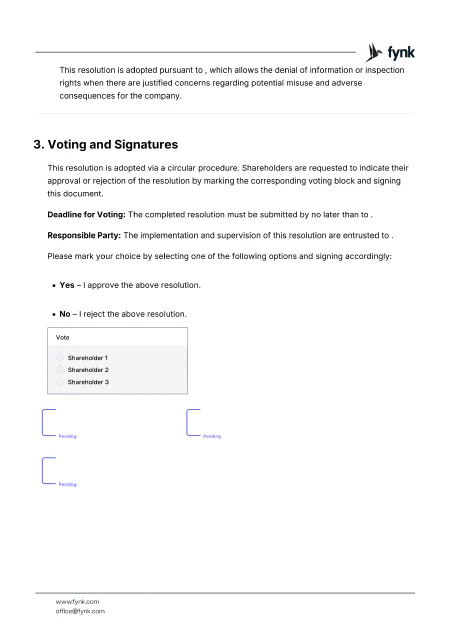
This resolution is adopted via a circular procedure. Shareholders are requested to indicate their approval or rejection of the resolution by marking the corresponding voting block and signing this document.
Deadline for Voting: The completed resolution must be submitted by no later than Voting deadline to Name of managing director or responsible party.
Responsible Party: The implementation and supervision of this resolution are entrusted to Name of managing director or responsible party.
Please mark your choice by selecting one of the following options and signing accordingly:
Yes – I approve the above resolution.
No – I reject the above resolution.
Vote Shareholder 1Shareholder 2Shareholder 3