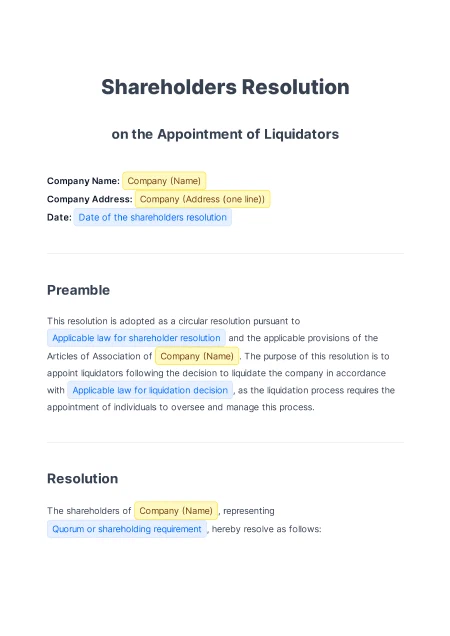
Shareholders Resolution
on the Appointment of Liquidators
Company Name: Company (Name)
Company Address: Company (Address (one line))
Date: Date of the shareholders resolution
Preamble
This resolution is adopted as a circular resolution pursuant to Applicable law for shareholder resolution and the applicable provisions of the Articles of Association of Company (Name). The purpose of this resolution is to appoint liquidators following the decision to liquidate the company in accordance with Applicable law for liquidation decision, as the liquidation process requires the appointment of individuals to oversee and manage this process.
Resolution
The shareholders of Company (Name), representing Quorum or shareholding requirement, hereby resolve as follows:
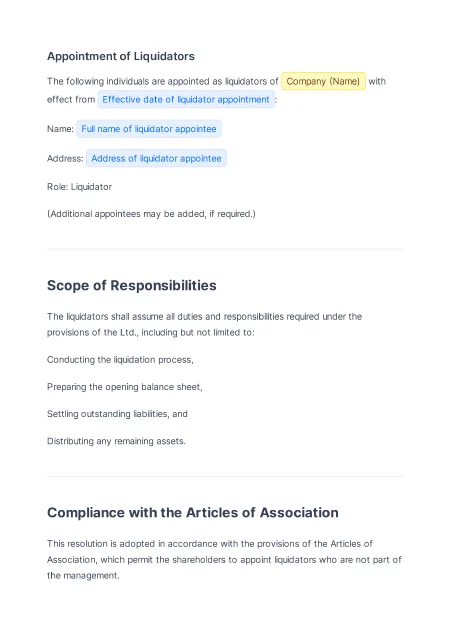
Appointment of Liquidators
The following individuals are appointed as liquidators of Company (Name) with effect from Effective date of liquidator appointment:
Name: Full name of liquidator appointee
Address: Address of liquidator appointee
Role: Liquidator
(Additional appointees may be added, if required.)
Scope of Responsibilities
The liquidators shall assume all duties and responsibilities required under the provisions of the Ltd., including but not limited to:
Conducting the liquidation process,
Preparing the opening balance sheet,
Settling outstanding liabilities, and
Distributing any remaining assets.
Compliance with the Articles of Association
This resolution is adopted in accordance with the provisions of the Articles of Association, which permit the shareholders to appoint liquidators who are not part of the management.
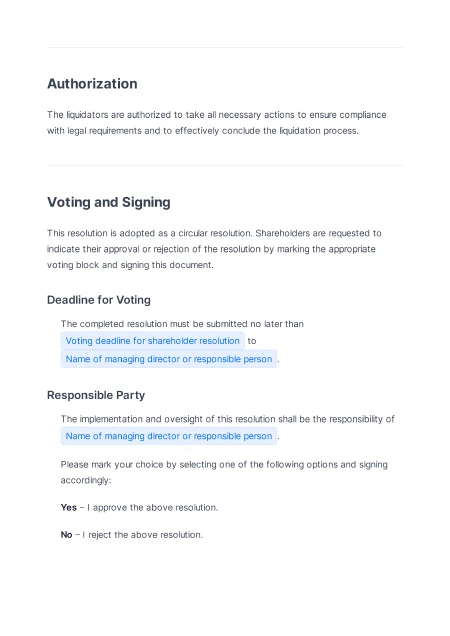
Authorization
The liquidators are authorized to take all necessary actions to ensure compliance with legal requirements and to effectively conclude the liquidation process.
Voting and Signing
This resolution is adopted as a circular resolution. Shareholders are requested to indicate their approval or rejection of the resolution by marking the appropriate voting block and signing this document.
Deadline for Voting
The completed resolution must be submitted no later than Voting deadline for shareholder resolution to Name of managing director or responsible person.
Responsible Party
The implementation and oversight of this resolution shall be the responsibility of Name of managing director or responsible person.
Please mark your choice by selecting one of the following options and signing accordingly:
Yes – I approve the above resolution.
No – I reject the above resolution.
Vote Shareholder 1Shareholder 2Shareholder 3