
The €70K contract lesson behind five 14’s move to fynk

"The idea was really having a centralized platform where we have our standard templates for offers and contracts."
After a single contract change caused a €70,000 loss, executive search firm Five 14 rethought how contracts were created and controlled. With fynk, the company standardized templates, locked critical clauses, and centralized all agreements—turning contracts from hidden risk into a controlled, scalable process.
The hidden legal risk no one talks about
In executive search, contracts are not exotic documents. Fee structures, guarantees, jurisdictions, and timelines follow largely standardized patterns. Yet in many firms, those contracts live in Word files, email threads, and personal folders, quietly accumulating risk.
Harald R. Fortmann has seen this firsthand.
He runs a boutique executive search firm where he personally manages client relationships and oversees the full hiring process. Unlike his previous setup, contracts and client communication now run directly through him rather than being handled by multiple consultants.
Before using fynk for his current company, Five14, his team operated in a familiar setup. Consultants worked from Word templates, adjusted clauses for individual clients, and sent contracts out independently. Over time, this created a situation where no one had full visibility into what was actually being agreed with clients.
What looked like flexibility turned into exposure.
“We had people changing jurisdiction clauses, guarantees, percentages. Everyone thought they were doing the right thing for the deal,” Harald explained. But over time, this ballooned into dozens of versions, including more than 50 different jurisdiction clauses across contracts.
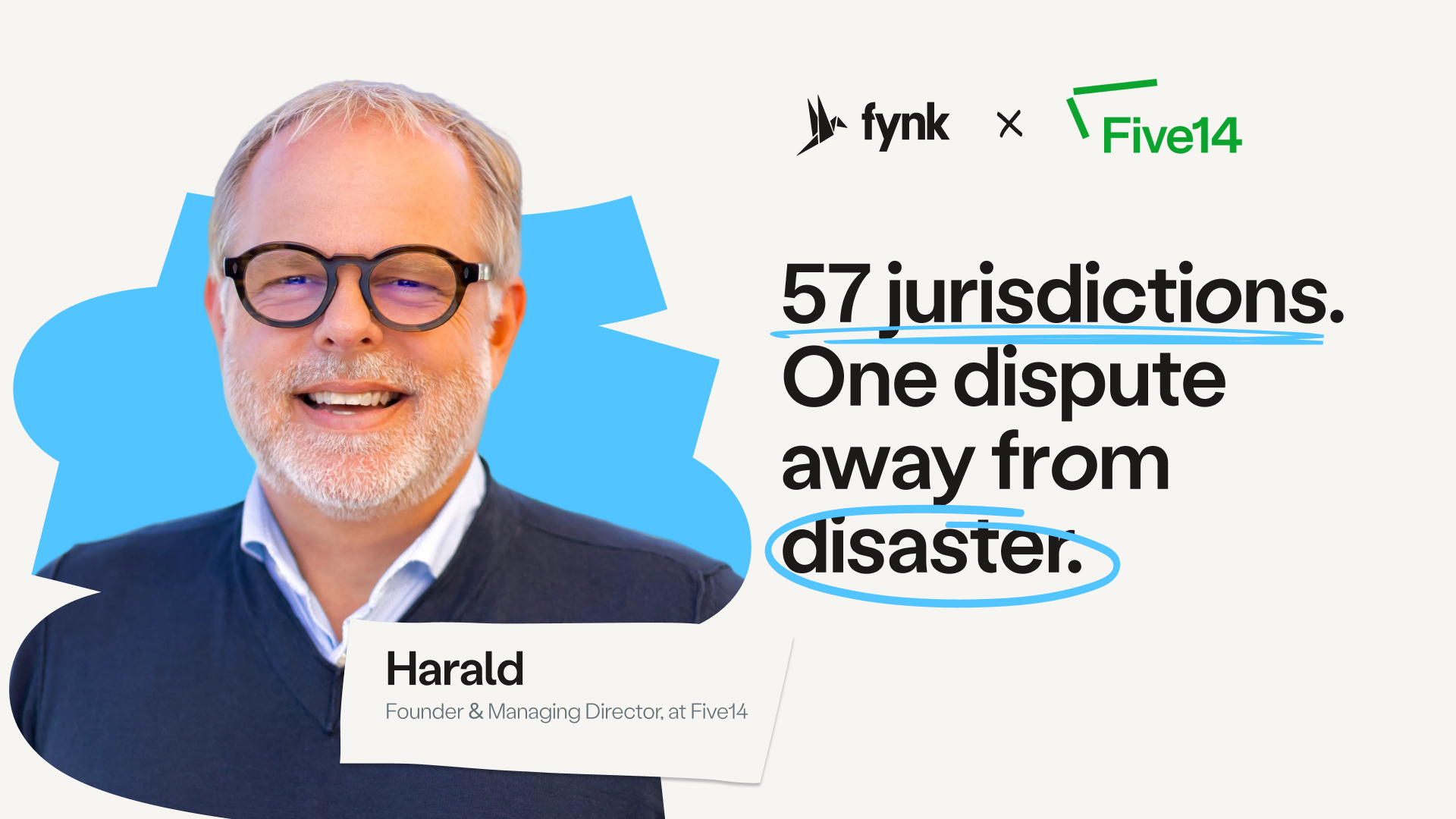
The real cost of this only became clear later in just a moment, when a single change to a guarantee clause resulted in a mandatory replacement at no cost, with an impact of €50–70k.
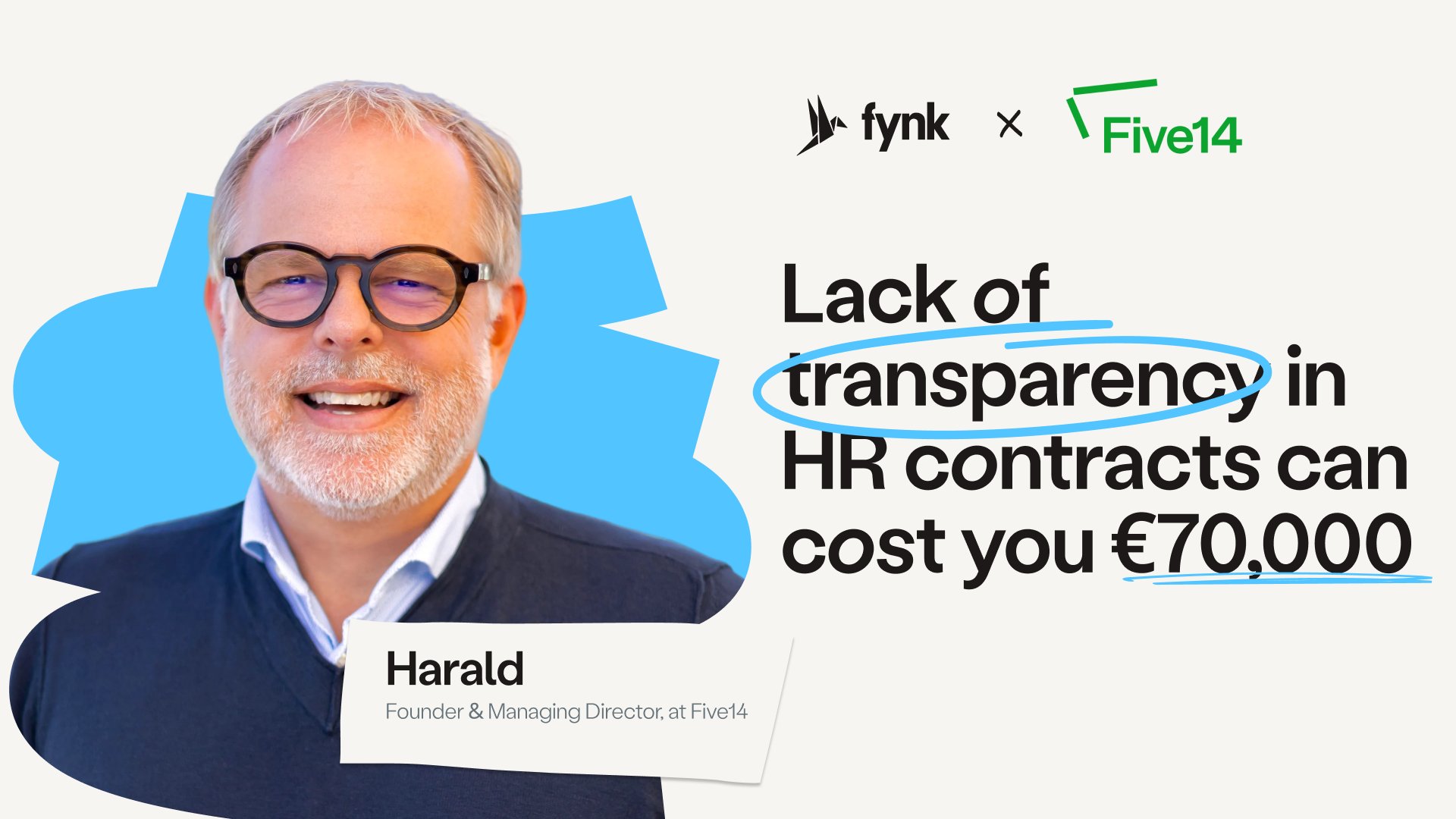
That moment became the trigger for change.
Why standardization became necessary
This incident wasn’t a one-off. It highlighted a broader issue in how contracts were handled day to day.
At his previous executive search firm, consultants were sending contracts independently. Over time, that naturally led to many versions of the same agreement being used in parallel. Small changes accumulated, and before long there were dozens of variations in circulation, including more than 50 different jurisdiction clauses.
"We had like 25 people all using different contracts, and from a legal point of view, it was kind of a nightmare. People were changing things on their own, and you don’t really see it until it appears later."

There was no bad intent behind this. Consultants were focused on moving deals forward. But without clear guardrails, commercial pressure made it easy to adjust things that should have stayed fixed. Management and legal teams had limited visibility, and issues often only became visible once a contract was already signed.
As part of standardizing the process, he used fynk templates to bring these variations back to a single jurisdiction standard, ensuring that critical clauses could no longer be changed freely.
For Harald, this made one thing clear: the process needed more structure.
"The goal was to standardize the entire offering and contract process. Digital signature was important, but control was the real driver."
Why fynk became the control layer
Harald initially set out to find a GDPR conform, European solution for digital signatures. A long time freelance designer he works with encouraged him to think a step further and look at digital contracting as a whole, rather than just signatures, and to avoid relying on a large, US based provider.
As Harald explored different options, one thing quickly became clear: he needed more than a tool to sign documents. He needed a way to bring structure into how contracts were created and controlled.
That’s where fynk stood out. The product felt clear and intentional from the start. The logic behind how it was built, what problems it was designed to solve, and where it was heading made sense to him early on and gave him confidence to move forward.
Instead of adding another layer of complexity, fynk supported the idea of standardization. Contracts and offer letters were rebuilt once as templates and then reused consistently. Specific commercial details could still be adjusted, but the overall structure stayed intact. This reduced the risk of unintended changes while keeping daily work practical for consultants.
"You give people flexibility where it’s safe, but you lock the rest. That’s the key."
Over time, fynk became the place where structure was built into the process itself. Control no longer depended on manual reviews or constant oversight, but on how contracts were created from the start. That shift addressed the root cause of the earlier issues and made the process easier to manage going forward.
Templates that protect the business, not slow it down
For Harald, templates are not about making contracts rigid. They are about making them safe and workable at scale.
"[In fynk] The entire executive search process is pretty standardized. As soon as you can make the few variable parts selectable, everything becomes easier and safer."
Instead of copying Word documents and adjusting them again and again, contracts now follow a single structure and live in one place. The legal foundation stays consistent, while consultants can still work efficiently without having to interpret or rewrite clauses on their own. At the same time, management has a clear view of what is being sent out.
The biggest difference, however, is what no longer happens.
“With Word templates, people change things you would never approve. With this setup, that risk just disappears,” Harald explains.
That shift removes a type of risk that often stays invisible until it’s too late.
A European, GDPR first approach
Another important factor for Harald was choosing a solution built in Europe with GDPR compliance at its core.
He had experience with other digital signature tools in the past, but for his own companies and clients, he deliberately wanted to avoid relying on US-based solutions. This wasn’t an isolated preference. He described it as a broader shift he sees across the market.
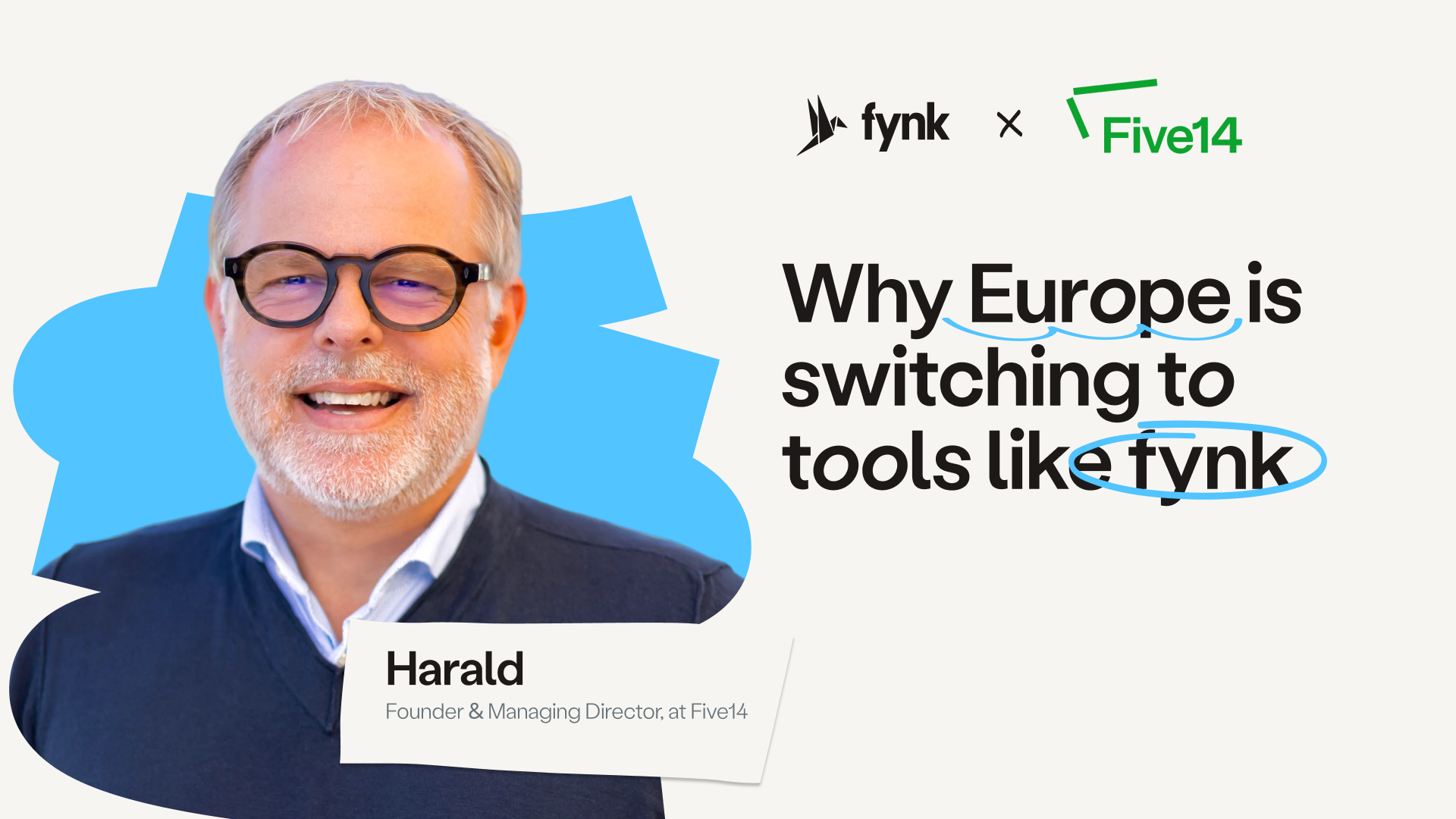
As he mentions, “More and more companies are asking to move away from US solutions. I see this with many of our SaaS clients.”
fynk’s European roots and compliance focus gave him confidence early on. It aligned with how he thinks about risk, data protection, and long-term reliability when it comes to contracts.
For Harald, choosing fynk was therefore not just a tooling decision, but a conscious compliance choice that fit both his own standards and those of his clients.
Adoption depends on culture, not software
Not every rollout looks the same, and Harald is very open about that.
At his previous company, only a small share of clients were ready to complete contracts fully digitally. Many still preferred to print, sign, scan, and send documents back. Over time, adoption stayed low, and the board decided that the cost didn’t make sense given how little the tool was being used.
"Less than two percent of contracts went through the tool [we were using]. From a cost perspective, it didn’t make sense."
That decision wasn’t a reflection of the product itself. It was a question of timing and readiness.
In contrast, in Harald’s current boutique setup, digital workflows were adopted much more naturally. His clients were already comfortable working digitally, which made the process smoother from the start. “It’s a mindset thing. Not age, mindset,” he emphasizes.
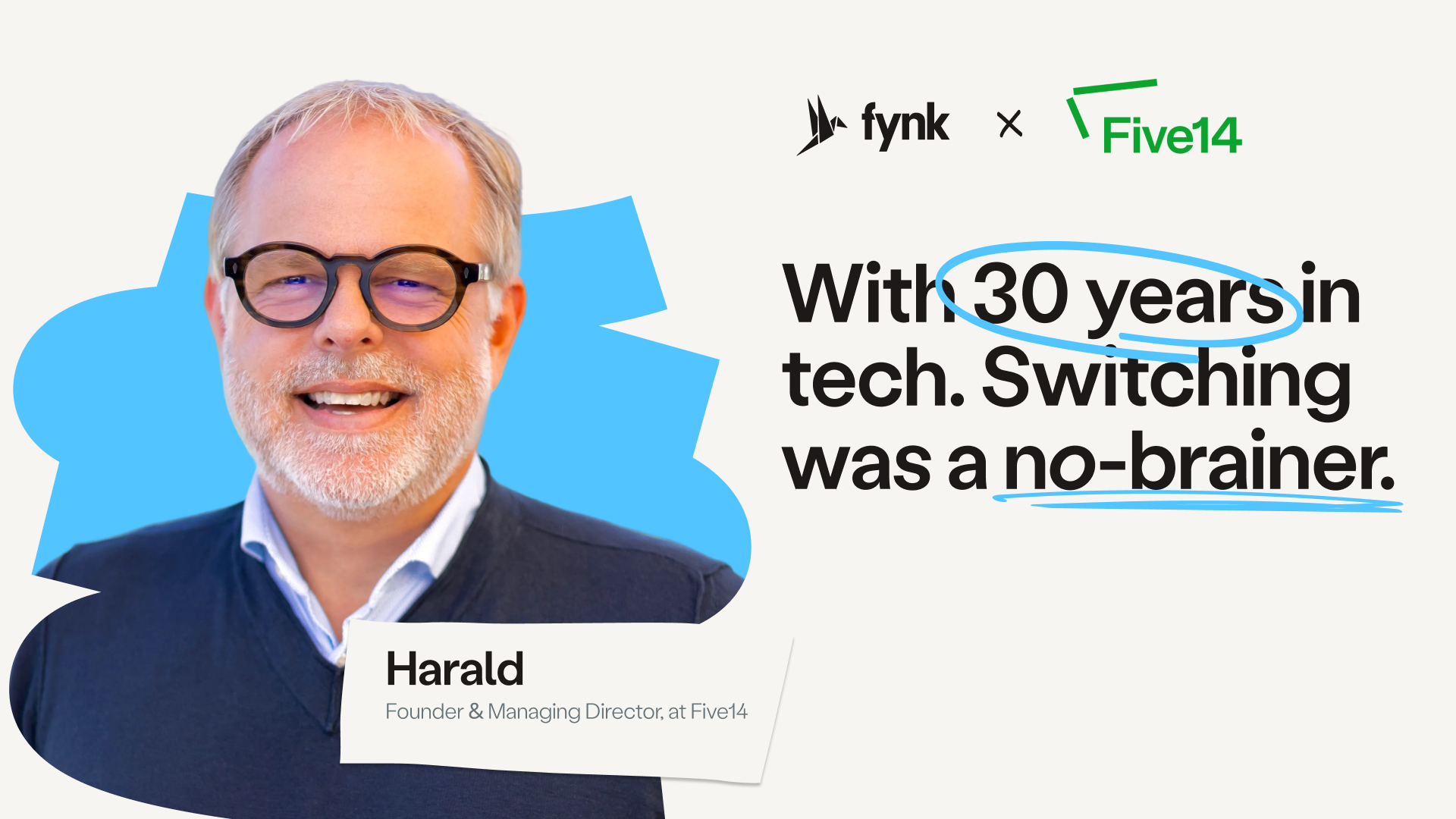
For Harald, the takeaway is clear: successful implementation depends as much on how teams and clients work as on the tool itself. Clear setup, realistic expectations, and proper onboarding matter just as much as the software.
Features that worked especially well in this setup
For Harald’s executive search workflow, a few capabilities stood out:
- Templates: Used to standardize offer letters and contracts across consultants.
- Controlled fields: Allowed specific parameters to be adjusted without changing core legal clauses.
- Central document storage: Provided a single place for all agreements instead of scattered files.
- Search: Made it easy to locate contracts and understand what had been signed.
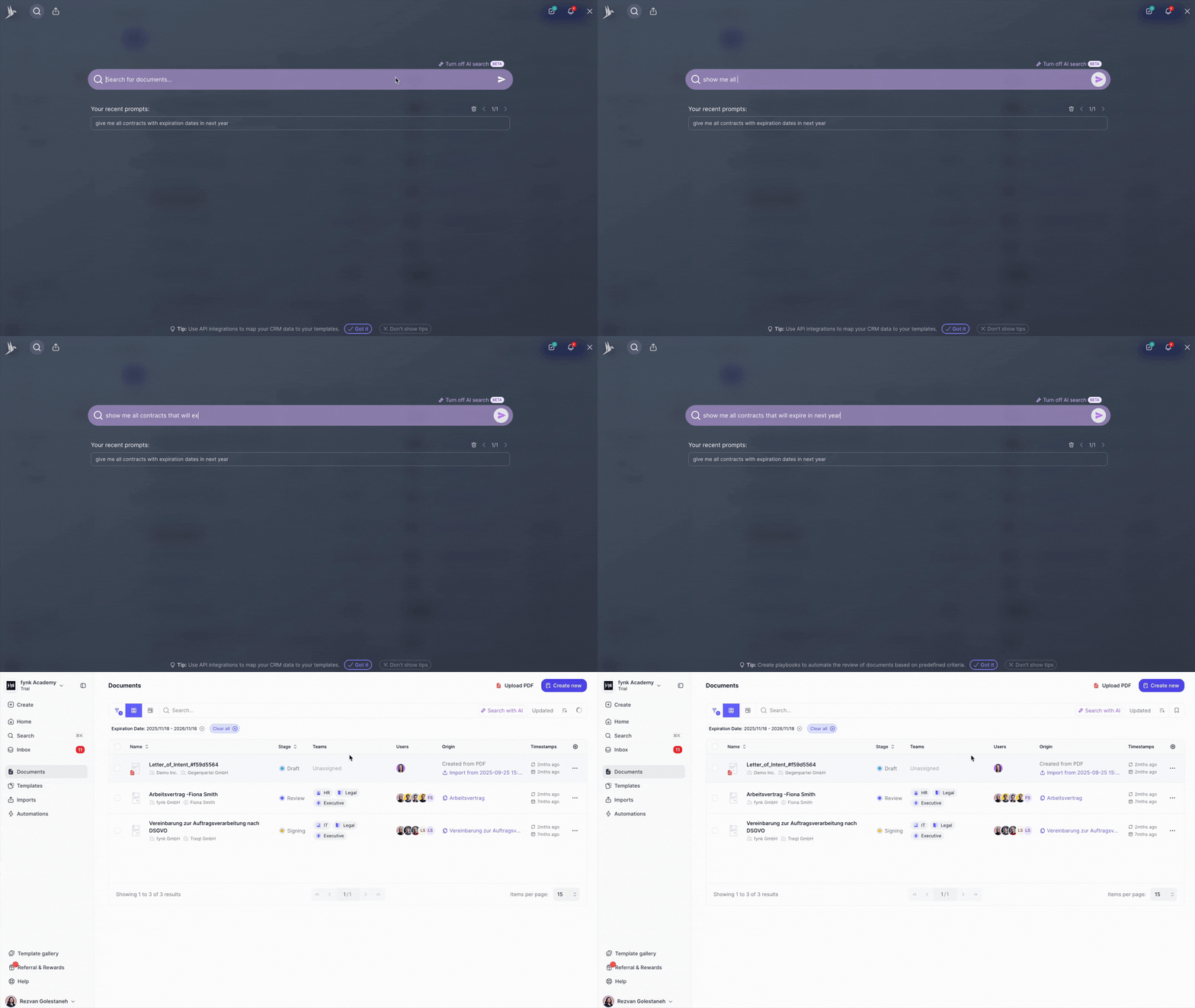


AI search in fynk
One place for every contract
Today, fynk serves as Harald’s central contract repository. Every document is easy to find, searchable, and structured.
"The search function is really good. You don’t have to dig through emails or servers anymore."
This central visibility provides peace of mind, especially in industries where contracts define revenue and liability.
Looking ahead
Harald’s experience shows how risky uncontrolled contract changes can be. Issues rarely appear immediately. They surface later, when a dispute happens and it’s already too late to correct anything.
Standardizing templates and locking critical clauses helps remove this risk while still allowing teams to work efficiently. It creates clarity, consistency, and control without slowing day to day work.
Looking ahead, Harald sees potential for deeper integrations, especially with ATS and HR systems. For now, his focus remains on keeping contracts structured and easy to manage as the business grows.
"It’s about having one process, one template, one source of truth."




Take control of your agreements. Move your business forward.
Run agreements the way they should run: fast, clear, and on your terms.
No setup headaches
Go live in days, not quarters
No lock-in
Full export anytime
No hidden fees
Unlimited signatures included