
Indefinite term
An indefinite term clause allows a contract to remain in effect without a set expiration date, continuing until one or both parties choose to terminate it under the conditions specified within the agreement. This type of clause is often used in contracts where the duration of the collaboration is uncertain or intended to persist as long as mutually beneficial.
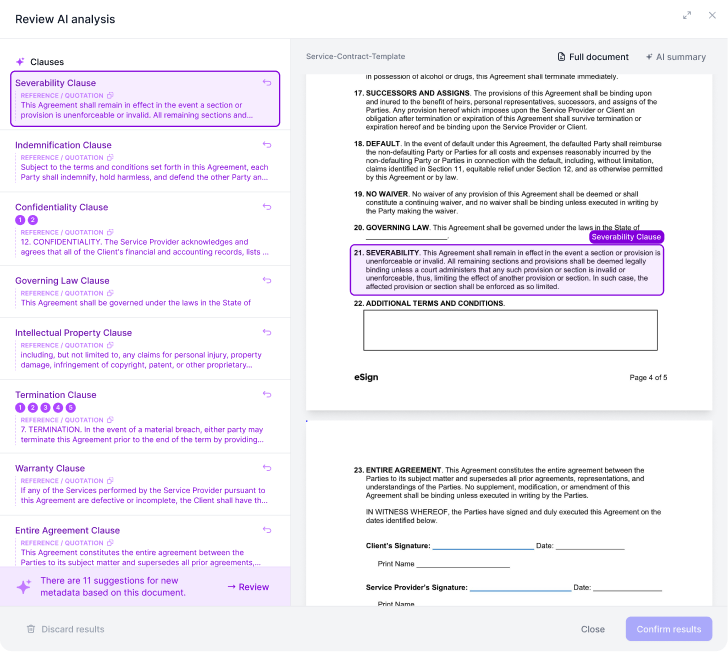
Analyze your contracts. Extract important clauses.
Try our AI contract analysis and extract important clauses and information from existing contracts.
Save your favourite clauses
Insert directly with a single click
Upload preferred precedents
Sample Indefinite term clauses
Source
Tidal ETF TrustIndefinite term;
since 2019
Source
Tidal ETF TrustAML Compliance Officer since 2023, Indefinite term; Chief Compliance Officer since 2021, Indefinite term
Assistant Treasurer since April 2021; Indefinite Term
Treasurer since May 2015; Principal Accounting Officer since October 2017; Principal Financial Officer since April 2021; Indefinite Term
Secretary since April 2021; Chief Compliance Officer and Anti-Money Laundering Officer since November 2021; Indefinite Term
What is an Indefinite Term?
An indefinite term refers to a contract or agreement that does not have a fixed period or end date. Instead, the contract continues indefinitely until one of the parties chooses to terminate the agreement according to the terms specified within the contract. This type of arrangement provides flexibility for both parties, allowing them to maintain the relationship as long as it remains beneficial.
When Should I Use an Indefinite Term?
Indefinite term agreements are useful in situations where the parties prefer not to be bound by a specific duration. They are particularly advantageous when:
- Long-term collaboration is desired without needing regular renegotiation.
- Market conditions or business needs are likely to change frequently, necessitating flexible arrangements.
- Employment contracts are involved, where the role may continue as long as both parties agree.
- You want to establish a dynamic business relationship that can be modified or terminated easily if necessary.
How Do I Write an Indefinite Term?
While drafting an indefinite term contract, consider the following guidelines:
- Clarity: Clearly state that the contract is intended to continue indefinitely without a fixed end date.
- Termination Clause: Include a termination clause specifying the conditions under which either party may end the agreement. This can include notice periods or specific events that can trigger termination.
- Review: Keep provisions for regular reviews of the agreement to ensure it remains relevant and beneficial.
- Flexibility: Allow for modifications to the terms by mutual consent to adapt to changing circumstances.
Example:
This agreement shall commence on the Effective Date and shall continue indefinitely, unless terminated earlier in accordance with the terms of this Agreement.
Which Contracts Typically Contain an Indefinite Term?
Indefinite term provisions are common in various types of contracts and agreements, such as:
- Employment Contracts: Particularly where long-term employment is anticipated without a specified end date.
- Service Agreements: Where ongoing services are provided and both parties want flexibility.
- Partnership Agreements: Enabling partners to work collaboratively without being confined to a fixed period.
- Licensing Agreements: Where continuous use of a product or property is intended without the need for frequent renewals.
These contracts benefit from flexibility, allowing parties to maintain beneficial relationships over the long term while providing an avenue for adjustments as necessary.
More clauses from the library
See allIndemnification and hold harmless
The Indemnification and Hold Harmless clause requires one party to compensate the other party for any losses, damages, or liabilities arising from specific events or actions. It also ensures that the indemnified party is protected from any legal claims or damages related to the indemnifying party's actions or negligence.
20 example clauses
Indemnification by service provider
The indemnification clause requires the service provider to compensate the client for any losses, damages, or claims arising from the service provider's actions or negligence. This clause protects the client by ensuring that any legal or financial liabilities connected to the service provider's work are addressed by the provider.
11 example clauses
Indemnification for third party claims
The indemnification for third-party claims clause obligates one party to compensate or defend the other party against claims, damages, or liabilities brought by third parties arising from the indemnifying party's actions or omissions. This clause is designed to allocate risk and provide financial protection to one party if legal issues or disputes with third parties arise during the contract's performance.
11 example clauses
Analyze your contracts. Extract important clauses.
Try our AI contract analysis and extract important clauses and information from existing contracts.
Save your favourite clauses
Insert directly with a single click
Upload preferred precedents