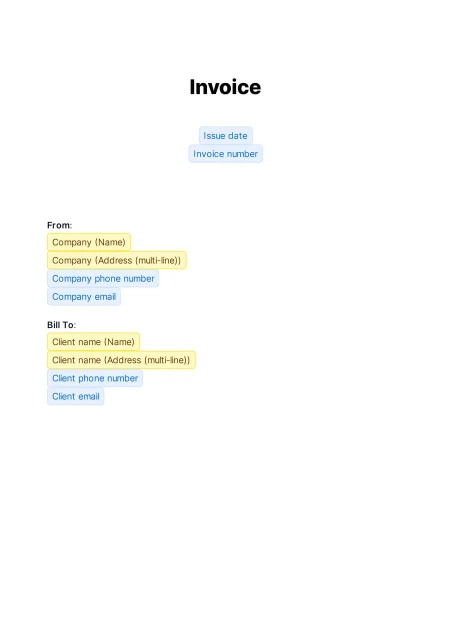
From: Company (Name) Company (Address (multi-line)) Company phone number Company email
Bill To: Client name (Name) Client name (Address (multi-line)) Client phone number Client email
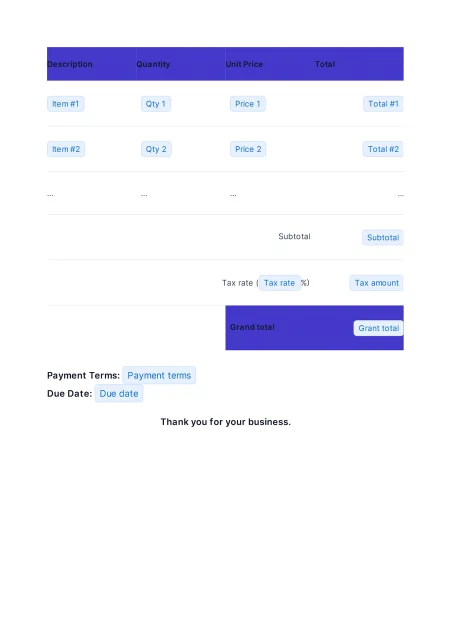
Description
Quantity
Unit Price
Total
Item #1
Qty 1
Price 1
Total #1
Item #2
Qty 2
Price 2
Total #2
…
…
…
…
Subtotal
Subtotal
Tax rate (Tax rate%)
Tax amount
Grand total
Grant total
Payment Terms:Payment terms Due Date:Due date
Thank you for your business.
Disclaimer: The original creator, the author of this template, and fynk GmbH are not responsible for any damages or liabilities that may result from using this template. This template should not be considered a substitute for legal advice, and consulting with a legal professional is recommended before use. fynk GmbH, the original creator, and the author do not provide legal advice and will not be held accountable for any legal consequences arising from its use.
More than3,000 teamschose fynk to outgrow legal chaos.
Understand how to structure and fill your billing invoice
Learn everything there is about billing invoices. What they are, who they are for and what they should contain.
What is a billing invoice?
A “billing invoice” is essentially a formal document issued by a business to a client or customer, detailing the goods or services that have been provided and requesting payment for them.
An invoice is used to:
Request for Payment: Its primary purpose is to inform the customer how much they owe and when that payment is due.
Itemized List: It typically includes a detailed breakdown of the products sold or services rendered. This usually lists quantities, unit prices, and a total amount for each item.
Transaction Record: It serves as a legal and accounting record for both the seller and the buyer. For the seller, it tracks accounts receivable (money owed to them). For the buyer, it becomes an accounts payable (money they owe).
Key Information: A billing invoice generally contains:
The word “Invoice” prominently displayed.
Unique invoice number.
Date of issue.
Business’s name, address, and contact information.
Client’s name, address, and contact information.
Description of goods or services provided.
Quantities and unit prices.
Subtotal, taxes, shipping charges, and the total amount due.
Payment terms (e.g., “Net 30 days,” meaning payment is due within 30 days).
Accepted payment methods.
While often used interchangeably with “bill,” an invoice is typically more formal and detailed, especially in business-to-business (B2B) transactions where detailed record-keeping is crucial. A “bill” might be more immediate and less detailed, often seen in business-to-consumer (B2C) settings (like a restaurant bill).
When should you use a billing invoice?
Timing’s everything in business, especially when it comes to cash flow. Here’s when to whip out that billing invoice:
Completion of a service or milestone. When the work’s done, whether it’s slick mockups, bug-squashing code, or genius consulting, you send an invoice to signal “let’s wrap this up.”
Regular billing cycles. Got a monthly or quarterly routine? Use your blank billing invoice template to stay consistent and keep those dollars rolling in.
Reimbursable expenses. If you’ve racked up costs (travel, materials, software licenses), itemize them on a simple billing invoice template no need to hide them in the fine print.
Retainers and deposits. For upfront deposits or recurring retainers, a printable billing invoice template puts those numbers in black and white.
What’s inside this billing invoice template?
Our free billing invoice template got everything you need, including:
Header Section
Issue Date and Invoice Number so you can keep track of who owes what.
A spot for your logo (optional), because even invoices deserve a little flair.
From & Bill To
Your business name, address, phone, and email, front and center.
Your client’s details, ensuring your invoice lands in the right inbox.
Line Items Table
A clear description of each goodie or service you delivered.
Columns for Quantity, Unit Price, and Total, no calculator needed.
Automatic Subtotal, Tax Rate, Tax Amount, and Grand Total, it’s all there.
Payment Details
Crystal-clear Payment Terms (like Net 30 or Due on Receipt).
A Due Date that keeps everyone on the same page.
Whether you’re going old school with a blank billing invoice template or embracing the digital world with an integrated system, you’ll never forget a detail.
Why use this template?
It’s Free
A fully functional free billing invoice template that’s perfect for bootstrapping start-ups, nonprofits, and freelancers flying solo.
It’s Integrated into fynk Contract Management App
This template’s built right into the fynk Contract Management App. That means you can:
Pull in contract details automatically from your favourite CRM, like HubSpot or Salesforce. fynk can pull in client addresses, purchase orders, and billing contacts in seconds.
Link or attach relevant contracts or any other files to your invoice
Store invoice history alongside signed contracts, so you’ve got a single source of truth.
Export the invoice as a PDF and print it if you like.
Customize it using your brand colors, logo, and header and footer
Send the invoice via mail to your clients directly from the app
It’s Easy to Fill
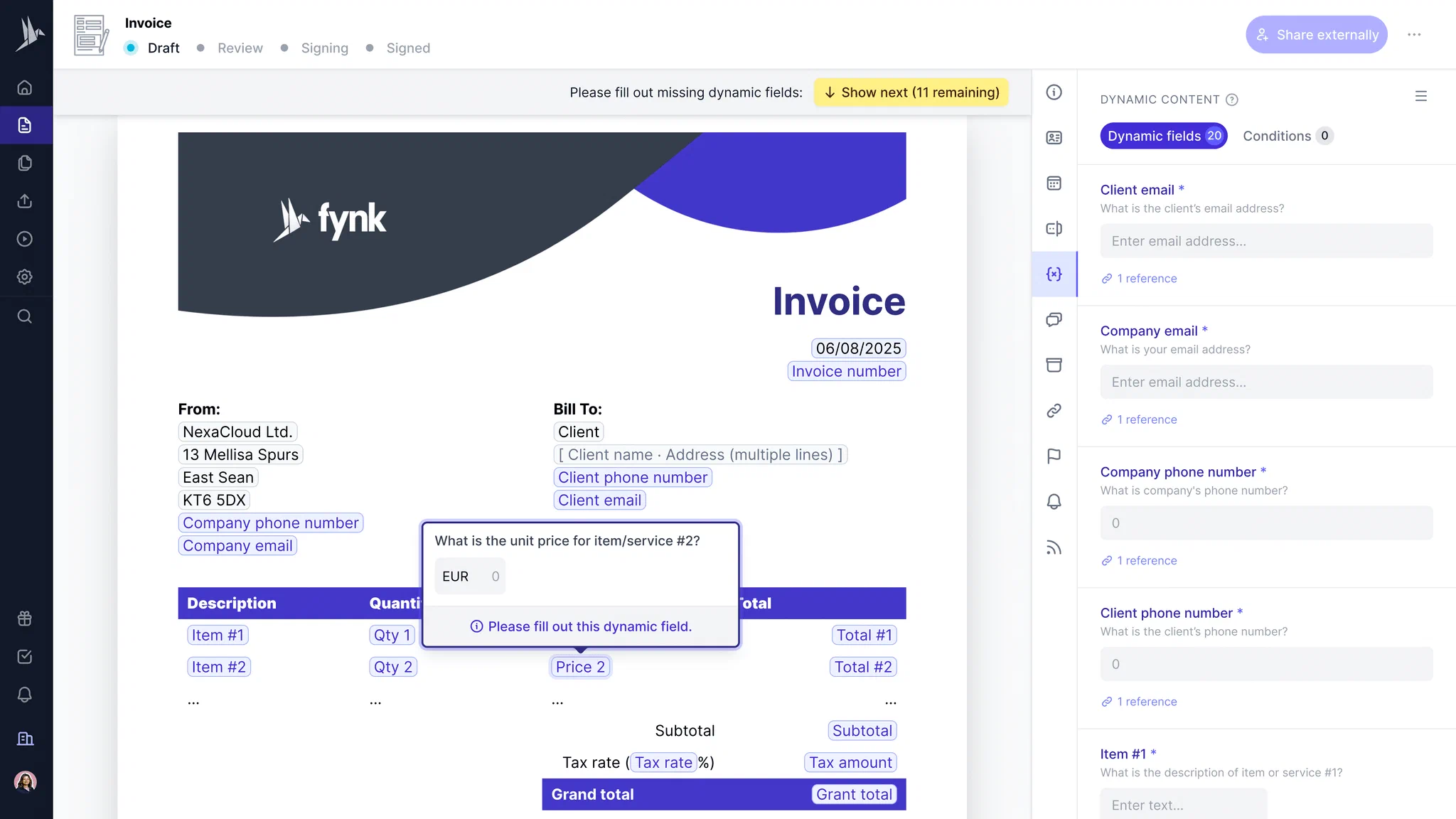
Using fynk’s dynamic fields makes filling out your invoice template a snap. Just tap the highlighted questions and enter your answers. You can easily modify or add these fields and even pre-fill it for easier use.
Use this free invoice template
Ready to ditch the invoice headaches? Use this free invoice template and watch how easy invoicing can be. Just create a free account on fynk and start filling the invoice with your info.