
Every deal is different. Handle them all with one template.
Rewriting a contract for every variation wastes time and introduces risk. fynk lets you define the conditions once. Clauses show up or stay hidden based on the inputs. The contract always says exactly what it should, for that specific situation.










One template. Every scenario handled correctly.
Define the conditions once and fynk applies them automatically. The right clauses are always there for the right situation.
 Smart clausesGet a demo
The right sections are in. The wrong ones out.
Some clauses belong in certain contracts and not in others. A liability cap that applies to enterprise deals, a data processing addendum required only for specific regions. Conditions in fynk control exactly what goes in and what stays out, so every contract is clean and complete.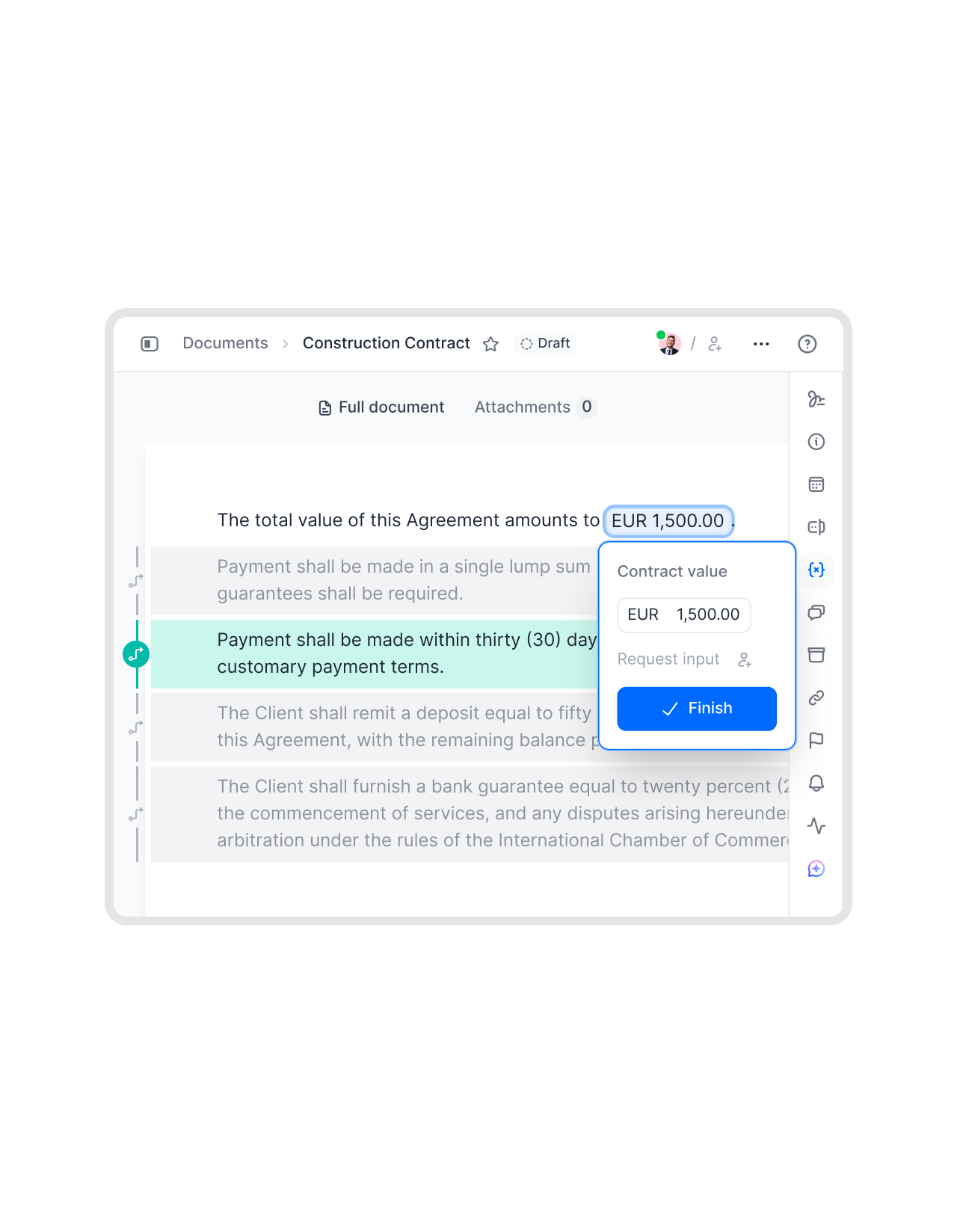 Inputs drive the outputGet a demo
Fill in the fields. The contract adjusts itself.
When someone fills in the contract value, the region, or the contract type, fynk reads those inputs and adjusts the document accordingly. The person creating the contract doesn’t need to know which clauses apply. The right contract is ready as soon as the fields are filled in."Before fynk, our templates always needed a lot of manual adjustment for every single contract. With fynk, we reduced everything to two or three main templates with only small adjustments needed per contract. We also managed to distribute contract-building responsibility across two stakeholders. Saving resources and giving ownership to the salesperson."
 Dr. Jörg Burkhardt Head of Sales & New Partnerships of 1. FC Nürnberg
 One template, many usesGet a demo
Stop maintaining a separate file for every new agreement.
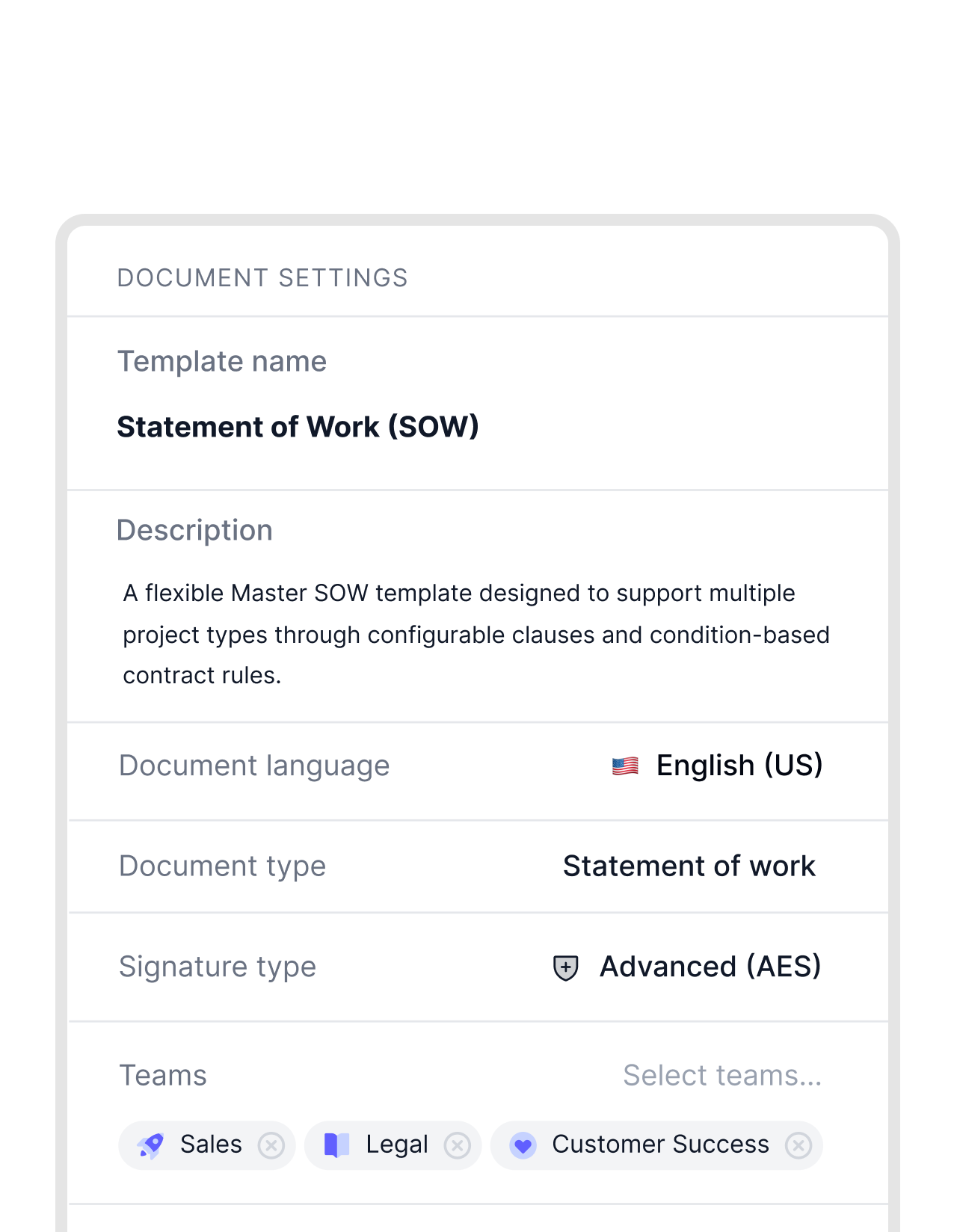
Every new agreement used to mean editing the template. Enterprise vs. SMB, full-time vs. contractor, domestic vs. international. No one wants a folder full of variations. Conditional logic collapses all of that into one template. The logic inside handles the differences, with one place to maintain and one source of truth.


 Combined conditionsGet a demo
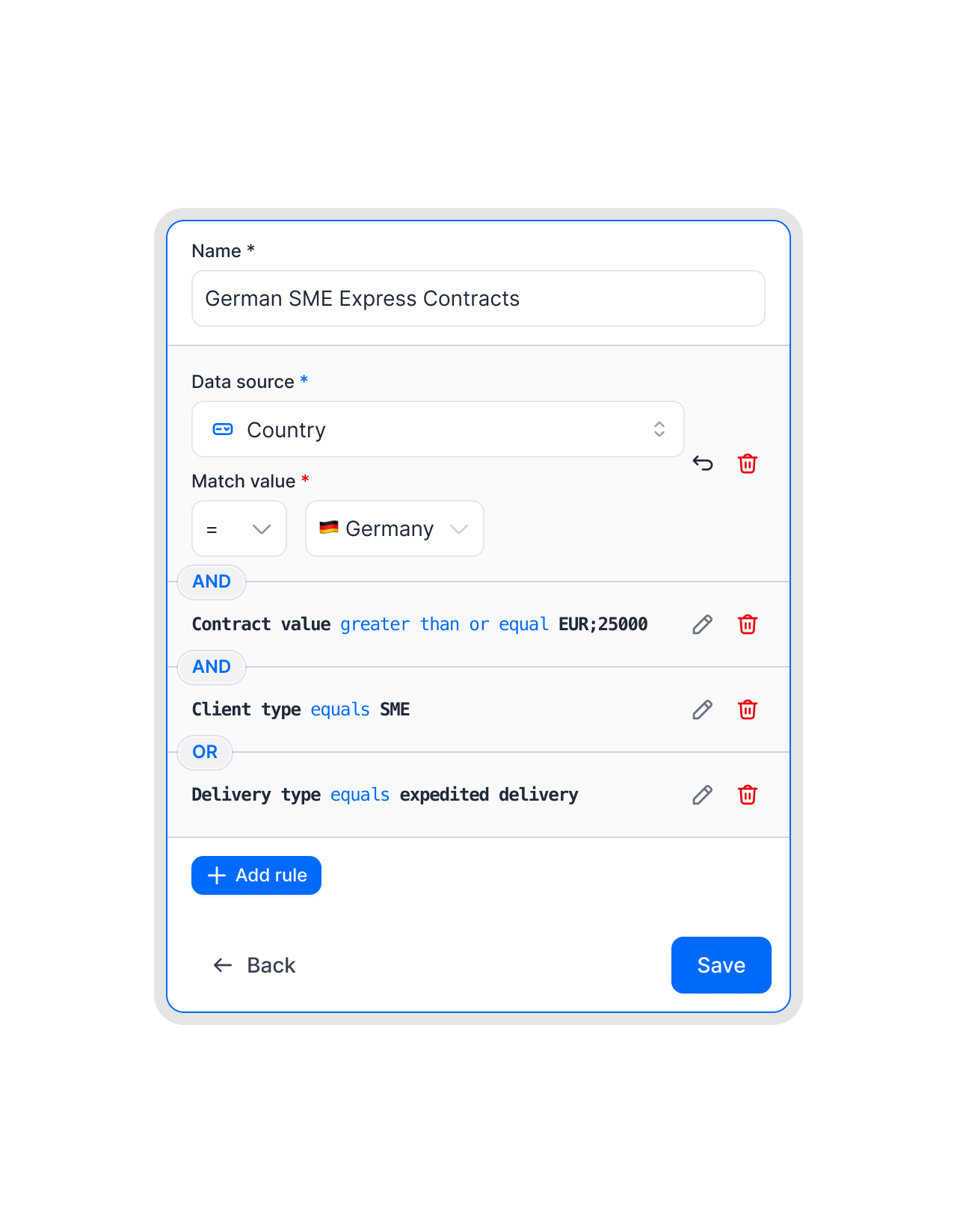
One rule or several. The right clause is always included.
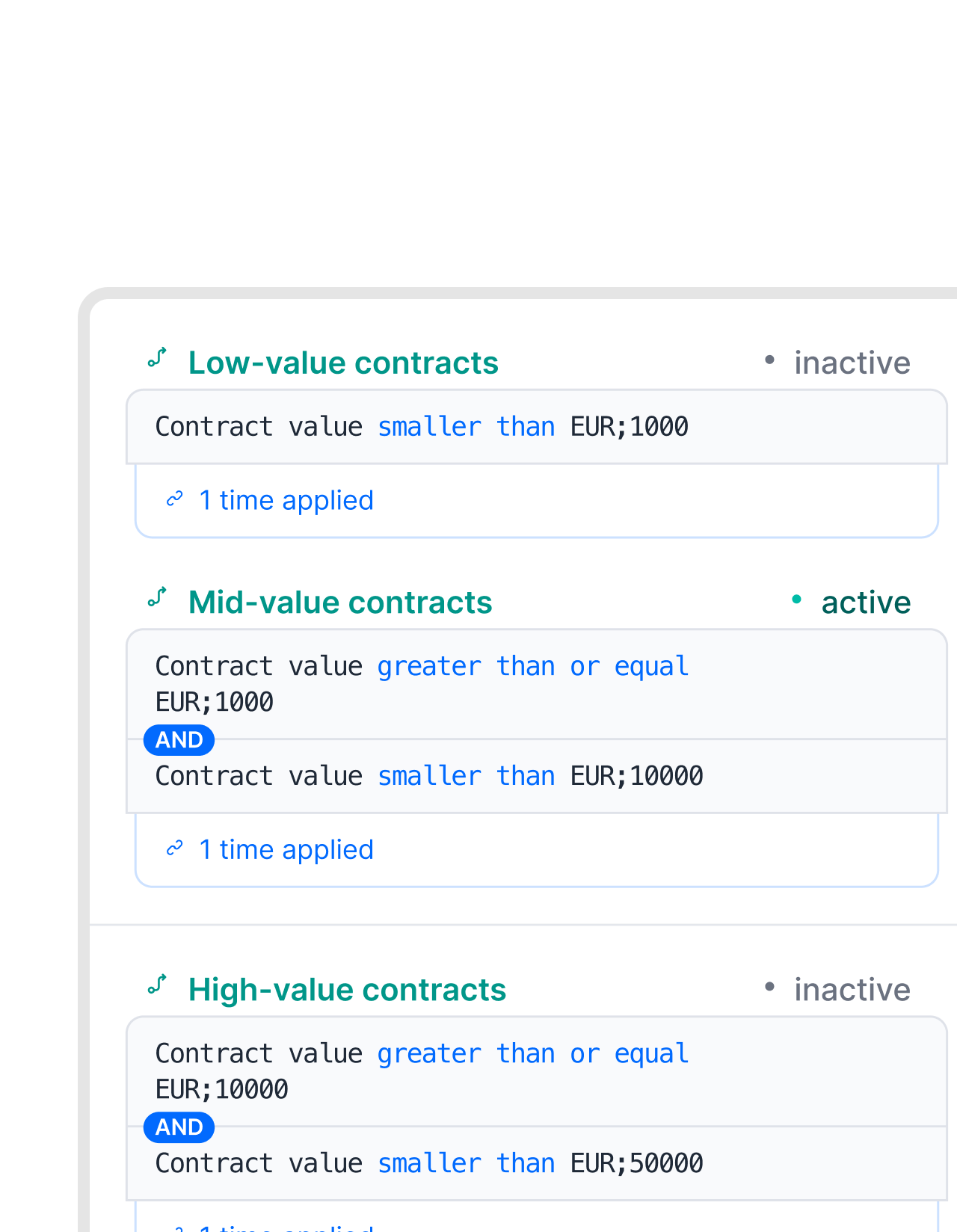
A GDPR addendum applies when the counterparty is based outside the EU. A liability cap applies when the deal value exceeds a threshold. Both conditions can be active at the same time. You combine them with AND/OR logic in the template, and fynk evaluates every contract against those rules automatically. One template covers the full range of combinations.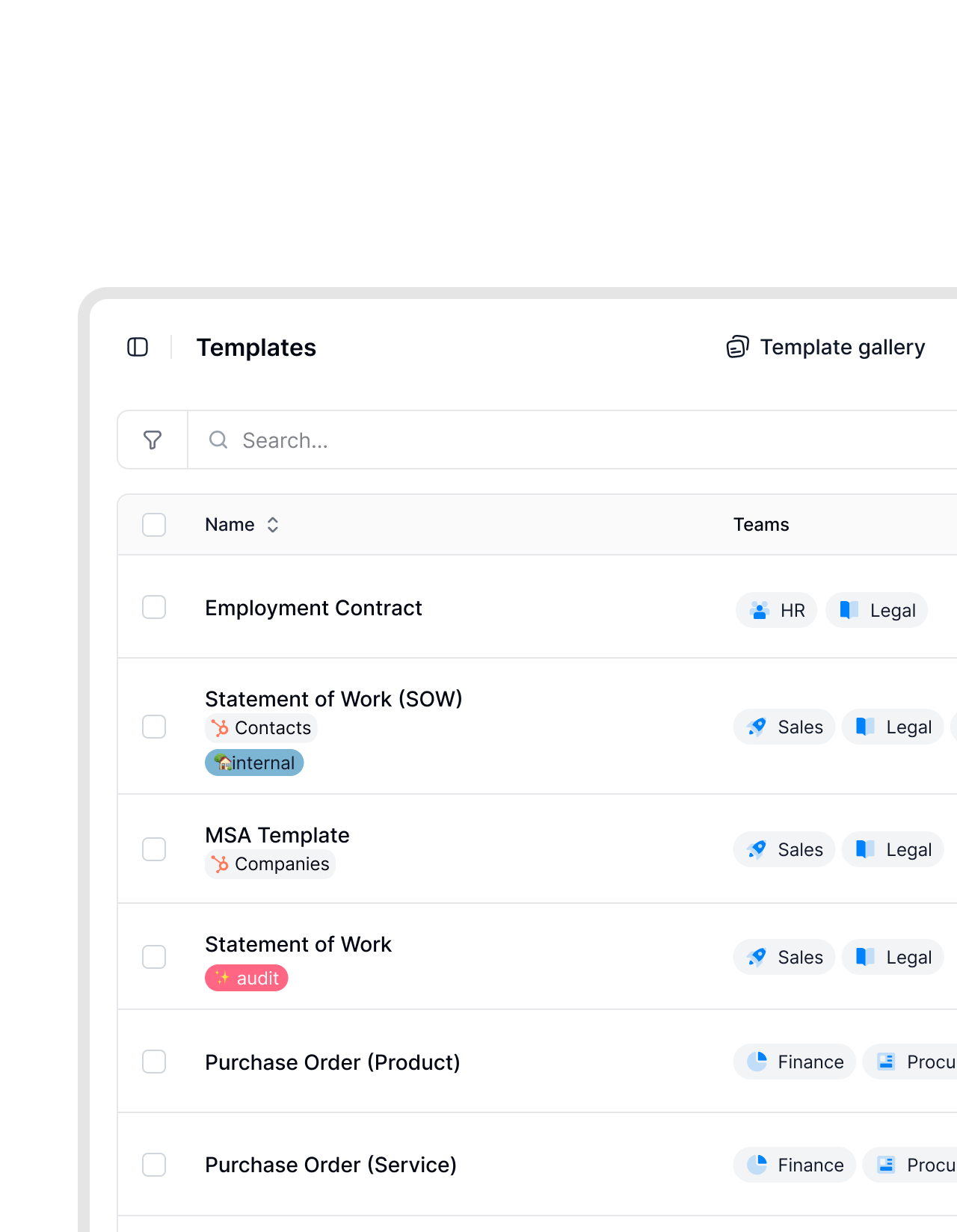 TemplatesGet a demo
Legal sets the rules once. They apply for everyone.
Conditional logic lives in the template. Legal writes the conditions once, together with the clauses they control. Sales, HR, and ops all create contracts from that one template. The conditions fire automatically for each of them. No separate version per team, no separate rules to maintain.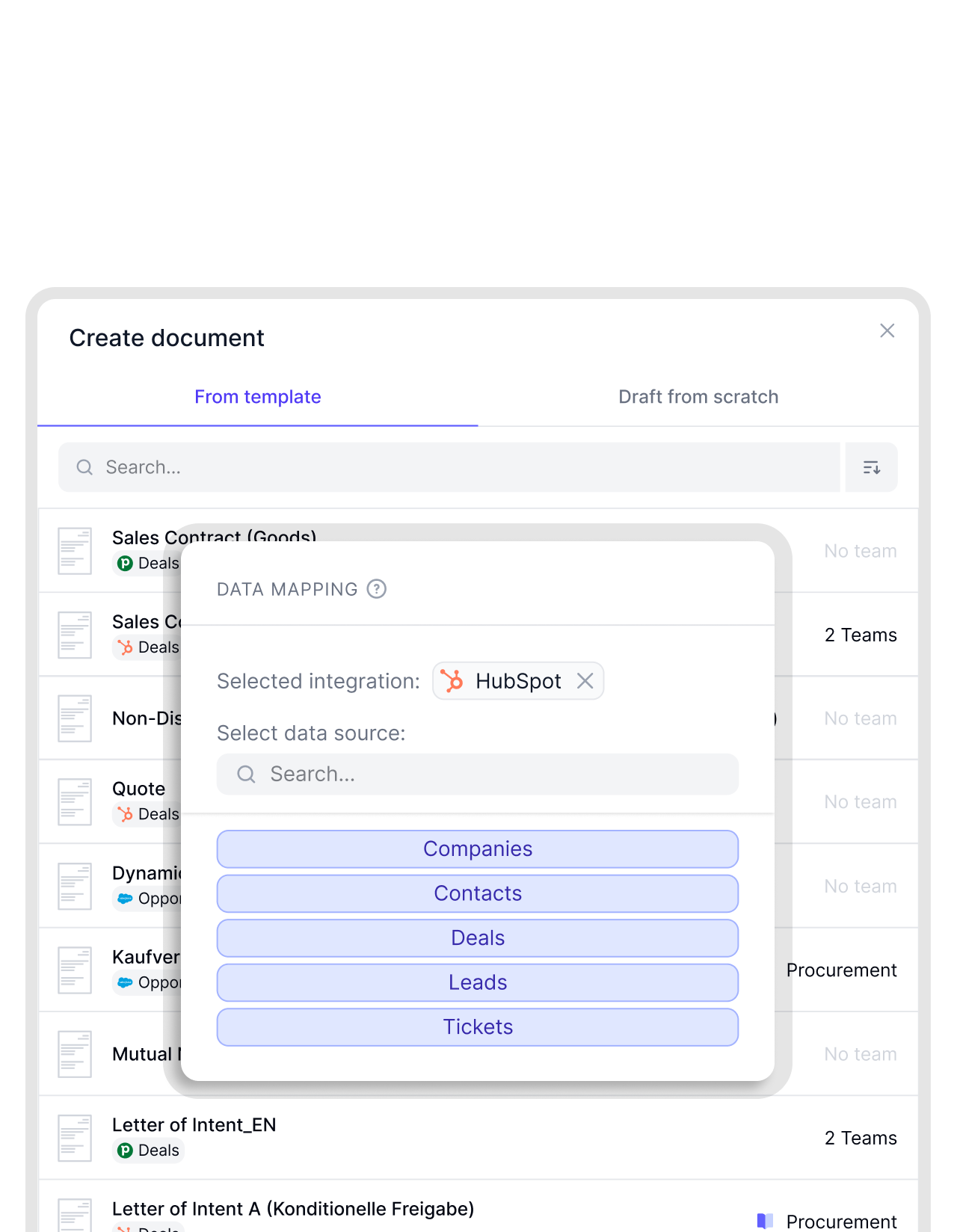 IntegrationsGet a demo
Your CRM closes the deal. fynk creates the contract.
Connect fynk to your favorite CRM. When a deal moves to Closed Won, fynk pulls the CRM data, fills in the dynamic fields, and evaluates the conditions. The right contract is ready, with the right clauses already in place. No one copies data between systems or picks which version of the agreement applies.


"At my previous firm, we had 25 different contract versions. We eventually discovered 57 different jurisdiction clauses, when only Frankfurt should have been the standard. With fynk's centralized templates, consultants can no longer change jurisdiction clauses on their own."
One set of rules. Every contract exactly right.
Conditions defined once apply everywhere. The right clauses, the right workflow, the right outcome every time.
Nothing slips through.
Required clauses are always present. Restricted ones never are. Conditions act as a safety net on every contract, regardless of who creates it.
Tailored in seconds.
When inputs are filled in, the contract adapts immediately. No back-and-forth to add or remove the right version of a clause.
Change once, done.
Update a condition in one place. Every contract created after that point reflects the new rule without any additional work.
Safe for non-lawyers.
Sales and HR can create contracts without legal involvement. The conditions ensure the right language is always in place for the right situation.
Logic visible to all.
Everyone on the team can see what conditions are active for each contract type. No hidden rules, no surprises when a clause is there or not.
No accidental exceptions.
Every required clause is always included. There's no gap where someone might create a contract without the condition being checked.





More product features to explore.
Draft.
Create contracts from proven templates. Fast, consistent, and ready to send.
Boost.
AI reviews, summarizes, and explains your contracts so you never miss what matters.
Sign.
Send contracts for legally binding e-signatures, tracked from sent to signed.
Insights.
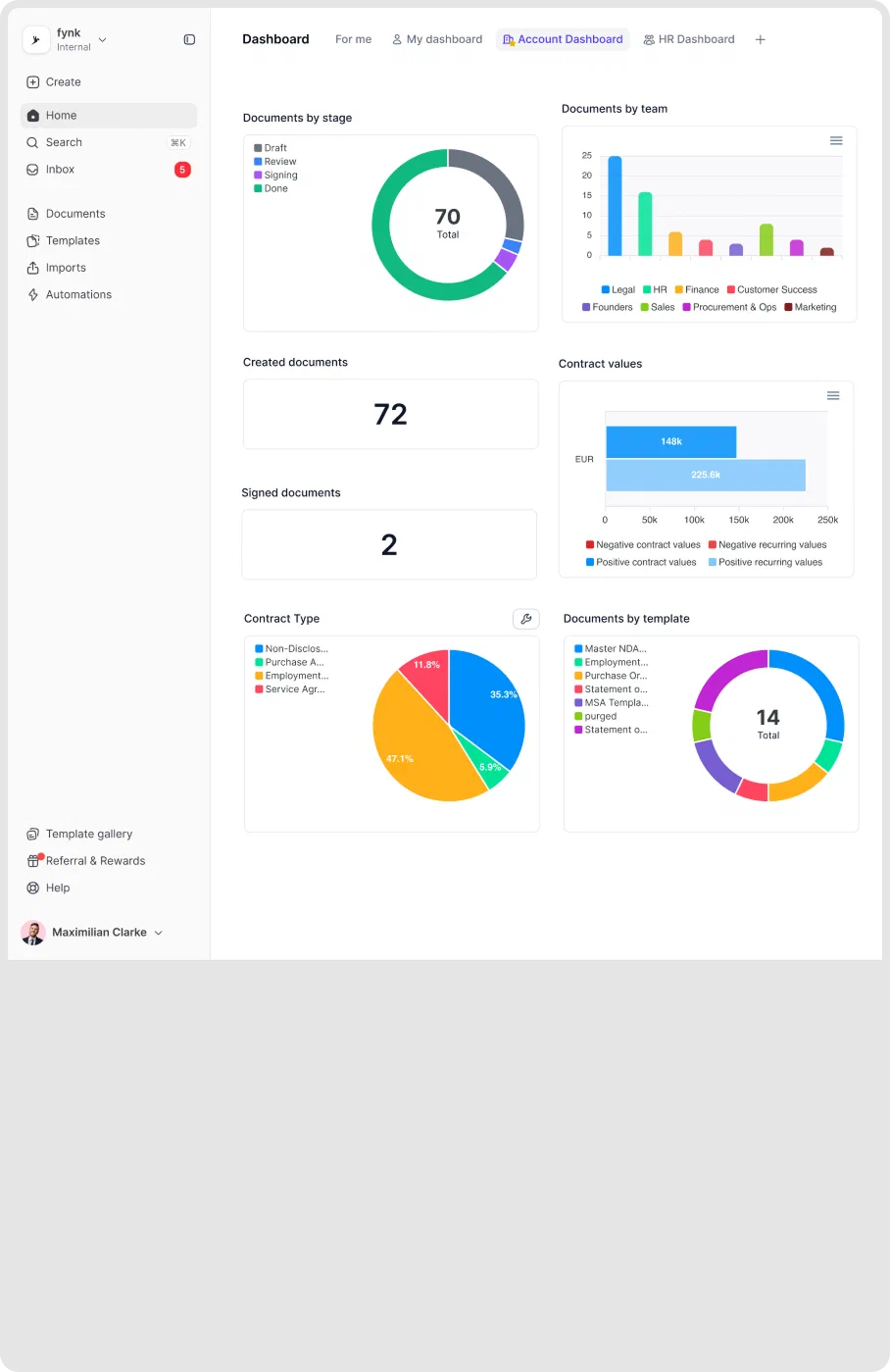
See the full picture of your contracts with dashboards, search, and smart alerts.
Frequently asked questions.
Conditional logic lets you define rules that control what ends up in a contract based on specific inputs or metadata values. Clauses and fields are included or kept out depending on the conditions you set, using AND/OR logic. All of it is set up once in the template and applied automatically every time the contract is created.
You assign a condition to any clause or section in a template. The condition checks a field value, metadata, or contract type and decides whether to include the clause in the final document. When someone creates a contract from the template, the inputs they provide trigger the conditions and the document is built accordingly. No manual selection is required.
Yes. You can use AND/OR logic to require multiple conditions to be true before a clause is included. A data processing addendum can be set to show only when the counterparty is based outside the EU and the contract value is above a certain amount. Both conditions must be met for the clause to show.
If a field value changes while the contract is still in draft, fynk re-evaluates the conditions and updates the document accordingly. The contract always reflects the current state of the inputs. If the contract has already been sent for signing, field changes are handled through the standard amendment process.
Yes. A single template can serve legal, sales, HR, and procurement, each getting the right clauses for their context. The conditions in the template decide what each department's version of the contract looks like. There's no need to maintain separate templates for each team.
Dynamic fields and conditional logic work together directly. A field value, such as contract type, deal size, or jurisdiction, can trigger a condition that shows or hides clauses or fields. The field provides the input. The condition decides what goes into the document.
Still have questions?


One master template to rule them all.
One template. Every scenario handled correctly. The right clauses, every time.