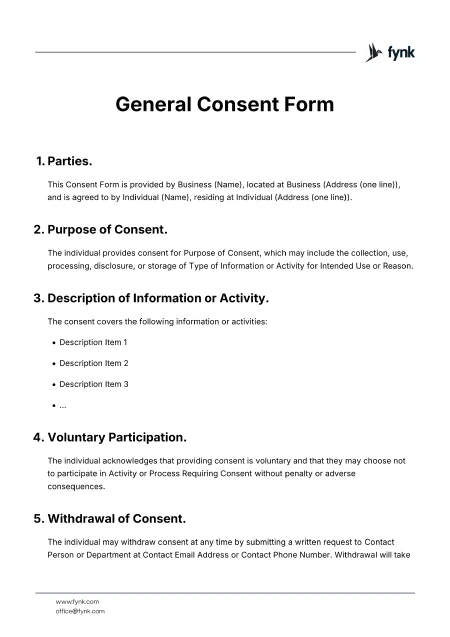
This Consent Form is provided by Business (Name), located at Business (Address (one line)), and is agreed to by Individual (Name), residing at Individual (Address (one line)).
Purpose of Consent.
The individual provides consent for Purpose of Consent, which may include the collection, use, processing, disclosure, or storage of Type of Information or Activity for Intended Use or Reason.
Description of Information or Activity.
The consent covers the following information or activities:
Description Item 1
Description Item 2
Description Item 3
…
Voluntary Participation.
The individual acknowledges that providing consent is voluntary and that they may choose not to participate in Activity or Process Requiring Consent without penalty or adverse consequences.
Withdrawal of Consent.
The individual may withdraw consent at any time by submitting a written request to Contact Person or Department at Contact Email Address or Contact Phone Number. Withdrawal will take effect within Withdrawal Processing Timeframe.
Duration of Consent.
This consent remains valid until Consent Expiration Condition, unless withdrawn earlier by the individual.
Confidentiality and Protection.
Business (Name) will take reasonable measures to protect the individual's information and ensure it is handled in accordance with Applicable Policy or Standard.
Third-Party Sharing.
The individual acknowledges that their information may be shared with Third-Party Type or Category solely for Sharing Purpose. Such sharing will comply with Applicable Requirement or Condition.
Rights of the Individual.
The individual may request access to, correction of, or deletion of their information by contacting Contact Person or Department at Contact Email Address.
Acknowledgment and Consent.
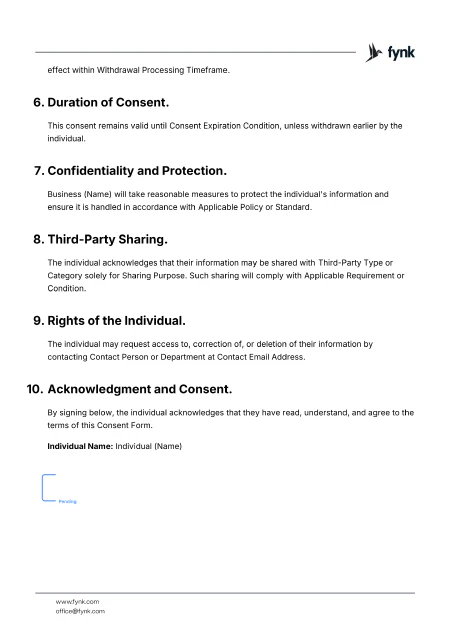
By signing below, the individual acknowledges that they have read, understand, and agree to the terms of this Consent Form.
Individual Name:Individual (Name)
Pending
Disclaimer: The original creator, the author of this template, and fynk GmbH are not responsible for any damages or liabilities that may result from using this template. This template should not be considered a substitute for legal advice, and consulting with a legal professional is recommended before use. fynk GmbH, the original creator, and the author do not provide legal advice and will not be held accountable for any legal consequences arising from its use.
More than1.000 teamschose fynk to outgrow legal chaos.
What a general consent form covers and how to use this template
Learn what a consent form is, what makes consent legally valid, the key elements it must include, and how to adapt this template for different consent scenarios.
What is a consent form?
A consent form is a document that records a person’s informed, voluntary agreement to participate in an activity, undergo a procedure, allow the use of their personal information, or permit some other action that affects them. The signed form creates a written record that:
The individual was given sufficient information about the activity
They understood what they were agreeing to
Their agreement was given freely, without coercion or undue pressure
They were made aware of their right to withdraw
Consent is a legal and ethical requirement across many domains:
Healthcare and clinical settings - patients must give informed consent before medical procedures, treatments, or participation in clinical trials
Research and academic studies - participants must consent to data collection, observation, or experimental protocols
Photography and video - individuals must consent to being filmed or photographed, particularly where images will be published or used commercially
Data collection and marketing - under GDPR, CCPA, and similar laws, explicit consent is required for certain categories of personal data processing
HR and employment - employees may need to consent to background checks, data processing, or participation in workplace programs
What makes consent legally valid?
For a consent form to be legally effective, the consent must be:
Informed - the individual must be given enough information to understand what they are consenting to, including any material risks or implications
Voluntary - consent must be given freely, without coercion, pressure, or undue influence
Specific - consent should be obtained for a defined purpose, not as a blanket authorization for unrelated activities
Capacity - the individual must have the legal and mental capacity to consent; for minors or individuals lacking capacity, a guardian or authorized representative must consent on their behalf
Documented - the consent must be recorded in a form that can be demonstrated later if challenged
Key elements of a general consent form
1. Identity of the parties
The form should clearly identify:
The organization requesting consent (name, contact information)
The individual giving consent (name, and where relevant, contact details or employee/participant ID)
A guardian or authorized representative, if consenting on behalf of a minor or incapacitated individual
2. Purpose and description of the activity
Describe clearly and specifically:
What the individual is consenting to (the activity, procedure, data use, or recording)
The scope of the consent (what is covered and what is not)
How the output will be used (e.g., internal research, public publication, clinical treatment, marketing materials)
Vague or overly broad descriptions can render a consent form ineffective. The description should be specific enough that the individual knows exactly what they are agreeing to.
3. Risks, implications, and material information
For activities where there are material risks or implications, these must be disclosed:
Physical or psychological risks (clinical and research contexts)
How personal data will be stored, used, and shared (data processing contexts)
Whether images or recordings will be published and where (media contexts)
Duration and extent of any ongoing commitment
4. Voluntary participation and right to withdraw
The form must confirm:
Participation is entirely voluntary
The individual may withdraw consent at any time without penalty or adverse consequence
The process for withdrawing consent (notice requirements, contact details)
For data processing consents under GDPR, the right to withdraw must be as easy to exercise as giving consent in the first place.
The legal basis for processing (consent, legitimate interest, etc.)
How long the data will be retained
Who the data will be shared with
How the individual can access, correct, or request deletion of their data
6. Signature and date
The form must be signed and dated by the consenting individual (or their guardian). For electronic consent, a timestamp and confirmation mechanism serves as the equivalent of a signature.
Where the organization is making commitments (data handling, confidentiality), an authorized representative of the organization should also sign.
Who needs a general consent form?
HR teams collecting employee data for background checks, health assessments, or workplace programs
Compliance teams ensuring the organization meets GDPR, CCPA, and sector-specific consent requirements
Legal teams managing consent documentation for research, clinical, or commercial programs
Marketing and communications teams obtaining consent for use of photographs, testimonials, case studies, and event recordings
Research and clinical organizations documenting participant consent for studies, trials, and assessments
How to customize this template
Define the purpose of the consent as specifically as possible - avoid vague or catch-all language that may not hold up to scrutiny.
For data processing consents, review the applicable privacy law (GDPR, CCPA, or sector-specific regulation) and include all required disclosures.
For minors or individuals who may lack capacity, add a section for guardian or authorized representative consent.
Specify the withdrawal process clearly - include the contact name, email, or mechanism through which consent can be withdrawn.
For clinical or research contexts, work with a legal or ethics advisor to ensure the form meets applicable regulatory requirements.
If the consent covers ongoing data use, specify the retention period and review interval.
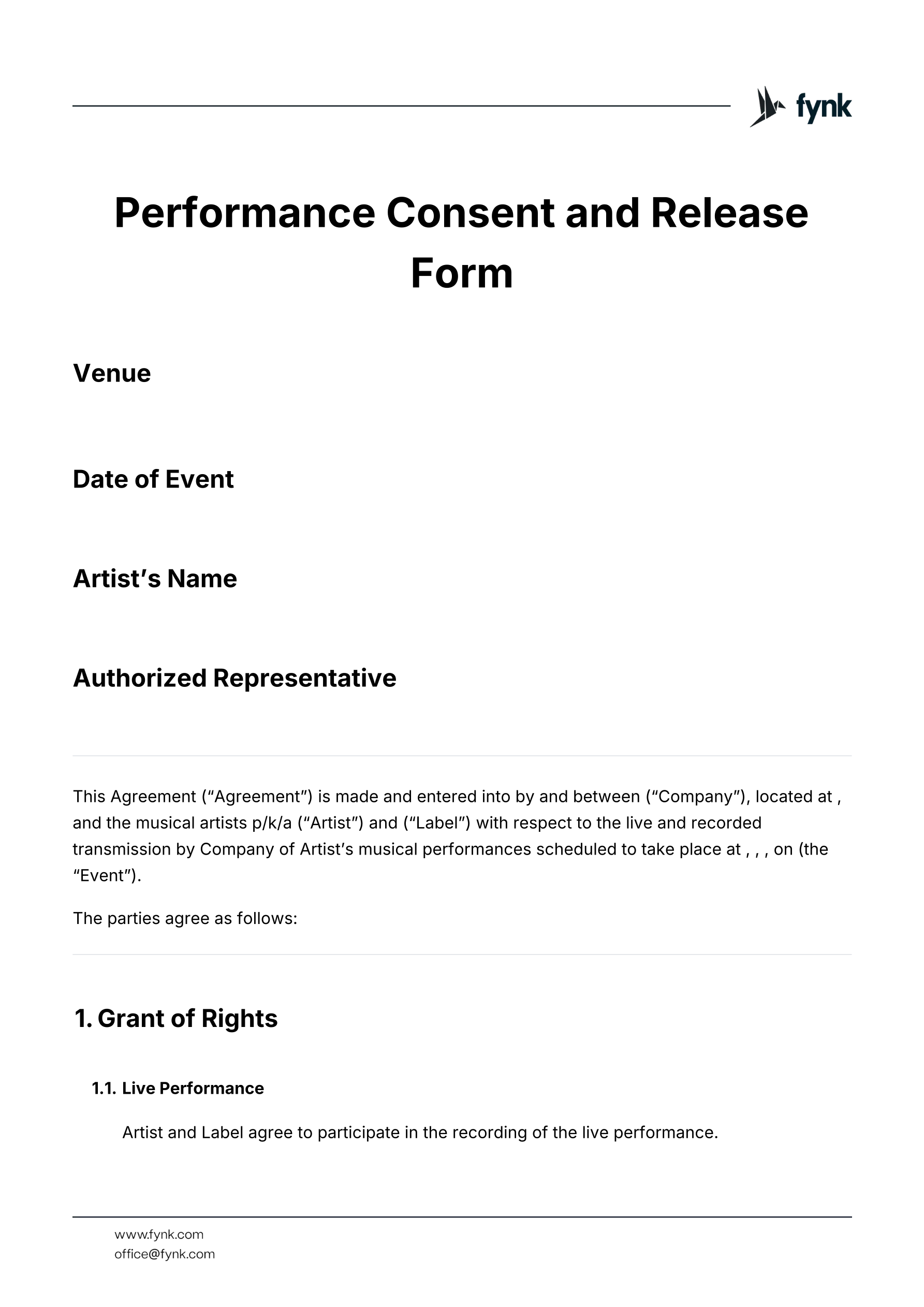
For activities involving creative performances or media appearances, a more specific release form may be needed:
This general consent form template is ready to customize in fynk. Adjust the purpose description, data handling terms, withdrawal process, and party details for your specific consent scenario, then collect signatures electronically.
With fynk, you can:
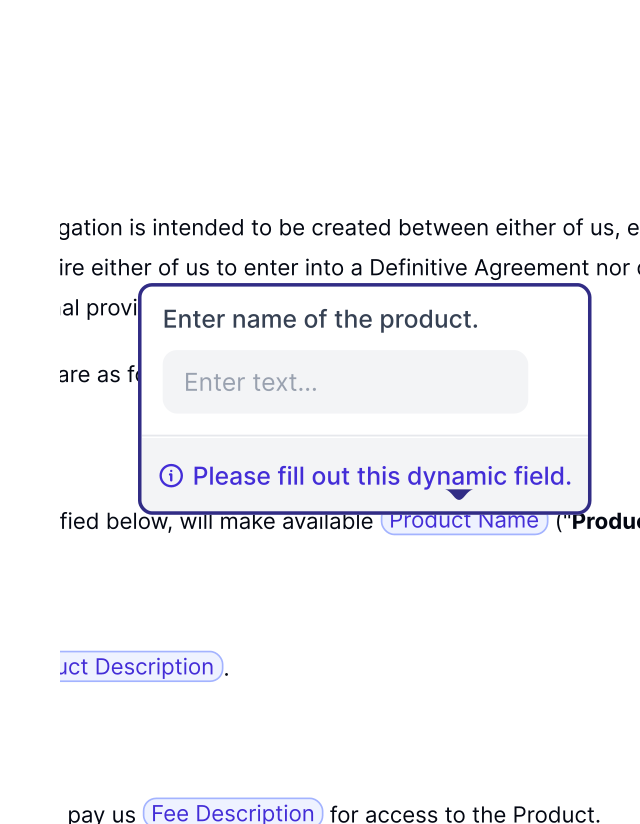
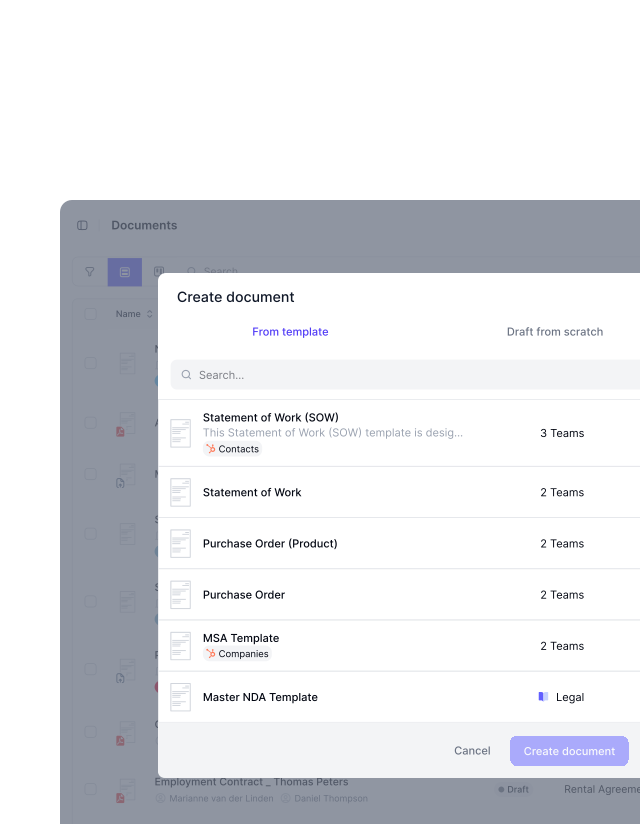
Use dynamic fields to populate the organization name, activity description, data retention period, and contact details across the form instantly.
Program name, purpose, and data handling terms filled across every section automatically.
Collect consents at scale using fynk’s bulk sending - send individual consent forms to all participants in a study, event, or employee program from a single template.
Personalized consent forms sent to every participant from one template.
Run approval workflows before sending - ensure legal or compliance review is completed on the consent form before it goes out to participants.
Consent form reviewed and signed off internally before it reaches participants.
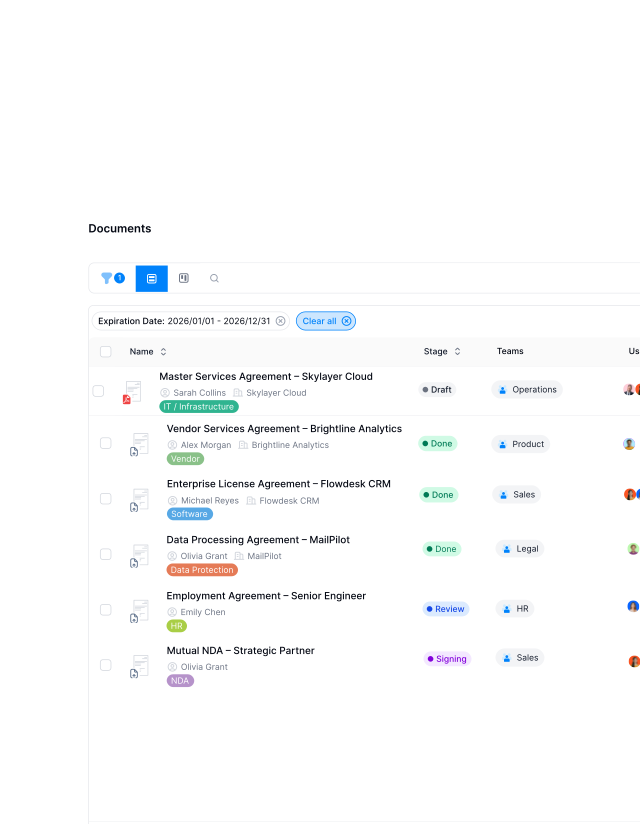
Store all signed consent forms in a structured document hub with consent date, activity type, and participant name as searchable metadata.
Consent forms filtered by program, date, or participant type.
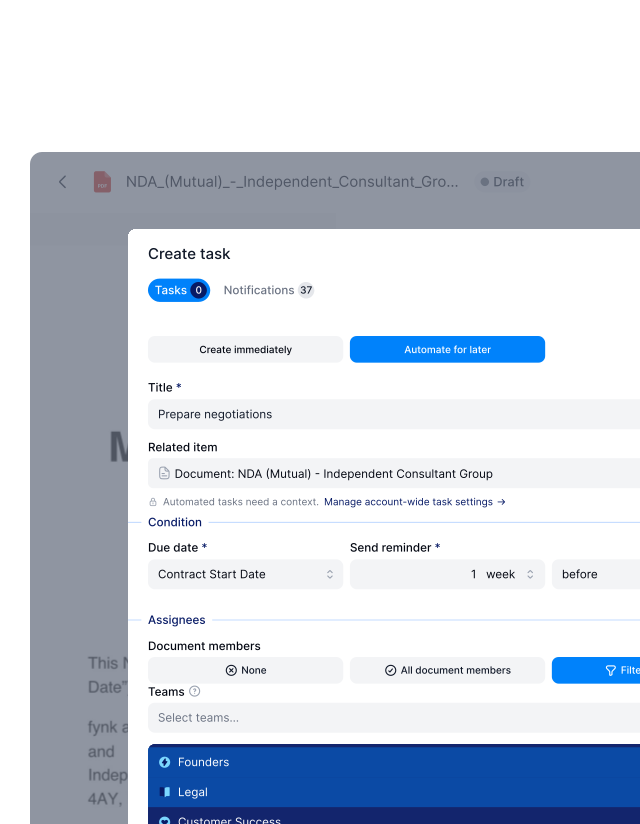
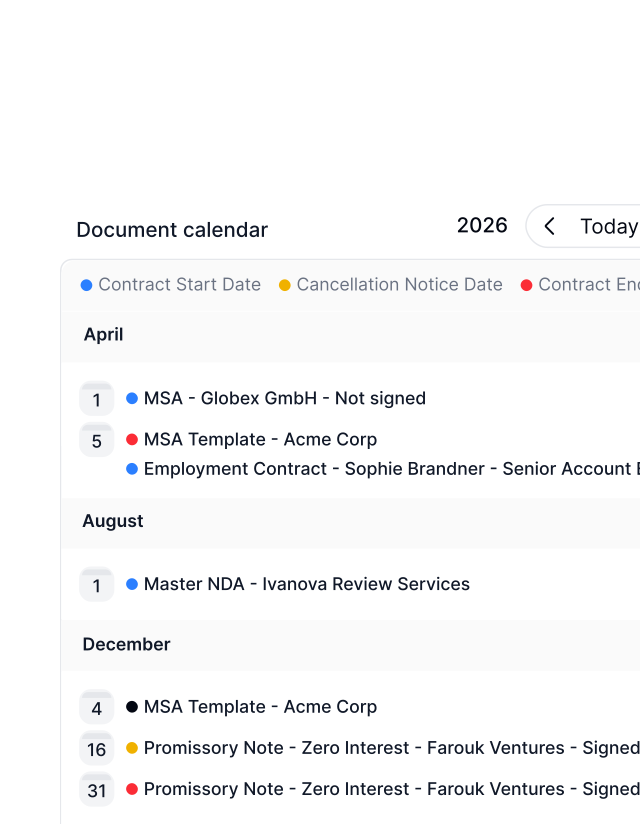
Set retention reminders with automated reminders to review and renew consents before they expire or before regulatory retention periods lapse.
Automated reminders for consent renewal and retention review dates.
FAQs
What is a consent form?
A consent form is a document that records a person's informed, voluntary agreement to participate in an activity, undergo a procedure, or allow the use of their personal data or likeness. It creates a written record that the individual was given sufficient information, understood what they were agreeing to, and consented freely.
Is a signed consent form legally binding?
A properly completed consent form is strong evidence of consent, but its legal effect depends on whether the consent was truly informed, voluntary, and given by a person with legal capacity. A form that uses overly broad language, fails to disclose material risks, or was signed under duress may not be enforceable. The form should be reviewed by legal counsel for any high-stakes or regulated consent scenario.
Can consent be withdrawn after a form is signed?
Yes. In most contexts - particularly data processing under GDPR and participation in research - individuals have the right to withdraw consent at any time. The form should clearly state how withdrawal works and what happens to data or outputs already collected. Withdrawal does not necessarily undo processing that occurred before withdrawal.
What consent is required under GDPR?
Under GDPR, consent must be freely given, specific, informed, and unambiguous. It must be recorded, and individuals must be able to withdraw it as easily as they gave it. Consent is only one of several lawful bases for processing - for some processing activities, a different basis (such as legitimate interest or contractual necessity) may be more appropriate than consent. GDPR also requires specific protections for special categories of data (health, biometric, ethnic origin, etc.).
Do I need a separate consent form for minors?
Yes. Minors typically cannot give legally valid consent for themselves - a parent or legal guardian must consent on their behalf. The consent form should be adapted to name the guardian as the consenting party and include their relationship to the minor. Some jurisdictions and contexts (such as clinical research) also require the minor's own assent in addition to guardian consent, depending on the minor's age and capacity.
Searching for a contract management solution?
Find out how fynk can help you close deals faster and simplify your eSigning process – request a demo to see it in action.