
royalties
The royalties clause in a contract outlines the percentage or fixed amount paid to a party, usually the creator or owner, for the use or sale of their intellectual property or product. It specifies the payment terms, frequency, and conditions under which royalties are calculated and distributed.
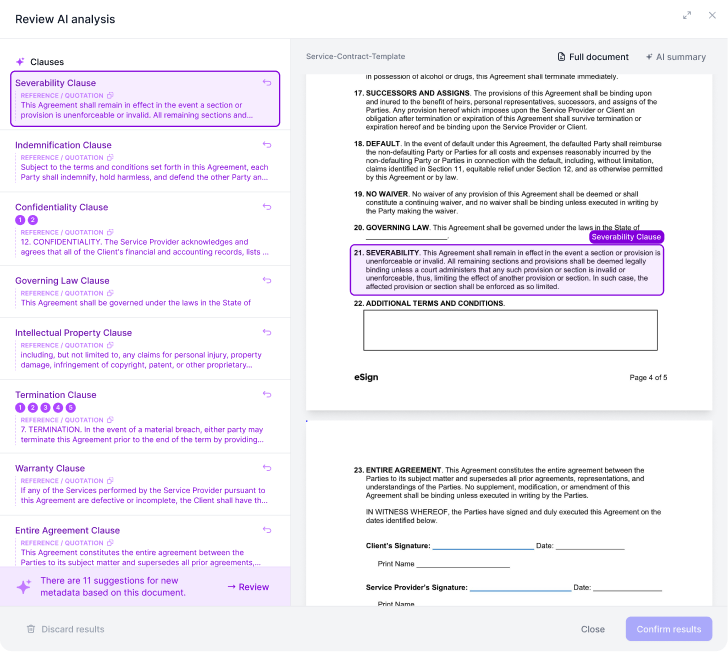
Analyze your contracts. Extract important clauses.
Try our AI contract analysis and extract important clauses and information from existing contracts.
Save your favourite clauses
Insert directly with a single click
Upload preferred precedents
Sample royalties clauses
Source
RoyaltyTraders LLCIn consideration of the Purchase Price paid to Producer hereunder, during the Royalty Period, Producer hereby agrees to pay (or direct payment from all applicable third parties, including Distributor and/or Artist) all Royalties from the following Revenue Sources, as applicable hereunder, in connection with the Portfolio as follows…
In consideration for the granting of the licence, the Licensee shall pay royalties to the Union for the exploitation of the Technology and the Patents, in accordance with the mechanisms and principles described in the following paragraphs.
What is royalties?
Royalties are payments made to individuals or entities for the ongoing use of their assets, intellectual properties, or resources. These are typically calculated as a percentage of the revenue generated from the use of the asset, or a fixed price per unit sold or produced. Common assets that earn royalties include music, books, patents, and natural resources.
When should I use royalties?
You should consider using royalties in scenarios where you wish to grant permission for the use of an asset you own, while also continuing to receive compensation for its use. This is particularly common in:
- Licensing intellectual property like patents, which allows others to produce inventions while you receive payment.
- Publishing, where authors earn royalties from book sales.
- Music and entertainment, to pay artists or rights holders whenever their work is used commercially.
- Extractive industries, where companies pay landowners royalties for the right to extract minerals or oil.
How do I write a royalties agreement?
When writing a royalties agreement, ensure it contains the following key elements:
- Parties Involved: Clearly identify the licensor (asset owner) and the licensee (user).
- Description of the Asset: Provide a detailed description of the asset being licensed.
- Payment Structure: Define how royalties will be calculated and paid, including percentages, schedules, and any minimum payment requirements.
- Term and Termination: Specify the duration of the agreement and conditions under which it can be terminated.
- Rights and Obligations: Detail the rights granted to the licensee and any obligations or restrictions.
- Confidentiality and Compliance: Include clauses to protect sensitive information and ensure legal compliance.
Example: “The Licensee agrees to pay the Licensor a royalty of 10% of the net sales value of all products sold that incorporate the licensed patent.”
Which contracts typically contain royalties?
Royalties are typically included in various types of contracts, such as:
- Licensing Agreements: For intellectual property, including technology, trademarks, and copyrights.
- Publishing Contracts: Covering books, music, and artistic works, where creators earn from sales.
- Franchise Agreements: Where a franchisee pays to use the branding and business model of the franchisor.
- Resource Extraction Agreements: Involving natural resources, where landowners receive compensation based on what is extracted from their land.
- Software and Technology Licensing: Permitting use of proprietary software or technology solutions.
These contracts ensure that the creators or original owners of an asset receive ongoing compensation while allowing others to benefit from the asset’s use.
More clauses from the library
See allRoyalty payment
A royalty payment clause specifies the terms under which one party (the licensee) compensates another party (the licensor) for the use of intellectual property, such as patents, copyrights, or trademarks. This clause typically outlines the percentage or fixed amount to be paid, the calculation method, the payment schedule, and any applicable terms or conditions impacting the payment structure, ensuring both parties agree on financial rights and responsibilities.
21 example clauses
Rule of 60
The "Rule of 60" is a guideline often used in retirement plans, where an employee becomes eligible for a pension or early retirement benefits once their age combined with years of service equals 60. This rule aims to reward long-serving employees by allowing them to retire earlier with full or partial benefits.
12 example clauses
Rule of construction
A "Rule of Construction" clause in a contract establishes guidelines for interpreting the terms and provisions within the agreement. This clause can specify that the contract should not be interpreted against the party that drafted it, ensuring a fair and neutral interpretation.
11 example clauses
Analyze your contracts. Extract important clauses.
Try our AI contract analysis and extract important clauses and information from existing contracts.
Save your favourite clauses
Insert directly with a single click
Upload preferred precedents