
internal controls
The internal controls clause outlines the mechanisms and procedures a company must implement to ensure the integrity of financial and operational processes, safeguarding against fraud and error. This clause mandates regular audits and assessments to ensure compliance with established standards and regulatory requirements.
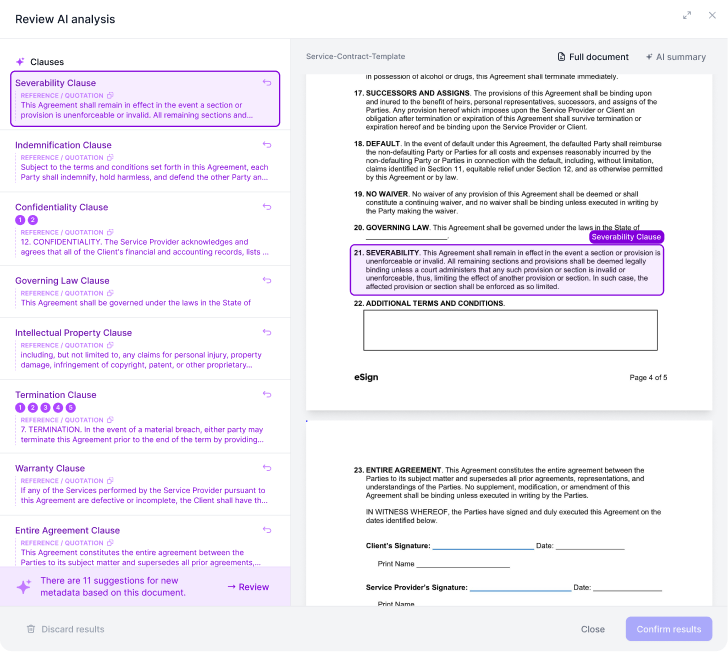
Analyze your contracts. Extract important clauses.
Try our AI contract analysis and extract important clauses and information from existing contracts.
Save your favourite clauses
Insert directly with a single click
Upload preferred precedents
Sample internal controls clauses
Source
DYNARESOURCE INC (DYNR)The registrant’s other certifying officer and I are responsible for establishing and maintaining disclosure controls and procedures (as defined in Exchange Act Rules 13a-15 (e) and 15d-15(e) and internal controls over financial reporting (as defined in Exchange Act Rules 13a-15(f) and 15d-15(f)) for the registrant and have…Designed such internal controls over financial reporting, or caused such internal controls over financial reporting to be designed under our supervision, to provide reasonable assurance regarding the reliability of financial reporting and the preparation of financial statements for external purposes in accordance with generally accepted accounting principles…
The Bank’s independent auditor is also responsible for auditing the Bank’s internal controls over financial reporting in accordance with such standards and for expressing an opinion on the Bank’s internal controls over financial reporting.
What is internal control?
Internal control refers to a process, implemented by an organization’s management and other personnel, designed to provide reasonable assurance regarding the achievement of objectives in the following categories:
- Effectiveness and efficiency of operations
- Reliability of financial reporting
- Compliance with applicable laws and regulations
These controls are a key part of any governance and risk management framework, aiming to improve an organization’s overall efficiency and effectiveness.
When should I use internal controls?
Internal controls should be used whenever an organization needs to minimize risks and ensure processes are running efficiently and effectively. You should implement internal controls in situations such as:
- When handling financial transactions
- Ensuring compliance with industry regulations
- Protecting sensitive data and information
- Safeguarding assets against theft or misuse
How do I write internal controls?
Writing internal controls involves outlining procedures and policies that aim to mitigate risks and ensure objectives are met. The process usually includes:
- Identifying Risks - Evaluate potential risks in the organization’s operations, reporting, and compliance areas.
- Designing Controls - Develop policies and procedures to address these risks. Ensure that controls are:
- Preventive - Aim to deter errors or irregularities from occurring.
- Detective - Aim to identify errors or irregularities after they have occurred.
- Documenting - Clearly document each control, detailing the purpose, responsible personnel, procedures, and expected results.
- Implementing - Put the controls into action and communicate them to relevant employees.
- Monitoring - Continuously monitor and assess the effectiveness of controls, making adjustments as necessary.
Example:
Procedure: All expense reports must be approved by the head of department.
Purpose: Ensure expenses are legitimate and accounted for properly.
Responsible Personnel: Head of Department, Accountant
Which contracts typically contain internal controls?
Internal controls can be embedded in various types of contracts, especially those involving financial and operational processes. Typical contracts that might contain internal controls include:
- Service Level Agreements (SLAs): Includes controls to manage performance metrics and compliance.
- Vendor Contracts: Contains controls for payment processing, delivery timelines, and compliance with procurement policies.
- Employment Agreements: May include clauses on expense reimbursement processes or data security protocols.
- Lease Agreements: Outlines controls over expense management and maintenance responsibilities.
Including internal controls in these contracts helps to ensure clarity, accountability, and alignment with organizational objectives.
More clauses from the library
See allinterpretation
The interpretation clause in a contract provides guidance on how the terms and definitions within the agreement should be understood and applied. It helps prevent ambiguities by clarifying the meanings of specific words or phrases, ensuring that all parties have a consistent understanding of the contractual terms.
9 example clauses
Interruption of services
The "Interruption of Services" clause outlines the conditions and responsibilities associated with temporary or permanent disruptions in the provision of services outlined in a contract. It typically includes information on notification requirements, potential remedies, and liability limitations for the parties involved when service interruptions occur.
9 example clauses
Intuitu personae
The "intuitu personae" clause emphasizes the personal nature of a contractual relationship, indicating that the contract has been entered into specifically because of the individual qualities or characteristics of the parties involved. Such a clause often restricts the ability to transfer or assign rights and obligations to third parties without consent, as the identity and personal attributes of the involved parties are crucial to the contract's intent.
7 example clauses
Analyze your contracts. Extract important clauses.
Try our AI contract analysis and extract important clauses and information from existing contracts.
Save your favourite clauses
Insert directly with a single click
Upload preferred precedents