
Environmental indemnification
Environmental indemnification is a contractual clause in which one party agrees to compensate or shield another party from liabilities related to environmental damages or breaches of environmental laws and regulations. This clause typically seeks to allocate the financial burden of cleanup, legal fees, and penalties associated with environmental issues that may arise during or after a transaction or project.
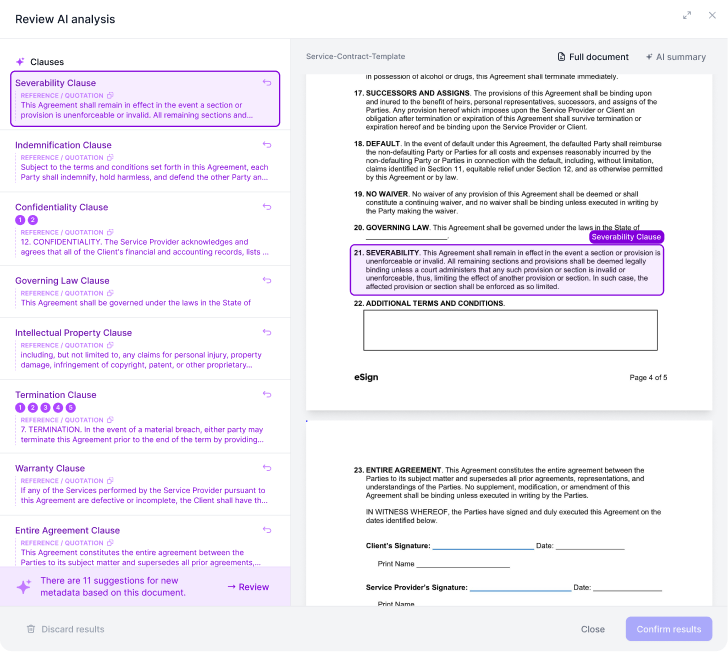
Analyze your contracts. Extract important clauses.
Try our AI contract analysis and extract important clauses and information from existing contracts.
Save your favourite clauses
Insert directly with a single click
Upload preferred precedents
Sample Environmental indemnification clauses
Environmental Indemnification. In addition to all other remedies available to the Authority under this Lease, at law or in equity, Virgin will indemnify, defend and save harmless the Authority, its officers, agents, board members, commissions, employees, successors and assigns from and against any and all Environmental Claims arising out of the acts or omissions of Virgin or Virgin’s agents, employees, contractors, officers, directors, licensees or invitees or any other Person acting by or through or on behalf of Virgin, except to the extent arising out of the negligence or willful misconduct of the Authority. This indemnity will survive the expiration or termination of this Lease and, with respect to a particular Environmental Claim, the period during which the Authority may tender a claim for indemnification to Virgin under this Section 14.5 will expire 30 calendar days after the expiration of the limitation period under the State or federal law applicable to such Environmental Claim or 30 days after the Authority receives notice of such Environmental Claim, whichever is later.
Environmental Liabilities. The Environmental Indemnification Agreements with respect to FA and FP in effect shall continue in effect without amendment, except that, beginning on the earlier of [] (i) Toshiba shall be responsible for its share of liability for Environmental Costs (as defined in the Environmental Indemnification Agreements) []FA and/or FP, as applicable, at the time of the contamination or release, if determinable, and (ii) if the time of such contamination or release is not determinable, the liability for Environmental Costs shall be allocated [***] of NAND Flash production through the time of discovery of such contamination or release.
“Environmental Indemnification Agreement” means the Amended and Restated Mutual Contribution and Environmental Indemnification Agreement, dated as of the Effective Date, between Toshiba and SanDisk Corporation.
The Loan is secured by the Project, and Stratus’ guarantee is limited to non-recourse carve-out obligations and environmental indemnification, as set forth in the Loan Documents. In addition, any default under the ground leases, which grant College Station the right to occupy the Jones Crossing property, would trigger the carve-out guaranty.
Borrower and Guarantor also executed an Environmental Indemnification Agreement dated November 30, 2018 for the benefit of Lender (the “EIA”).
What is Environmental Indemnification?
Environmental indemnification is a contractual agreement where one party agrees to compensate another for any losses or damages arising from environmental issues related to a property or operation. This is often used in transactions involving real estate or industrial operations to protect one or both parties from potential environmental liabilities, such as contamination or pollution.
When Should I Use Environmental Indemnification?
Environmental indemnification should be used when:
- Buying or selling real estate: When property transactions involve real estate that may have environmental issues.
- Corporate acquisitions: During mergers or acquisitions where operations have potential environmental risks.
- Industrial operations: For contracts related to facilities that produce waste or emissions.
- Compliance and regulatory obligations: To manage liability concerning environmental laws and regulations.
How Do I Write Environmental Indemnification?
Writing an environmental indemnification clause requires careful consideration of several elements, including:
- Scope: Clearly define what environmental risks are covered.
- Parties involved: Specify the indemnitor (party providing indemnity) and indemnitee (party receiving protection).
- Duration: Determine the timeframe during which the indemnity applies.
- Claim procedures: Outline the process for making and resolving claims.
- Exclusions: Note any exceptions to the indemnification coverage.
Example clause:
The Seller agrees to indemnify and hold harmless the Buyer from any and all claims, damages, liabilities, or expenses arising from environmental contamination existing on, under, or about the premises prior to the closing date.
Which Contracts Typically Contain Environmental Indemnification?
Environmental indemnification is commonly found in:
- Real estate purchase agreements: Protecting the buyer from existing environmental conditions.
- Lease agreements: Allocating environmental responsibilities between landlords and tenants.
- Mergers and acquisitions agreements: Managing liabilities when acquiring companies with potential environmental risks.
- Construction contracts: Addressing pollution or contamination during building projects.
More clauses from the library
See allEquity compensation
Equity compensation refers to non-cash benefits that give employees ownership in the company, often in the form of stock options, restricted stock units, or employee stock purchase plans. This form of compensation is intended to align the interests of employees with those of shareholders, incentivizing employees to contribute to the company’s success.
8 example clauses
Errors and omissions
The "Errors and Omissions" clause provides protection for parties against unintentional mistakes or oversights that might occur in the documentation or execution of a contract. It typically allows for corrections to be made without penalizing the responsible party, thereby ensuring the contract remains fair and accurate.
7 example clauses
Escrow instructions
Escrow instructions refer to the specific guidelines and conditions set by the parties involved in a transaction, which govern the management and disbursement of funds or documents held by an escrow agent until all obligations and contingencies in the transaction are met. These instructions ensure that the transaction is handled securely and accurately, protecting the interests of all parties involved.
14 example clauses
Analyze your contracts. Extract important clauses.
Try our AI contract analysis and extract important clauses and information from existing contracts.
Save your favourite clauses
Insert directly with a single click
Upload preferred precedents